Vehicle
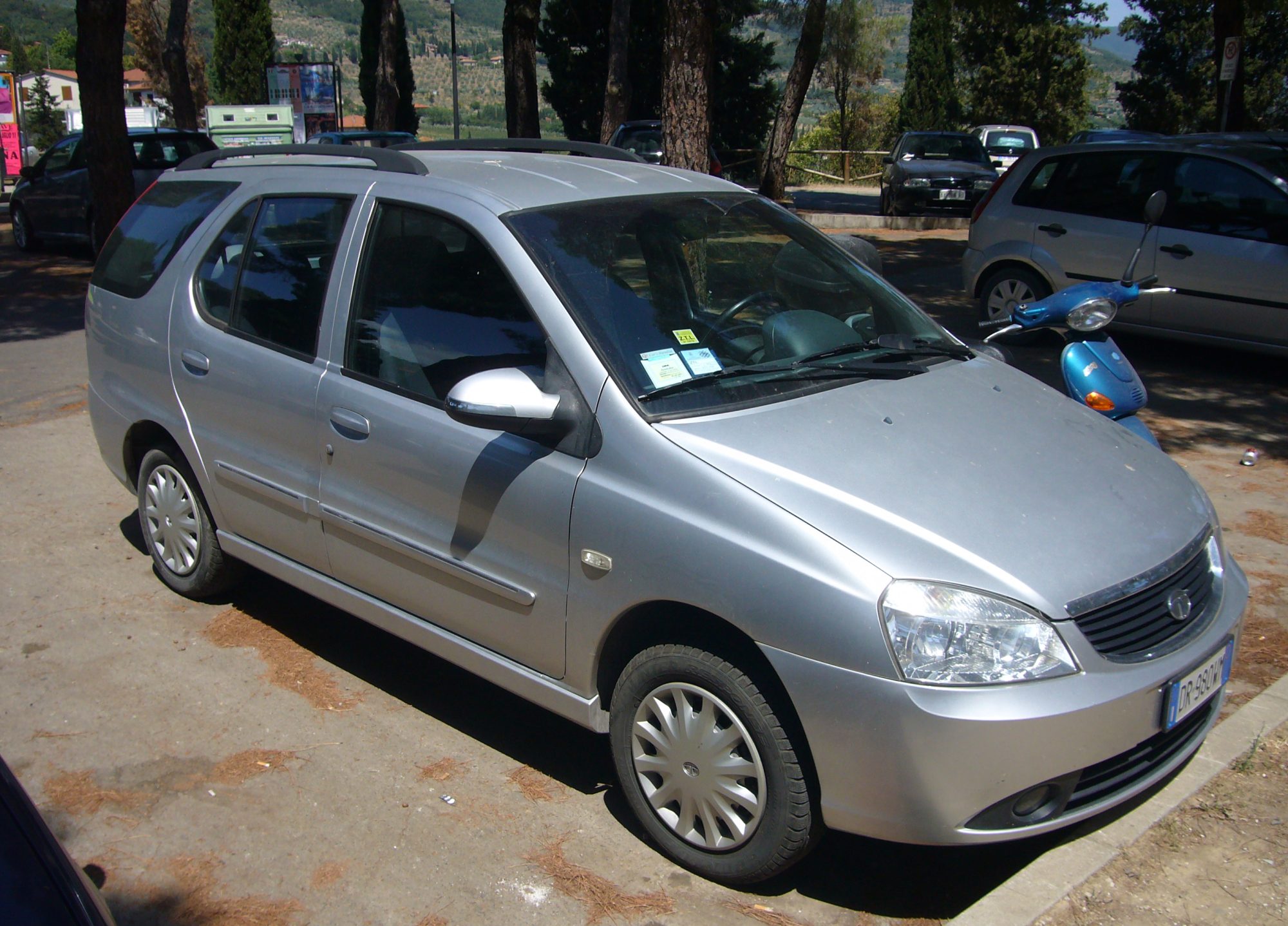
Tata Indigo
The Indica as a saloon, and the model that carried Tata's diesel into the taxi trade — which is why so many are still working at mileages nothing else in this catalogue reaches. The name covers two structurally different cars. The original Indigo shares its floorpan and its 1.4 engines with the Indica; the 2009 Manza is a larger car on the X1 platform with Fiat-derived power, and nothing about the older one prepares you for it.
Establishing the injection system comes before connecting anything. The early 1.4 TDI is an indirect-injection diesel with an inline pump and no rail to interrogate; the later CR4 and the Manza's 1.3 Quadrajet are common-rail and read normally. A scan tool on the wrong one of those is a wasted hour, and the badge on the boot does not tell you which.
On the common-rail cars the recurring items are the family's: injector return flow as the fastest route through a rough-running complaint, and a fuel-filter water sensor that corrodes in service. On every version, the earth points behind the battery and at the gearbox are a classic source of faults that read as being somewhere else entirely.

Generations
-
First generation 2002–2018
The Indica as a saloon and estate; indirect-injection diesels early, common-rail later, and the badge does not say which.
- Body styles
- Sedan · Estate
- Platform
- Tata X1
- Engines
-
- 1.2 — 475 · petrol · 48 kW (64 hp) · 100 Nm (74 lb-ft) · the 1,193 cc 475 SI, and the designation is the maker's own rather than the sibling row's: Tata Motors' Indigo Owner's Manual & Service Book prints `Tata 475 SI (MPFI) - (1.2L)` in its technical specification table at 75 × 67.5 mm and 1,193 cc, 65 PS at 5,200 with 102 Nm under BS-III and 65 PS at 5,000 with 100 Nm at 2,700 under BS-IV — which is this row's own pair to the digit. en.wikipedia names no designation for any Indigo petrol and gives the 1.2 as 68 hp, which is the 2002 launch car rather than this one; it does say the Indigo CS carried the engine over from the Indica Xeta, and the Indica's 1.2 row here already reads 475. **That sibling is not what this rests on.** Copying a designation across on a matching displacement is the failure `spec-merge repair` was built to strip, so the manual was read instead. One thing the manual settles against en.wikipedia: it gives the 1.2 as 1,193 cc where en's Indica article puts the Xeta at 1,172 — which is the SaFire's capacity, not this engine's
- 1.4 TDI — 475 · diesel · 51–52 kW (69–70 hp) · 135 Nm (100 lb-ft) · indirect injection with an inline pump — nothing to interrogate electronically
- 1.4 common rail — diesel · 51 kW (69 hp) · 140 Nm (103 lb-ft) · the CR4 engine; reads normally where the TDI does not
- Transmissions
- 5-speed manual
- Drivetrain
- Front-wheel drive
-
Second generation (Manza) 2009–2016
A larger car on the X1 platform with Fiat-derived power — structurally unrelated to the Indigo whose name it carries.
- Body styles
- Sedan
- Platform
- Tata X1
- Engines
-
- 1.4 petrol — SAFIRE · petrol · 66 kW (88 hp) · 116 Nm (86 lb-ft)
- 1.3 Quadrajet — SDE · diesel · 67 kW (90 hp) · 200 Nm (148 lb-ft) · the Fiat Multijet built at Ranjangaon — Fiat common-rail conventions apply, not Tata's
- Transmissions
- 5-speed manual
- Drivetrain
- Front-wheel drive
Information, not instruction
CarGeek is a reference, not a service manual. Its pages are written from public sources and from what other people have found, never from a manufacturer's own service information, so they can be wrong or incomplete for your particular vehicle. Some of what they describe carries real risk: high voltage, fuel under pressure, stored energy, hot and moving parts.
Have anything you intend to act on checked by a trained person against the manufacturer's own procedure for your vehicle. Nothing here replaces that procedure.
Posted about the Tata Indigo
Be the first to write this up
Nothing posted about this yet. Whatever you found is worth writing down — even a dead end saves someone the same afternoon.
What makes one worth reading:
- The car — make, model, year and engine. The same fault behaves differently on each.
- What you measured, not only what you replaced.
- What actually fixed it — or that nothing did, which is worth knowing too.
Sign in or create an account to add what you found about Tata Indigo.