Vehicle
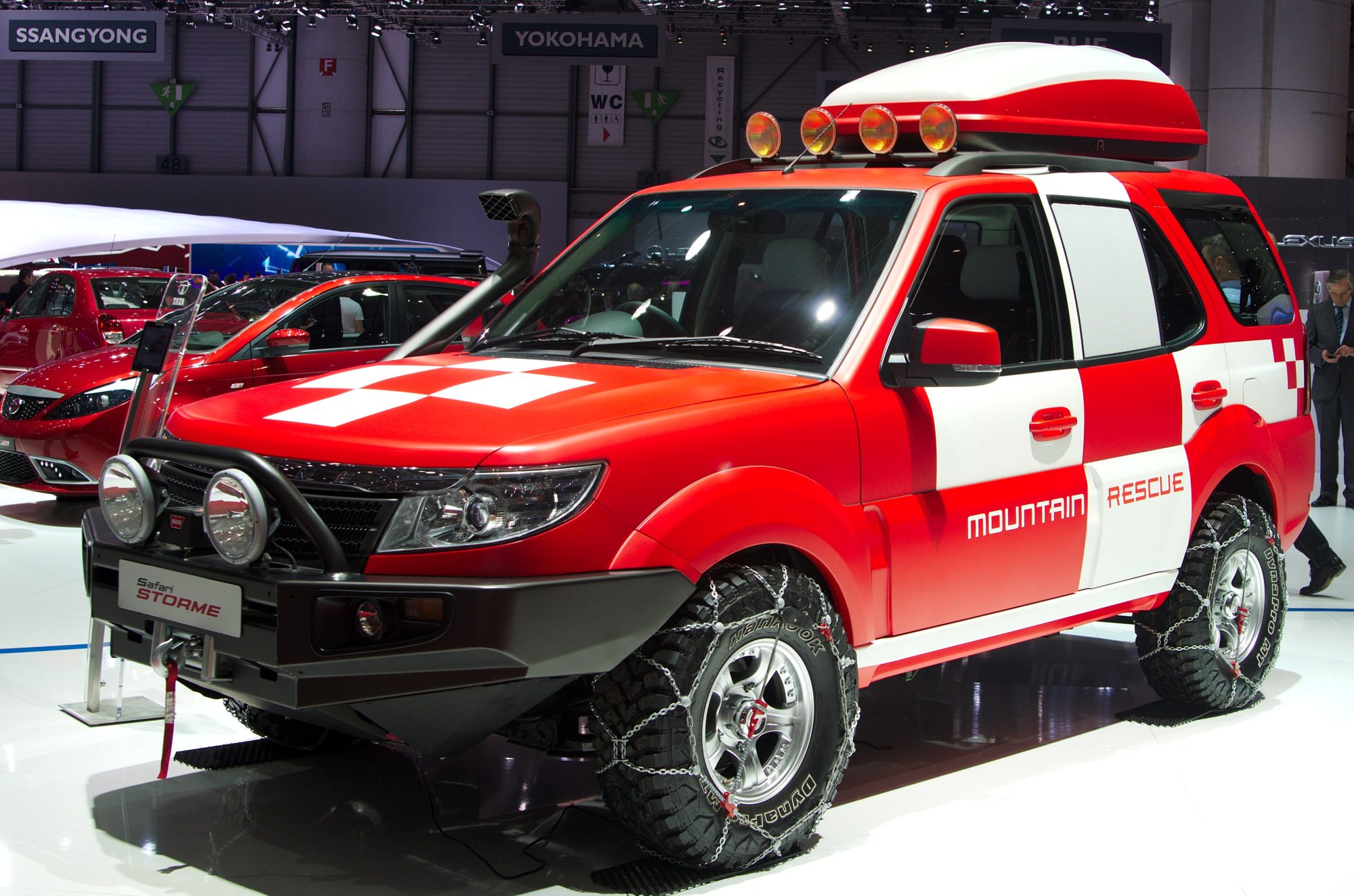
Tata Safari
Two unrelated vehicles across two eras, and the name alone will mislead. The original Safari to 2019 is a ladder-frame four-wheel-drive SUV with the 2.2 DICOR diesel — a working vehicle with a transfer case. The 2021 Safari is a three-row Harrier: monocoque, front-wheel drive, no low range, and the OMEGA platform underneath. Nothing about diagnosing one prepares you for the other, and a code list for the older car will point at systems the newer one does not have.

Generations
-
First generation 1998–2019
Ladder frame with a transfer case and the 2.2 DICOR — a working four-wheel drive, and structurally unrelated to the car that took the name later.
- Body styles
- SUV
- Platform
- Tata X2
- Engines
-
- 2.0 turbo — diesel · 65–69 kW (87–92 hp) · the 1,948 cc turbodiesel the Safari launched on in 1998 and shared with the Telcoline, the Sierra and the Sumo — indirect injection, a KKK turbocharger and two valves per cylinder. The range is two emissions eras of one engine rather than two tunes: 92 hp under Euro 2 falling to 87 under Euro 3. en.wikipedia states both figures and the transition, de.wikipedia gives 87 PS with its own Safari diesel range opening at 64 kW, and ru.wikipedia has the launch car at 90. Left uncoded for the reason the Sumo's turbo row is — the Safari and Sumo articles turbocharge the Peugeot XD88 where the Sierra and Telcoline articles turbocharge the 483 DL, at the same outputs, and a code that sends a technician to the wrong engine page is no better than none
- 2.2 DICOR — DW12 · diesel · 103–105 kW (138–141 hp) · 320 Nm (236 lb-ft) · the PSA DW12 reworked by AVL, and the range is two states of one engine across the Safari's life rather than two tunes: 140 PS at launch and 143 PS from October 2007. de.wikipedia states both in sequence — the Euro IV engine shown at Bologna in 2006 at 140 PS (103 kW) and 320 Nm, then "eine höhere Leistung von 143 PS (105 kW)" in October 2007 — and it.wikipedia states both independently, 143 CV (105 kW) with 320 N·m held from 1,700 to 2,700 in its engine section and "il 2.2 diesel Dicor da 140 cavalli" twice in the Storme sections. The torque stays 320 Nm on one source short of a second: de alone gives the later vtt 300 Nm at 1,700, where en and it both give 320
- 3.0 Di — 497 · diesel · 86 kW (116 hp) · 300 Nm (221 lb-ft) · the 3.0 DICOR, derived from a Mercedes-Benz commercial unit by way of the Tata 407, and the first direct-injection diesel Tata fitted — sixteen valves and common rail, 116 hp at 3,000 with the torque held from 1,600 to 2,000. The same 2,956 cc block the Sumo carries as the 497, in a stronger tune
- 2.2 VariCOR — DW12 · diesel · 110–115 kW (148–154 hp) · 320–400 Nm (236–295 lb-ft)
- 2.1 — 486PL · petrol · 99 kW (133 hp) · the sixteen-valve naturally aspirated petrol Tata developed with AVL, offered 2003–2005 only. de.wikipedia's engine range states 99 kW and en.wikipedia's body 135 horsepower, which is the same figure read as PS — and de is not repeating en, because it gives the 2.2 vtt 300 Nm where en and it.wikipedia both give 320. Its torque is refused for want of any source at all, and that is now measured against the closed set rather than against whichever languages somebody thought of: all fourteen versions the Safari article has were swept and three carry a torque figure anywhere — de, it and ja — every one of them about a DiCOR or VariCOR diesel. de gives this engine as the `Ottomotor: 2,1 Liter (99 kW)` endpoint of its infobox range with no torque, it.wikipedia does not mention it, and ru.wikipedia's Safari carries only the diesels
- Transmissions
- 5-speed manual · 6-speed manual
- Drivetrain
- Rear-wheel drive · Part-time four-wheel drive with low range
-
Second generation 2021–present
A three-row Harrier — monocoque, front-wheel drive and no low range, so the older Safari's whole drivetrain branch simply does not exist here.
- Body styles
- SUV
- Platform
- Tata OMEGA
- Engines
-
- 2.0 — KRYOTEC · diesel · 125 kW (168 hp) · 350 Nm (258 lb-ft) · Fiat Multijet derivative
- 1.5 turbo petrol — HYPERION · petrol · 125 kW (168 hp) · 280 Nm (207 lb-ft) · the same higher tune of the Hyperion T-GDi as the Harrier, launched with it and stated with it — indiacarnews gives 170bhp and 280Nm for the pair in one sentence and Tata's commercial officer names both cars in the same quotation. The Sierra's 160 PS and 255 Nm is this engine deliberately detuned rather than a contradiction; the Harrier row carries the full account of the split and the unit arithmetic behind 168 bhp against 170 PS
- Transmissions
- 6-speed manual · 6-speed automatic
- Drivetrain
- Front-wheel drive
Information, not instruction
CarGeek is a reference, not a service manual. Its pages are written from public sources and from what other people have found, never from a manufacturer's own service information, so they can be wrong or incomplete for your particular vehicle. Some of what they describe carries real risk: high voltage, fuel under pressure, stored energy, hot and moving parts.
Have anything you intend to act on checked by a trained person against the manufacturer's own procedure for your vehicle. Nothing here replaces that procedure.
Posted about the Tata Safari
Be the first to write this up
Nothing posted about this yet. Whatever you found is worth writing down — even a dead end saves someone the same afternoon.
What makes one worth reading:
- The car — make, model, year and engine. The same fault behaves differently on each.
- What you measured, not only what you replaced.
- What actually fixed it — or that nothing did, which is worth knowing too.
Sign in or create an account to add what you found about Tata Safari.