Vehicle
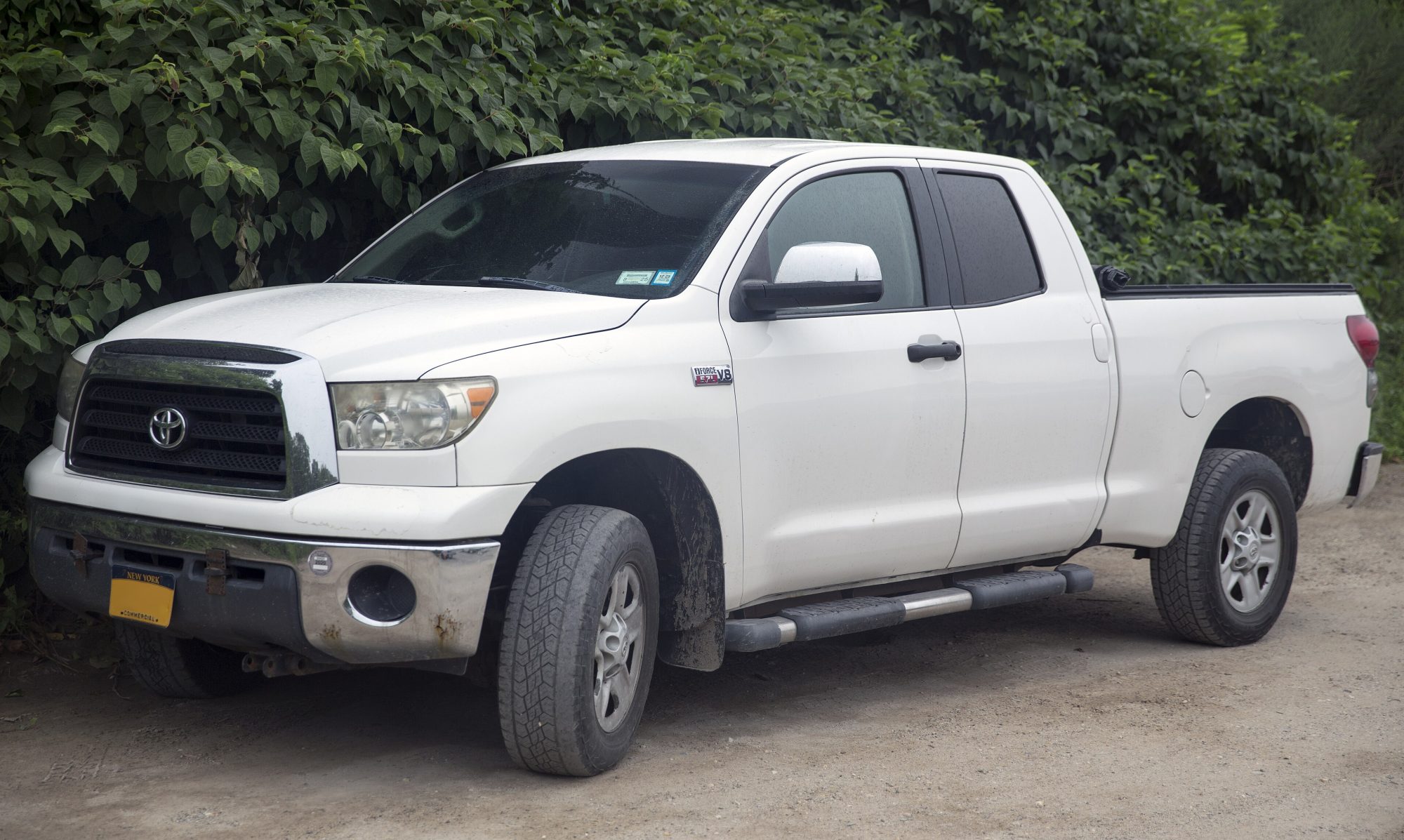
Toyota Tundra
The full-size pickup, and the model where Toyota's conservative reputation has an exception worth knowing: the second generation's secondary air injection system is a recall-level fault that sets P2440-family codes on a cold start and is a genuinely expensive repair rather than a sensor. The 2022 car drops the V8 entirely for a twin-turbo V6, with a hybrid option, so a Tundra's model year decides whether it is a naturally aspirated truck or a boosted one.

Generations
-
XK30 1999–2006
The 4.7 2UZ-FE V8; the secondary air injection system that defines the later trucks is not yet fitted here.
- Body styles
- Pickup
- Platform
- Toyota XK30
- Engines
-
- 3.4 V6 — 5VZ-FE · petrol · 132–142 kW (177–190 hp) · 294–299 Nm (217–221 lb-ft)
- 4.0 V6 — 1GR-FE · petrol · 177–199 kW (237–267 hp) · 361–380 Nm (266–280 lb-ft)
- 4.7 V8 — 2UZ-FE · petrol · 170–212 kW (228–284 hp) · 410–448 Nm (302–330 lb-ft)
- Transmissions
- 5-speed manual · 5-speed automatic · 4-speed A340 automatic · 6-speed manual
- Drivetrain
- Rear-wheel drive · Part-time four-wheel drive with low range
-
Second generation 2007–2021
The 5.7 V8 era; the secondary air injection system is its defining fault and sets cold-start codes that look far cheaper than they are.
- Body styles
- Pickup
- Platform
- Toyota Tundra
- Engines
-
- 4.0 V6 — 1GR-FE · petrol · 177–199 kW (237–267 hp) · 361–380 Nm (266–280 lb-ft)
- 4.6 V8 — 1UR-FE · petrol · 221–255 kW (296–342 hp) · 439–460 Nm (324–339 lb-ft)
- 5.7 V8 — 3UR-FE · petrol · 284 kW (381 hp) · 544 Nm (401 lb-ft)
- 4.7 V8 — 2UZ-FE · petrol · 170–212 kW (228–284 hp) · 410–448 Nm (302–330 lb-ft) · 2007–2009
- Transmissions
- 5-speed automatic · 6-speed automatic
- Drivetrain
- Rear-wheel drive · Part-time four-wheel drive with low range
-
Third generation 2021–present
TNGA-F, and no V8 at all — a twin-turbo V6 with a hybrid option, so the whole boost and thermal picture changes.
- Body styles
- Pickup
- Platform
- Toyota TNGA-F
- Engines
-
- 3.4 twin-turbo V6 — V35A-FTS · petrol · 549–650 Nm (405–479 lb-ft)
- 3.4 twin-turbo hybrid — hybrid · i-Force Max
- Transmissions
- 10-speed automatic
- Drivetrain
- Rear-wheel drive · Part-time four-wheel drive with low range
Service information
Information, not instruction
CarGeek is a reference, not a service manual. Its pages are written from public sources and from what other people have found, never from a manufacturer's own service information, so they can be wrong or incomplete for your particular vehicle. Some of what they describe carries real risk: high voltage, fuel under pressure, stored energy, hot and moving parts.
Have anything you intend to act on checked by a trained person against the manufacturer's own procedure for your vehicle. Nothing here replaces that procedure.
Posted about the Toyota Tundra
Be the first to write this up
Nothing posted about this yet. Whatever you found is worth writing down — even a dead end saves someone the same afternoon.
What makes one worth reading:
- The car — make, model, year and engine. The same fault behaves differently on each.
- What you measured, not only what you replaced.
- What actually fixed it — or that nothing did, which is worth knowing too.
Sign in or create an account to add what you found about Toyota Tundra.