نصيحة
رمز العطل P0420
P0420 is rarely the sensor — what the rear O2 is actually saying
HO
@hhh
منذ شهر
The catalyst stores oxygen while it works. The rear O2 sensor exists to watch that storage: while the cat is healthy, the front sensor switches constantly and the rear one stays comparatively flat and lazy. P0420 sets when the rear starts mirroring the front — oxygen is passing straight through.
So the sensor reporting the failure is usually doing its job, and replacing it usually buys a few weeks until the monitor runs again. Before any parts, two checks:
First, what killed the efficiency. Catalysts rarely die of old age alone — sustained misfires load them with unburned fuel, lean running overheats them, burned oil or coolant coats them. If there is a misfire or fuel-trim code current or in history, fix that first, or the replacement cat inherits the same death.
Second, exhaust leaks ahead of and around the rear sensor. A leaking flange or a cracked flex section pulls in outside air and makes a working cat read as failed.
Then look at the rear O2 live. Flat around 0.6–0.7 V on a warm steady cruise is a healthy catalyst; a rear trace switching in step with the front is the real failure the code describes.
A word on the spacer trick sold everywhere: it moves the sensor out of the exhaust stream so the monitor passes. It does not make the exhaust clean, and it fails the honest version of any inspection.
So the sensor reporting the failure is usually doing its job, and replacing it usually buys a few weeks until the monitor runs again. Before any parts, two checks:
First, what killed the efficiency. Catalysts rarely die of old age alone — sustained misfires load them with unburned fuel, lean running overheats them, burned oil or coolant coats them. If there is a misfire or fuel-trim code current or in history, fix that first, or the replacement cat inherits the same death.
Second, exhaust leaks ahead of and around the rear sensor. A leaking flange or a cracked flex section pulls in outside air and makes a working cat read as failed.
Then look at the rear O2 live. Flat around 0.6–0.7 V on a warm steady cruise is a healthy catalyst; a rear trace switching in step with the front is the real failure the code describes.
A word on the spacer trick sold everywhere: it moves the sensor out of the exhaust stream so the monitor passes. It does not make the exhaust clean, and it fails the honest version of any inspection.
المرفقات
-
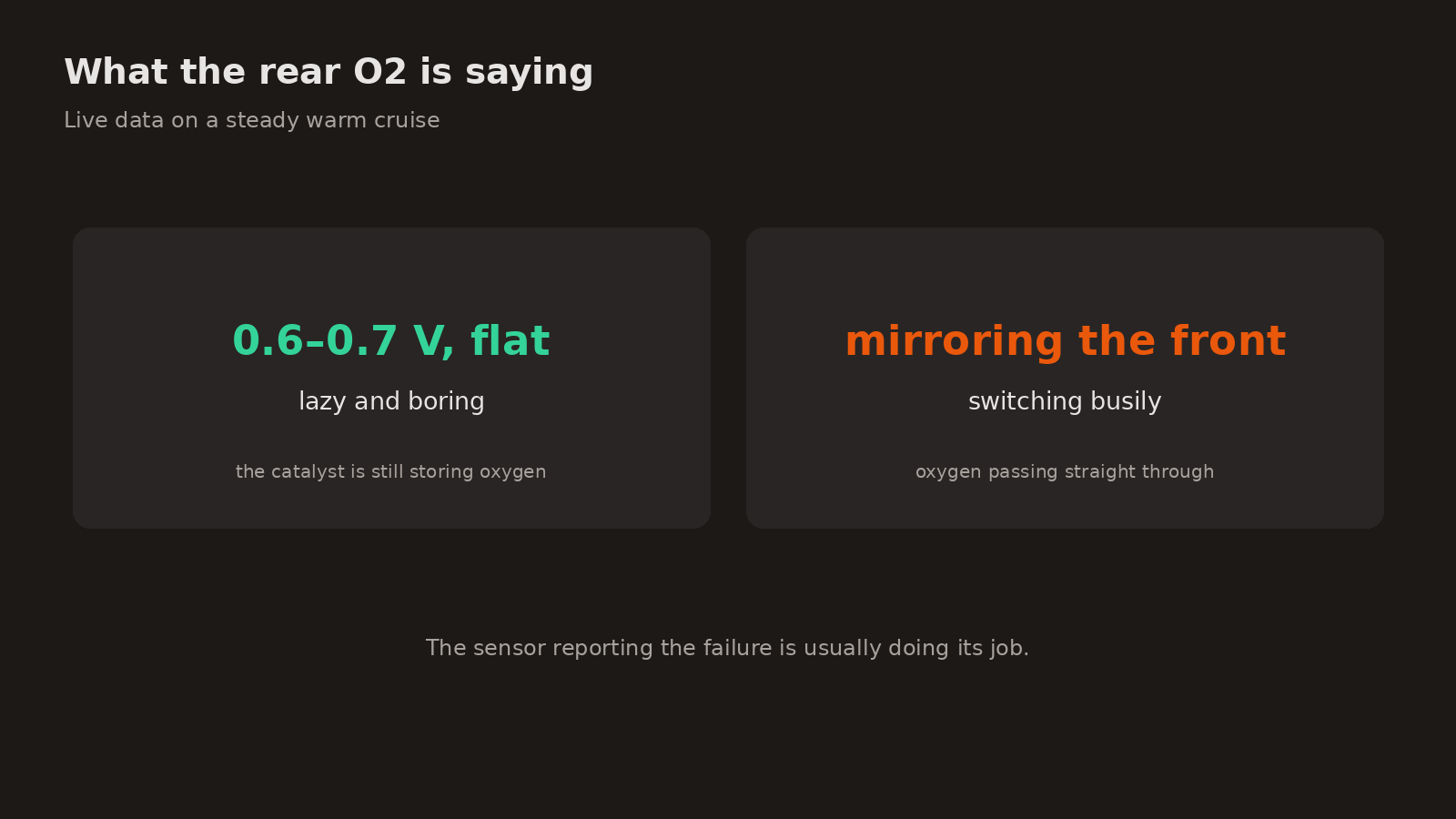
Diagram: a flat rear oxygen sensor trace means a healthy catalyst; one mirroring the front sensor is the real failure P0420 describes.
معلومات لا تعليمات
موقع CarGeek مرجع وليس دليل صيانة. تُكتب صفحاته من مصادر عامة ومما توصّل إليه آخرون، لا من وثائق الصيانة الخاصة بالشركة الصانعة، ولذلك قد تكون خاطئة أو ناقصة بالنسبة لمركبتك تحديدًا. وبعض ما تصفه ينطوي على خطر حقيقي: جهد عالٍ، ووقود تحت ضغط، وطاقة مخزَّنة، وأجزاء ساخنة أو متحركة.
قبل العمل بأي مما هنا، اطلب من شخص مدرَّب التحقق منه وفق الإجراء المعتمد من الشركة الصانعة لمركبتك. ولا شيء هنا يغني عن ذلك الإجراء.