İpucu
Arıza kodu P0420
P0420 is rarely the sensor — what the rear O2 is actually saying
HO
@hhh
1 ay önce
The catalyst stores oxygen while it works. The rear O2 sensor exists to watch that storage: while the cat is healthy, the front sensor switches constantly and the rear one stays comparatively flat and lazy. P0420 sets when the rear starts mirroring the front — oxygen is passing straight through.
So the sensor reporting the failure is usually doing its job, and replacing it usually buys a few weeks until the monitor runs again. Before any parts, two checks:
First, what killed the efficiency. Catalysts rarely die of old age alone — sustained misfires load them with unburned fuel, lean running overheats them, burned oil or coolant coats them. If there is a misfire or fuel-trim code current or in history, fix that first, or the replacement cat inherits the same death.
Second, exhaust leaks ahead of and around the rear sensor. A leaking flange or a cracked flex section pulls in outside air and makes a working cat read as failed.
Then look at the rear O2 live. Flat around 0.6–0.7 V on a warm steady cruise is a healthy catalyst; a rear trace switching in step with the front is the real failure the code describes.
A word on the spacer trick sold everywhere: it moves the sensor out of the exhaust stream so the monitor passes. It does not make the exhaust clean, and it fails the honest version of any inspection.
So the sensor reporting the failure is usually doing its job, and replacing it usually buys a few weeks until the monitor runs again. Before any parts, two checks:
First, what killed the efficiency. Catalysts rarely die of old age alone — sustained misfires load them with unburned fuel, lean running overheats them, burned oil or coolant coats them. If there is a misfire or fuel-trim code current or in history, fix that first, or the replacement cat inherits the same death.
Second, exhaust leaks ahead of and around the rear sensor. A leaking flange or a cracked flex section pulls in outside air and makes a working cat read as failed.
Then look at the rear O2 live. Flat around 0.6–0.7 V on a warm steady cruise is a healthy catalyst; a rear trace switching in step with the front is the real failure the code describes.
A word on the spacer trick sold everywhere: it moves the sensor out of the exhaust stream so the monitor passes. It does not make the exhaust clean, and it fails the honest version of any inspection.
Ekler
-
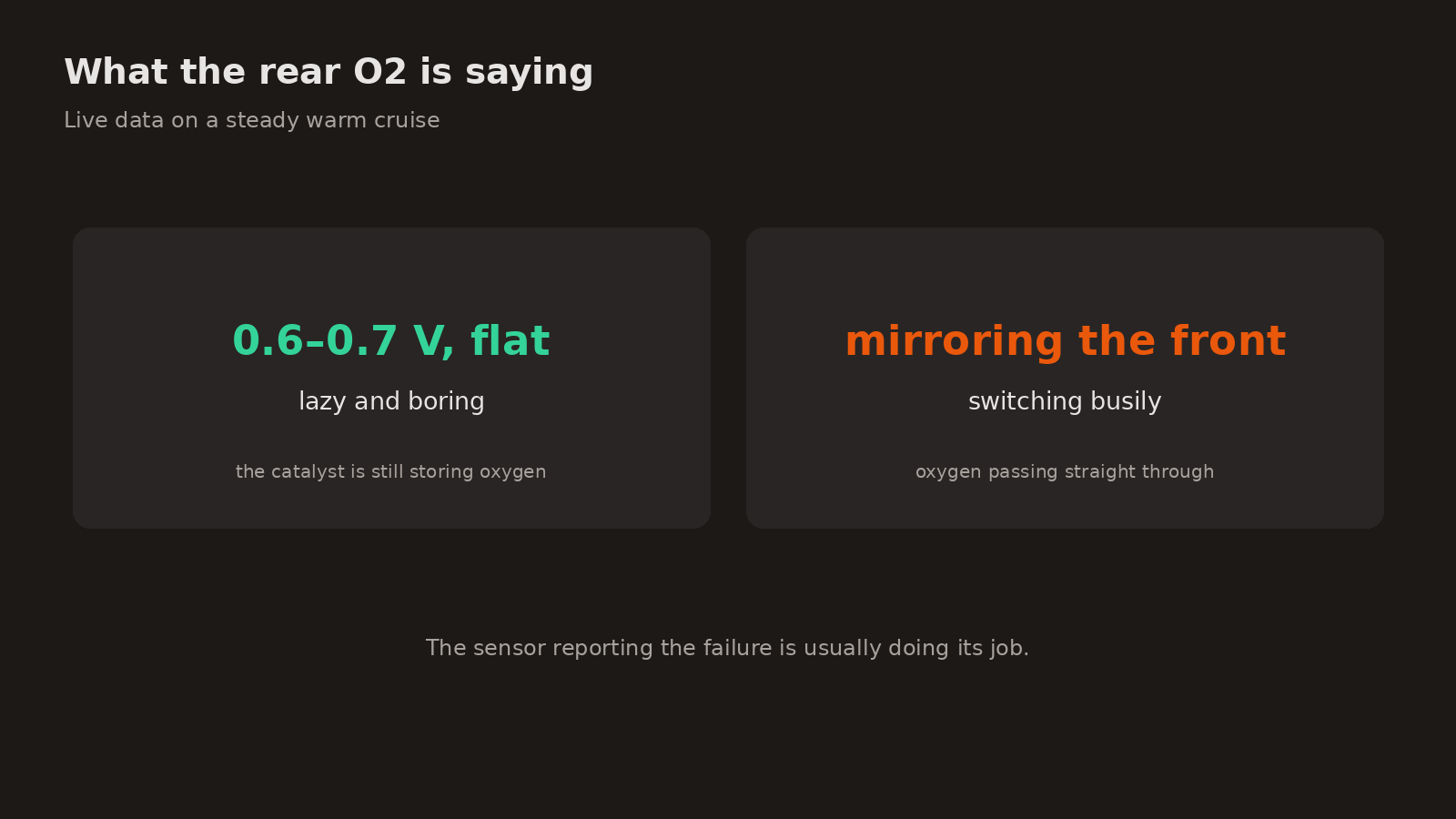
Diagram: a flat rear oxygen sensor trace means a healthy catalyst; one mirroring the front sensor is the real failure P0420 describes.
Bilgi amaçlıdır, talimat değildir
CarGeek bir başvuru kaynağıdır, servis el kitabı değildir. Sayfaları kamuya açık kaynaklardan ve başkalarının tespit ettiklerinden yazılır; hiçbir zaman üreticinin kendi servis belgelerinden yazılmaz. Bu nedenle sizin aracınız için yanlış veya eksik olabilir. Anlatılanların bir kısmı gerçek risk taşır: yüksek gerilim, basınç altındaki yakıt, depolanmış enerji, sıcak ve hareketli parçalar.
Uygulamayı düşündüğünüz her şeyi, aracınız için üreticinin kendi prosedürüne göre eğitimli bir kişiye doğrulatın. Buradaki hiçbir şey o prosedürün yerini tutmaz.