P0420 is rarely the sensor — what the rear O2 is actually saying
So the sensor reporting the failure is usually doing its job, and replacing it usually buys a few weeks until the monitor runs again. Before any parts, two checks:
First, what killed the efficiency. Catalysts rarely die of old age alone — sustained misfires load them with unburned fuel, lean running overheats them, burned oil or coolant coats them. If there is a misfire or fuel-trim code current or in history, fix that first, or the replacement cat inherits the same death.
Second, exhaust leaks ahead of and around the rear sensor. A leaking flange or a cracked flex section pulls in outside air and makes a working cat read as failed.
Then look at the rear O2 live. Flat around 0.6–0.7 V on a warm steady cruise is a healthy catalyst; a rear trace switching in step with the front is the real failure the code describes.
A word on the spacer trick sold everywhere: it moves the sensor out of the exhaust stream so the monitor passes. It does not make the exhaust clean, and it fails the honest version of any inspection.
Вложения
-
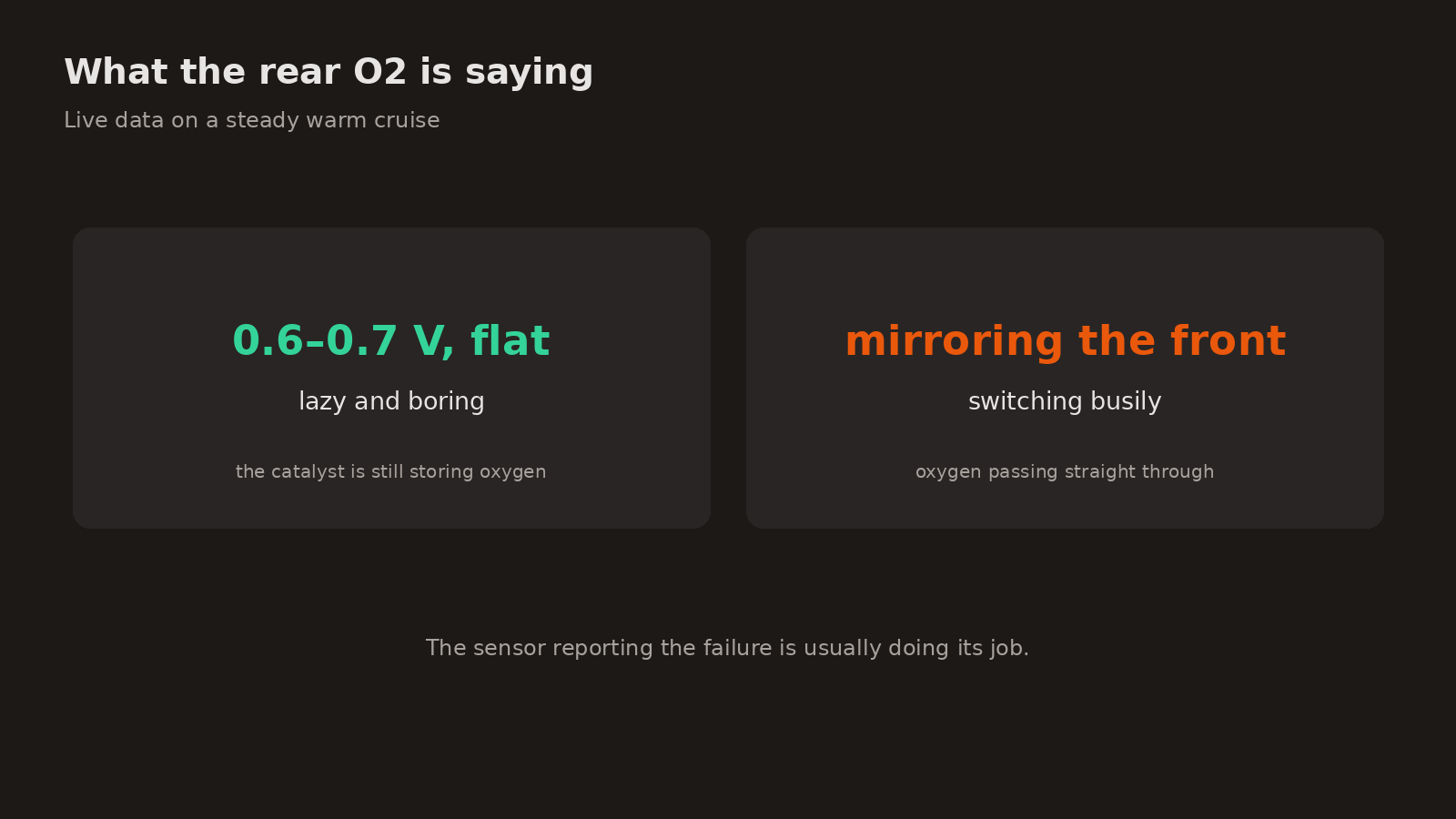
Diagram: a flat rear oxygen sensor trace means a healthy catalyst; one mirroring the front sensor is the real failure P0420 describes.
Информация, а не инструкция
CarGeek — это справочник, а не руководство по ремонту. Его страницы составлены по открытым источникам и по опыту других людей, но не по сервисной документации производителя, поэтому для вашего конкретного автомобиля они могут быть неверными или неполными. Часть описанного связана с реальной опасностью: высокое напряжение, топливо под давлением, накопленная энергия, горячие и движущиеся детали.
Всё, по чему вы собираетесь действовать, сначала проверьте с человеком, имеющим техническую подготовку, по собственной процедуре производителя для вашего автомобиля. Ничто здесь не заменяет эту процедуру.