P0420 is rarely the sensor — what the rear O2 is actually saying
So the sensor reporting the failure is usually doing its job, and replacing it usually buys a few weeks until the monitor runs again. Before any parts, two checks:
First, what killed the efficiency. Catalysts rarely die of old age alone — sustained misfires load them with unburned fuel, lean running overheats them, burned oil or coolant coats them. If there is a misfire or fuel-trim code current or in history, fix that first, or the replacement cat inherits the same death.
Second, exhaust leaks ahead of and around the rear sensor. A leaking flange or a cracked flex section pulls in outside air and makes a working cat read as failed.
Then look at the rear O2 live. Flat around 0.6–0.7 V on a warm steady cruise is a healthy catalyst; a rear trace switching in step with the front is the real failure the code describes.
A word on the spacer trick sold everywhere: it moves the sensor out of the exhaust stream so the monitor passes. It does not make the exhaust clean, and it fails the honest version of any inspection.
Archivos adjuntos
-
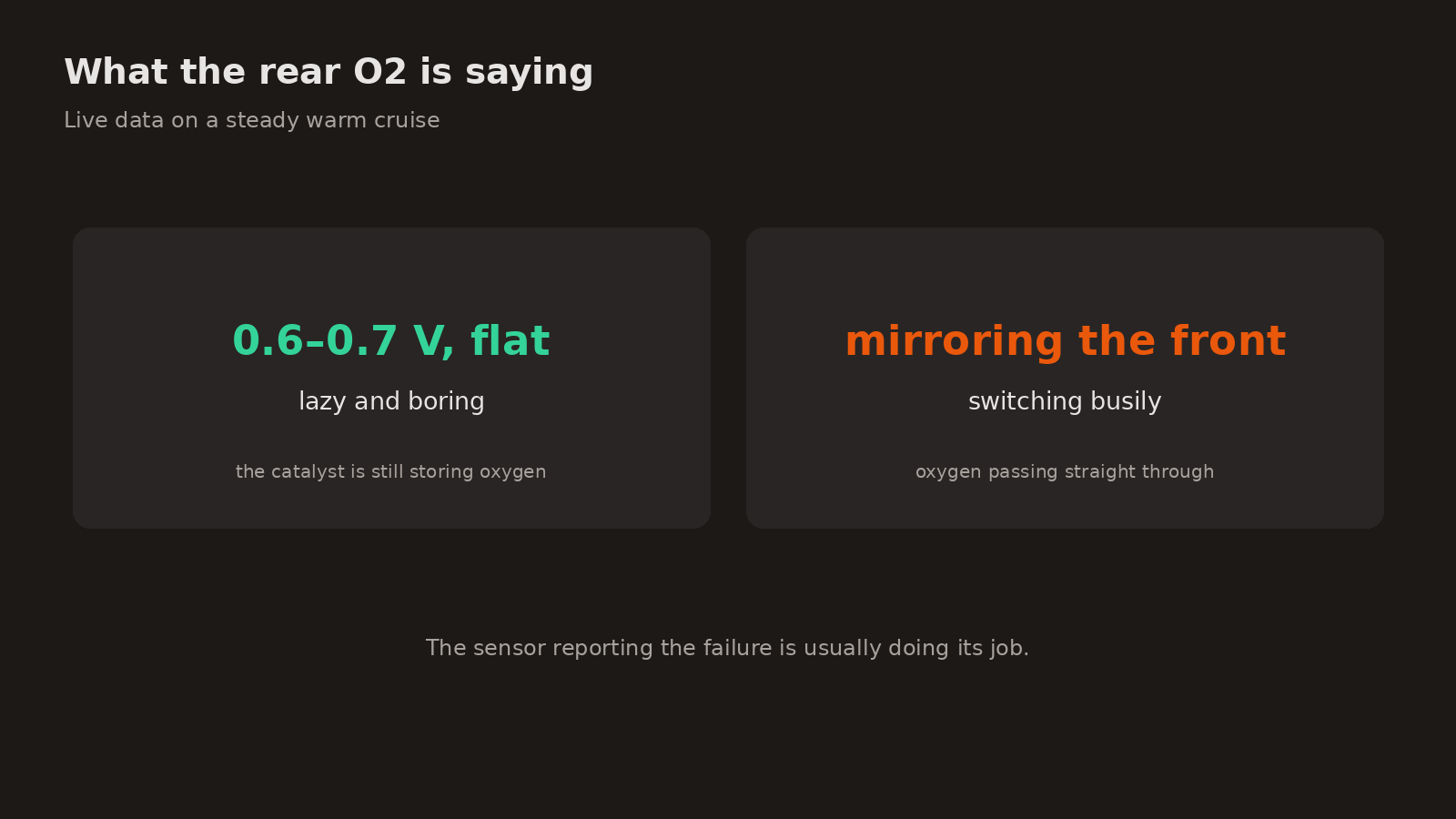
Diagram: a flat rear oxygen sensor trace means a healthy catalyst; one mirroring the front sensor is the real failure P0420 describes.
Información, no instrucciones
CarGeek es una obra de referencia, no un manual de taller. Sus páginas se escriben a partir de fuentes públicas y de lo que otras personas han comprobado, nunca a partir de la documentación de servicio del fabricante, de modo que pueden ser incorrectas o incompletas para su vehículo concreto. Parte de lo que describen entraña un riesgo real: alta tensión, combustible a presión, energía acumulada y piezas calientes o en movimiento.
Antes de actuar sobre cualquier indicación, hágala verificar por una persona con formación técnica siguiendo el procedimiento propio del fabricante para su vehículo. Nada de lo que hay aquí sustituye ese procedimiento.