Vehículo
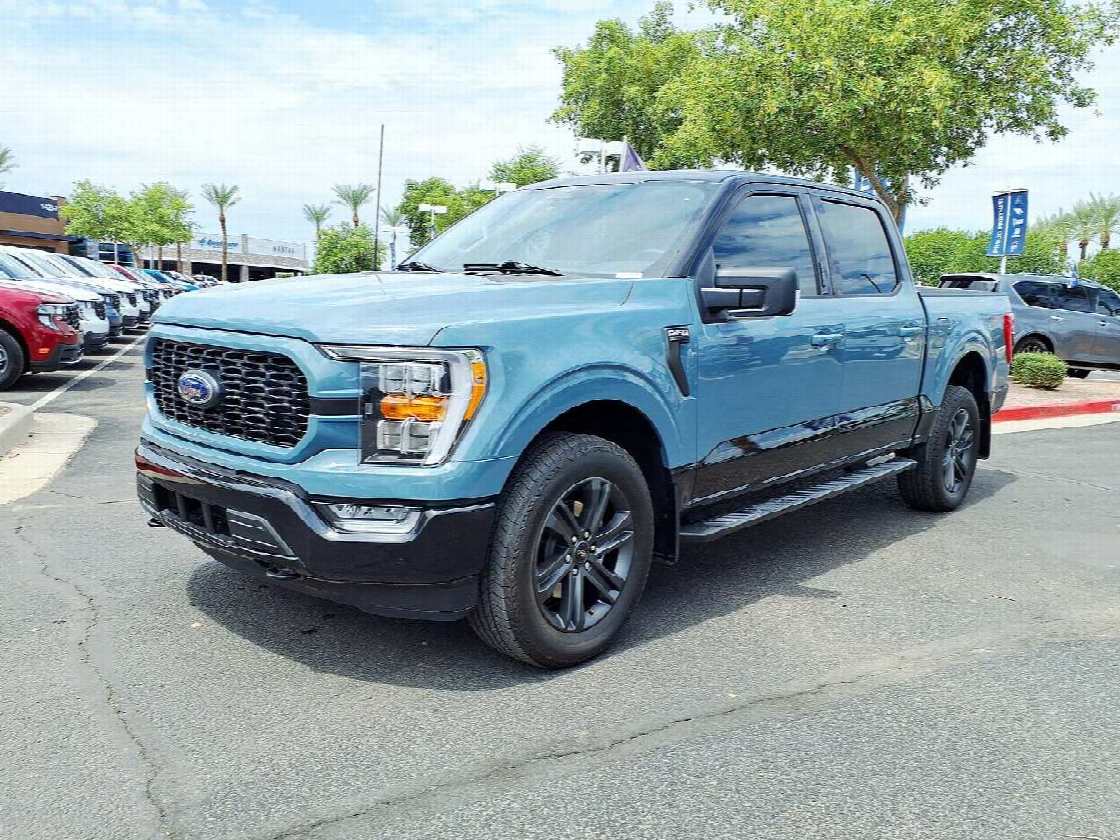
Ford F-150
America's best-selling vehicle for decades. The EcoBoost era made a turbocharged direct-injection V6 the volume engine, bringing boost-control, intercooler-condensation misfire and cam-phaser patterns the corpus's turbo and VVT pages cover.

Generaciones
-
Eighth generation 1987–1991
The first F-Series with fuel injection across the range; the 4.9 straight-six here is among the most durable engines Ford built.
- AOD automática de 4 velocidades
- Borg-Warner T18 / T19 manual de 4 velocidades
- C6 automática de 3 velocidades
- M5OD / M5OD-R1 manual de 5 velocidades
- ZF S5-42 / S5-47 manual de 5 velocidades
- Tipos de carrocería
- Pickup
- Plataforma
- Ford F-Series
- Motores
-
- 4.9 straight-six — petrol · 108–112 kW (145–150 hp) · 353–359 Nm (260–265 lb-ft)
- 5.0 V8 — WINDSOR · petrol · 138 kW (185 hp) · 366 Nm (270 lb-ft) · Windsor
- 5.8 V8 — WINDSOR · petrol · 157 kW (211 hp) · 414–427 Nm (305–315 lb-ft) · Windsor
- 3.9 — D229-4 · diesel · Brazil
- 3.9 turbo — TD229-4 · diesel · Brazil
- Transmisiones
- 4-speed manual · 5-speed manual · 4-speed automatic · 3-speed Ford C6 · 4-speed Ford AOD · 4-speed Ford E4OD · 4-speed Borg-Warner T18 · 4-speed Borg-Warner T19 · 5-speed Mazda M5OD · 5-speed ZF S5-42
- Tracción
- Rear-wheel drive · Part-time four-wheel drive with low range
-
Ninth generation 1992–1996
The last F-150 on Twin-I-Beam front suspension and the last with pushrod petrol engines — the 4.9 Truck Six, the 5.0 Windsor and the 5.8 Windsor, and nothing else. The 7.5 V8 and the 7.3 IDI and Power Stroke diesels of these years are F-250 and above, so an F-150 of this era is petrol whatever the seller says. The 1993–95 Lightning is the same 5.8 at 240 hp on GT40 heads, behind an E4OD.
- Tipos de carrocería
- Pickup
- Plataforma
- Ford F-Series
- Motores
-
- 4.9 straight-six — petrol · 108–112 kW (145–150 hp) · 353–359 Nm (260–265 lb-ft) · Truck Six
- 5.0 V8 — WINDSOR · petrol · 138–153 kW (185–205 hp) · 366–373 Nm (270–275 lb-ft) · Windsor
- 5.8 V8 — WINDSOR · petrol · 149–179 kW (200–240 hp) · 420–461 Nm (310–340 lb-ft) · Windsor
- Transmisiones
- 5-speed Mazda M5OD manual · 4-speed Ford AOD-E automatic · 4-speed Ford E4OD automatic
- Tracción
- Rear-wheel drive · Part-time four-wheel drive with low range
-
Tenth generation 1997–2004
The ground-up PN-96 redesign, and the reason a 1996 truck and a 1997 one share no engine at all: Twin-I-Beam goes, and the Windsor V8s and the Truck Six are replaced outright by the Essex V6 and the modular Triton V8s. The Lightning and Harley-Davidson trucks run the same 5.4 with an Eaton M112 supercharger and the heavy-duty 4R100 behind it. Sold through 2004 alongside its own replacement, as the F-150 Heritage.
- Tipos de carrocería
- Pickup
- Plataforma
- Ford P
- Motores
-
- 4.2 V6 — ESSEX · petrol · 153 kW (205 hp) · 353 Nm (260 lb-ft) · Essex
- 4.6 V8 — TRITON · petrol · 164–172 kW (220–231 hp) · 380–397 Nm (280–293 lb-ft) · Triton, modular
- 5.4 V8 — TRITON · petrol · 175–194 kW (235–260 hp) · 447–475 Nm (330–350 lb-ft) · Triton
- 5.4 supercharged V8 — petrol · 254–283 kW (341–380 hp) · 576–610 Nm (425–450 lb-ft) · Triton, SVT Lightning and Harley-Davidson
- 5.4 CNG bi-fuel — CNG bi-fuel · 8-cylinder, US market 2000-2003
- 5.4 LPG bi-fuel — LPG bi-fuel · 8-cylinder, US market 2001-2003
- Transmisiones
- 5-speed Mazda M5OD-R2 manual · 4-speed Ford 4R70W automatic · 4-speed Ford 4R100 automatic
- Tracción
- Rear-wheel drive · Part-time four-wheel drive with low range
-
11th gen 2004–2008
The 5.4 Triton's cam-phaser and spark-plug issues are the era's signature; phaser rattle reads as a top-end failure.
- Tipos de carrocería
- Pickup
- Plataforma
- Ford P2
- Motores
-
- 4.2 V6 — ESSEX · petrol · 157 kW (211 hp) · 353 Nm (260 lb-ft)
- 4.6 V8 — TRITON · petrol · 172–185 kW (231–248 hp) · 397–399 Nm (293–294 lb-ft)
- 5.4 V8 — TRITON · petrol · 224 kW (300 hp) · 495 Nm (365 lb-ft)
- Transmisiones
- 5-speed manual · 4-speed automatic · 6-speed automatic
- Tracción
- Rear-wheel drive · Four-wheel drive
-
12th gen 2009–2014
First EcoBoost 3.5 — early examples taught everyone that intercooler condensation causes shudder-and-misfire under load.
- Tipos de carrocería
- Pickup
- Plataforma
- Ford P415
- Motores
-
- 3.7 V6 — petrol · 225 kW (302 hp) · 377 Nm (278 lb-ft)
- 4.6 V8 — TRITON · petrol · 185–218 kW (248–292 hp) · 399–434 Nm (294–320 lb-ft)
- 5.0 V8 — COYOTE · petrol · 268 kW (359 hp) · 515 Nm (380 lb-ft)
- 6.2 Boss V8 Raptor — petrol · 306 kW (410 hp) · 588 Nm (434 lb-ft)
- 3.5 EcoBoost V6 — D35 · petrol · 272 kW (365 hp) · 569 Nm (420 lb-ft)
- 5.4 — petrol · 231 kW (310 hp) · 495 Nm (365 lb-ft) · 8-cylinder, US market 2009-2010
- Transmisiones
- 4-speed 4R75E automatic · 6-speed 6R80 automatic
- Tracción
- Rear-wheel drive · Four-wheel drive
-
13th gen 2015–2020
Aluminium body; 10-speed transmission arrives with its own shift-quality code traffic.
- Tipos de carrocería
- Pickup
- Plataforma
- Ford P552
- Motores
-
- 3.3 V6 — petrol · 216 kW (290 hp) · 359 Nm (265 lb-ft)
- 2.7 EcoBoost V6 — NANO · petrol · 242 kW (325 hp) · 508 Nm (375 lb-ft)
- 3.5 EcoBoost V6 — D35 · petrol · 272–336 kW (365–451 hp) · 569–692 Nm (420–510 lb-ft)
- 5.0 V8 — COYOTE · petrol · 287–295 kW (385–396 hp) · 525–542 Nm (387–400 lb-ft)
- 3.0 Power Stroke V6 — diesel · 186 kW (249 hp) · 597 Nm (440 lb-ft)
- 3.5 V6 — petrol · 210 kW (282 hp) · 343 Nm (253 lb-ft)
- Transmisiones
- 6-speed 6R80 automatic · 10-speed 10R80 automatic
- Tracción
- Rear-wheel drive · Four-wheel drive
-
14th gen 2021–present
PowerBoost hybrid joins — hybrid-system codes on a full-size pickup.
- Tipos de carrocería
- Pickup
- Plataforma
- Ford P702
- Motores
-
- 3.3 V6 — petrol · 216 kW (290 hp) · 359 Nm (265 lb-ft)
- 2.7 EcoBoost V6 — NANO · petrol · 242 kW (325 hp) · 542 Nm (400 lb-ft)
- 3.5 EcoBoost V6 — D35 · petrol · 298–336 kW (400–451 hp) · 678–691 Nm (500–510 lb-ft)
- 5.0 V8 — COYOTE · petrol · 298 kW (400 hp) · 556 Nm (410 lb-ft)
- 3.5 PowerBoost — hybrid · 321 kW (430 hp) · 773 Nm (570 lb-ft)
- 5.2 supercharged — petrol · 522–537 kW (700–720 hp) · 868 Nm (640 lb-ft) · 8-cylinder, US market 2023-2026
- 5.2 V8 Raptor R — petrol
- 3.0 turbo V6 — diesel · 186 kW (249 hp) · 597 Nm (440 lb-ft)
- 131.0 kWh electric — electric · 98.0 or 131.0kWh (usable/net for both) lithium-ion
- Transmisiones
- 10-speed automatic
- Tracción
- Rear-wheel drive · Four-wheel drive
Datos CAN
Bases de datos del bus que cubren este vehículo, replicadas del proyecto de código abierto opendbc.
Información de servicio
Información, no instrucciones
CarGeek es una obra de referencia, no un manual de taller. Sus páginas se escriben a partir de fuentes públicas y de lo que otras personas han comprobado, nunca a partir de la documentación de servicio del fabricante, de modo que pueden ser incorrectas o incompletas para su vehículo concreto. Parte de lo que describen entraña un riesgo real: alta tensión, combustible a presión, energía acumulada y piezas calientes o en movimiento.
Antes de actuar sobre cualquier indicación, hágala verificar por una persona con formación técnica siguiendo el procedimiento propio del fabricante para su vehículo. Nada de lo que hay aquí sustituye ese procedimiento.
Publicaciones sobre el Ford F-150
Sé el primero en documentarlo
Todavía no se ha publicado nada sobre esto. Todo lo que haya encontrado vale la pena anotarlo — incluso un callejón sin salida le ahorra a alguien esa misma tarde.
Lo que hace que valga la pena leerlo:
- El coche — marca, modelo, año y motor. La misma avería se comporta distinto en cada uno.
- Lo que mediste, no solo lo que cambiaste.
- Qué lo solucionó de verdad — o que nada lo hizo, que también conviene saber.
Iniciar sesión o crear una cuenta para agregar lo que encontró sobre Ford F-150.