Vehicle
Ford F-150
America's best-selling vehicle for decades. The EcoBoost era made a turbocharged direct-injection V6 the volume engine, bringing boost-control, intercooler-condensation misfire and cam-phaser patterns the corpus's turbo and VVT pages cover.

Generations
-
Eighth generation 1987–1991
The first F-Series with fuel injection across the range; the 4.9 straight-six here is among the most durable engines Ford built.
- AOD 4-speed automatic
- Borg-Warner T18 / T19 4-speed manual
- C6 3-speed automatic
- M5OD / M5OD-R1 5-speed manual
- ZF S5-42 / S5-47 5-speed manual
- Body styles
- Pickup
- Platform
- Ford F-Series
- Engines
-
- 4.9 straight-six — petrol · 108–112 kW (145–150 hp) · 353–359 Nm (260–265 lb-ft)
- 5.0 V8 — WINDSOR · petrol · 138 kW (185 hp) · 366 Nm (270 lb-ft) · Windsor
- 5.8 V8 — WINDSOR · petrol · 157 kW (211 hp) · 414–427 Nm (305–315 lb-ft) · Windsor
- 3.9 — D229-4 · diesel · Brazil
- 3.9 turbo — TD229-4 · diesel · Brazil
- Transmissions
- 4-speed manual · 5-speed manual · 4-speed automatic · 3-speed Ford C6 · 4-speed Ford AOD · 4-speed Ford E4OD · 4-speed Borg-Warner T18 · 4-speed Borg-Warner T19 · 5-speed Mazda M5OD · 5-speed ZF S5-42
- Drivetrain
- Rear-wheel drive · Part-time four-wheel drive with low range
-
Ninth generation 1992–1996
The last F-150 on Twin-I-Beam front suspension and the last with pushrod petrol engines — the 4.9 Truck Six, the 5.0 Windsor and the 5.8 Windsor, and nothing else. The 7.5 V8 and the 7.3 IDI and Power Stroke diesels of these years are F-250 and above, so an F-150 of this era is petrol whatever the seller says. The 1993–95 Lightning is the same 5.8 at 240 hp on GT40 heads, behind an E4OD.
- Body styles
- Pickup
- Platform
- Ford F-Series
- Engines
-
- 4.9 straight-six — petrol · 108–112 kW (145–150 hp) · 353–359 Nm (260–265 lb-ft) · Truck Six
- 5.0 V8 — WINDSOR · petrol · 138–153 kW (185–205 hp) · 366–373 Nm (270–275 lb-ft) · Windsor
- 5.8 V8 — WINDSOR · petrol · 149–179 kW (200–240 hp) · 420–461 Nm (310–340 lb-ft) · Windsor
- Transmissions
- 5-speed Mazda M5OD manual · 4-speed Ford AOD-E automatic · 4-speed Ford E4OD automatic
- Drivetrain
- Rear-wheel drive · Part-time four-wheel drive with low range
-
Tenth generation 1997–2004
The ground-up PN-96 redesign, and the reason a 1996 truck and a 1997 one share no engine at all: Twin-I-Beam goes, and the Windsor V8s and the Truck Six are replaced outright by the Essex V6 and the modular Triton V8s. The Lightning and Harley-Davidson trucks run the same 5.4 with an Eaton M112 supercharger and the heavy-duty 4R100 behind it. Sold through 2004 alongside its own replacement, as the F-150 Heritage.
- Body styles
- Pickup
- Platform
- Ford P
- Engines
-
- 4.2 V6 — ESSEX · petrol · 153 kW (205 hp) · 353 Nm (260 lb-ft) · Essex
- 4.6 V8 — TRITON · petrol · 164–172 kW (220–231 hp) · 380–397 Nm (280–293 lb-ft) · Triton, modular
- 5.4 V8 — TRITON · petrol · 175–194 kW (235–260 hp) · 447–475 Nm (330–350 lb-ft) · Triton
- 5.4 supercharged V8 — petrol · 254–283 kW (341–380 hp) · 576–610 Nm (425–450 lb-ft) · Triton, SVT Lightning and Harley-Davidson
- 5.4 CNG bi-fuel — CNG bi-fuel · 8-cylinder, US market 2000-2003
- 5.4 LPG bi-fuel — LPG bi-fuel · 8-cylinder, US market 2001-2003
- Transmissions
- 5-speed Mazda M5OD-R2 manual · 4-speed Ford 4R70W automatic · 4-speed Ford 4R100 automatic
- Drivetrain
- Rear-wheel drive · Part-time four-wheel drive with low range
-
11th gen 2004–2008
The 5.4 Triton's cam-phaser and spark-plug issues are the era's signature; phaser rattle reads as a top-end failure.
- Body styles
- Pickup
- Platform
- Ford P2
- Engines
-
- 4.2 V6 — ESSEX · petrol · 157 kW (211 hp) · 353 Nm (260 lb-ft)
- 4.6 V8 — TRITON · petrol · 172–185 kW (231–248 hp) · 397–399 Nm (293–294 lb-ft)
- 5.4 V8 — TRITON · petrol · 224 kW (300 hp) · 495 Nm (365 lb-ft)
- Transmissions
- 5-speed manual · 4-speed automatic · 6-speed automatic
- Drivetrain
- Rear-wheel drive · Four-wheel drive
-
12th gen 2009–2014
First EcoBoost 3.5 — early examples taught everyone that intercooler condensation causes shudder-and-misfire under load.
- Body styles
- Pickup
- Platform
- Ford P415
- Engines
-
- 3.7 V6 — petrol · 225 kW (302 hp) · 377 Nm (278 lb-ft)
- 4.6 V8 — TRITON · petrol · 185–218 kW (248–292 hp) · 399–434 Nm (294–320 lb-ft)
- 5.0 V8 — COYOTE · petrol · 268 kW (359 hp) · 515 Nm (380 lb-ft)
- 6.2 Boss V8 Raptor — petrol · 306 kW (410 hp) · 588 Nm (434 lb-ft)
- 3.5 EcoBoost V6 — D35 · petrol · 272 kW (365 hp) · 569 Nm (420 lb-ft)
- 5.4 — petrol · 231 kW (310 hp) · 495 Nm (365 lb-ft) · 8-cylinder, US market 2009-2010
- Transmissions
- 4-speed 4R75E automatic · 6-speed 6R80 automatic
- Drivetrain
- Rear-wheel drive · Four-wheel drive
-
13th gen 2015–2020
Aluminium body; 10-speed transmission arrives with its own shift-quality code traffic.
- Body styles
- Pickup
- Platform
- Ford P552
- Engines
-
- 3.3 V6 — petrol · 216 kW (290 hp) · 359 Nm (265 lb-ft)
- 2.7 EcoBoost V6 — NANO · petrol · 242 kW (325 hp) · 508 Nm (375 lb-ft)
- 3.5 EcoBoost V6 — D35 · petrol · 272–336 kW (365–451 hp) · 569–692 Nm (420–510 lb-ft)
- 5.0 V8 — COYOTE · petrol · 287–295 kW (385–396 hp) · 525–542 Nm (387–400 lb-ft)
- 3.0 Power Stroke V6 — diesel · 186 kW (249 hp) · 597 Nm (440 lb-ft)
- 3.5 V6 — petrol · 210 kW (282 hp) · 343 Nm (253 lb-ft)
- Transmissions
- 6-speed 6R80 automatic · 10-speed 10R80 automatic
- Drivetrain
- Rear-wheel drive · Four-wheel drive
-
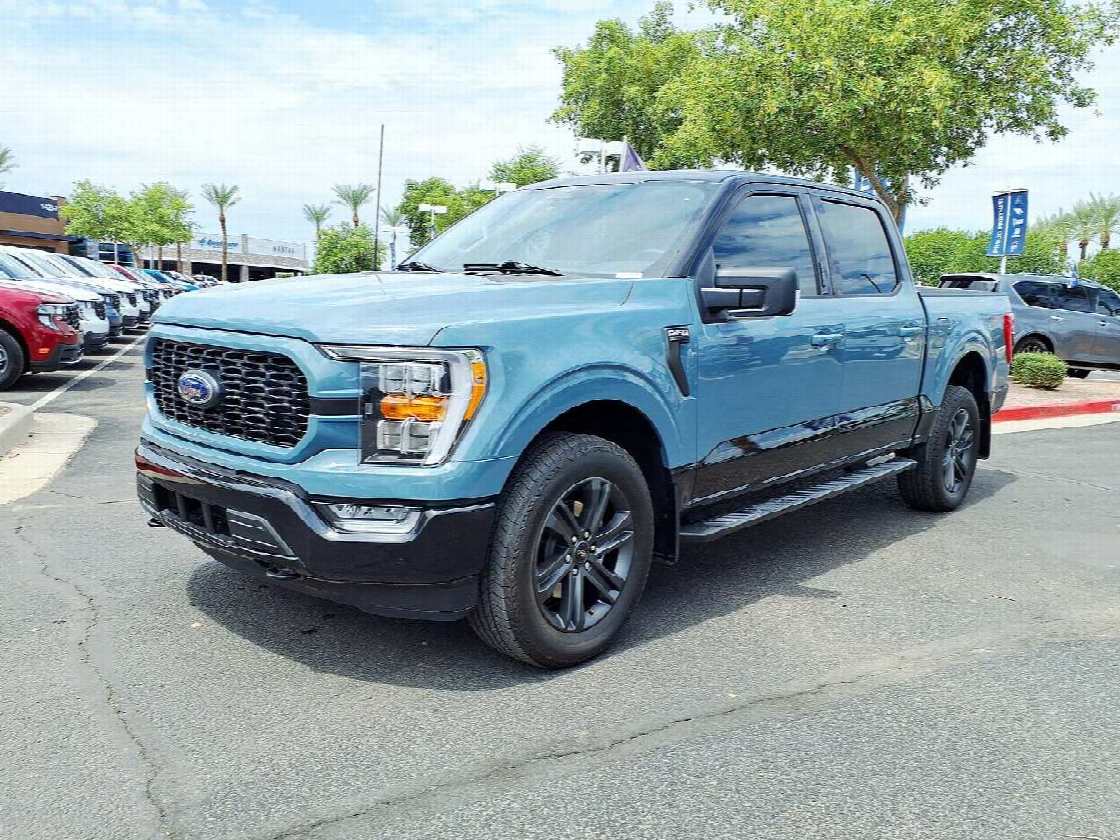
14th gen 2021–present
PowerBoost hybrid joins — hybrid-system codes on a full-size pickup.
- Body styles
- Pickup
- Platform
- Ford P702
- Engines
-
- 3.3 V6 — petrol · 216 kW (290 hp) · 359 Nm (265 lb-ft)
- 2.7 EcoBoost V6 — NANO · petrol · 242 kW (325 hp) · 542 Nm (400 lb-ft)
- 3.5 EcoBoost V6 — D35 · petrol · 298–336 kW (400–451 hp) · 678–691 Nm (500–510 lb-ft)
- 5.0 V8 — COYOTE · petrol · 298 kW (400 hp) · 556 Nm (410 lb-ft)
- 3.5 PowerBoost — hybrid · 321 kW (430 hp) · 773 Nm (570 lb-ft)
- 5.2 supercharged — petrol · 522–537 kW (700–720 hp) · 868 Nm (640 lb-ft) · 8-cylinder, US market 2023-2026
- 5.2 V8 Raptor R — petrol
- 3.0 turbo V6 — diesel · 186 kW (249 hp) · 597 Nm (440 lb-ft)
- 131.0 kWh electric — electric · 98.0 or 131.0kWh (usable/net for both) lithium-ion
- Transmissions
- 10-speed automatic
- Drivetrain
- Rear-wheel drive · Four-wheel drive
CAN data
Bus databases covering this vehicle, mirrored from the open-source opendbc project.
Service information
Information, not instruction
CarGeek is a reference, not a service manual. Its pages are written from public sources and from what other people have found, never from a manufacturer's own service information, so they can be wrong or incomplete for your particular vehicle. Some of what they describe carries real risk: high voltage, fuel under pressure, stored energy, hot and moving parts.
Have anything you intend to act on checked by a trained person against the manufacturer's own procedure for your vehicle. Nothing here replaces that procedure.
Posted about the Ford F-150
Be the first to write this up
Nothing posted about this yet. Whatever you found is worth writing down — even a dead end saves someone the same afternoon.
What makes one worth reading:
- The car — make, model, year and engine. The same fault behaves differently on each.
- What you measured, not only what you replaced.
- What actually fixed it — or that nothing did, which is worth knowing too.
Sign in or create an account to add what you found about Ford F-150.