Vehicle
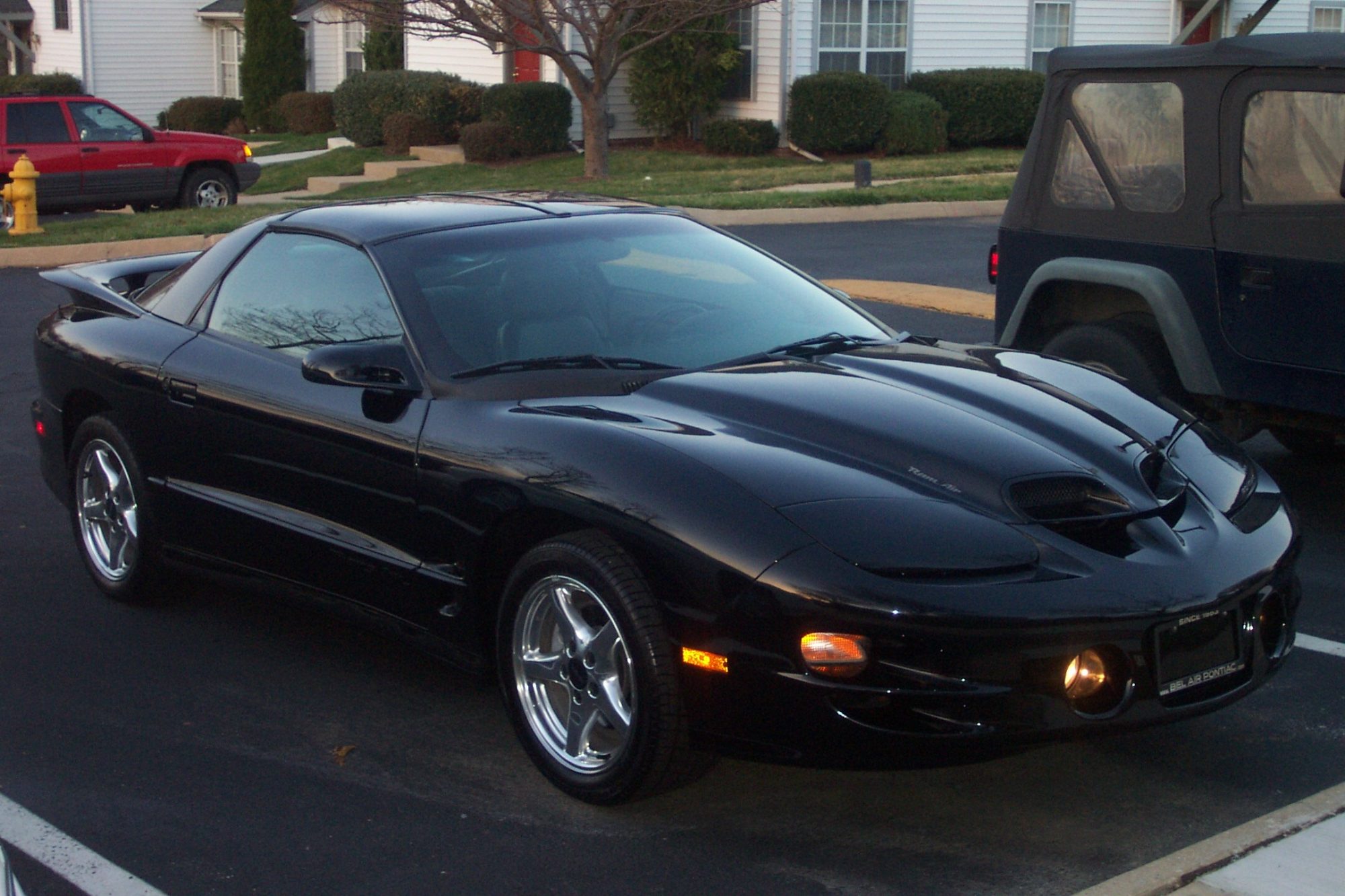
Pontiac Firebird
The F-body coupé built alongside the Chevrolet Camaro, and that is where its information lives — same platform, same engines, same transmissions, so Camaro data covers nearly all of it. The fourth-generation cars from 1993 are the ones still commonly met, and their recurring faults are electrical rather than mechanical: the optical distributor on the LT1 sits behind the water pump and fails when coolant seeps into it, producing a crank-no-start or an intermittent stall that reads as an ignition-module fault; and the VATS resistor-pellet key system on earlier cars degrades until the car refuses to start. The LS1 cars from 1998 drop both problems and share the Corvette's engine management.

Generations
-
Third generation 1982–1992
Carburetted and early throttle-body cars with VATS theft deterrent — a degraded key resistor is a common no-start.
- Body styles
- Coupé · Convertible
- Platform
- GM F-body
- Engines
-
- 2.5 four-cylinder — petrol · 67 kW (90 hp) · Iron Duke
- 2.8 V6 — petrol · 76–101 kW (102–135 hp)
- 5.0 V8 — petrol · 108–153 kW (145–205 hp)
- 5.7 V8 — petrol · L98
- 3.1 — petrol · 6-cylinder, US market 1990-1992
- Transmissions
- 5-speed manual · 4-speed automatic · 3-speed automatic · 4-speed manual
- Drivetrain
- Rear-wheel drive
-
Fourth generation 1993–2002
LT1 then LS1; the LT1's optical distributor fails on coolant ingress and reads as an ignition-module fault.
- Body styles
- Coupé · Convertible
- Platform
- GM F-body
- Engines
-
- 3.4 V6 — petrol
- 3.8 V6 — petrol · 149 kW (200 hp) · Series II L36
- 5.7 V8 — petrol · LT1
- 5.7 V8 — petrol · LS1
- Transmissions
- THM 4L60 4-speed automatic · THM 4L60E 4-speed automatic · Borg Warner T-5 5-speed manual · Borg Warner T56 6-speed manual
- Drivetrain
- Rear-wheel drive
Information, not instruction
CarGeek is a reference, not a service manual. Its pages are written from public sources and from what other people have found, never from a manufacturer's own service information, so they can be wrong or incomplete for your particular vehicle. Some of what they describe carries real risk: high voltage, fuel under pressure, stored energy, hot and moving parts.
Have anything you intend to act on checked by a trained person against the manufacturer's own procedure for your vehicle. Nothing here replaces that procedure.
Posted about the Pontiac Firebird
Be the first to write this up
Nothing posted about this yet. Whatever you found is worth writing down — even a dead end saves someone the same afternoon.
What makes one worth reading:
- The car — make, model, year and engine. The same fault behaves differently on each.
- What you measured, not only what you replaced.
- What actually fixed it — or that nothing did, which is worth knowing too.
Sign in or create an account to add what you found about Pontiac Firebird.