Vehicle
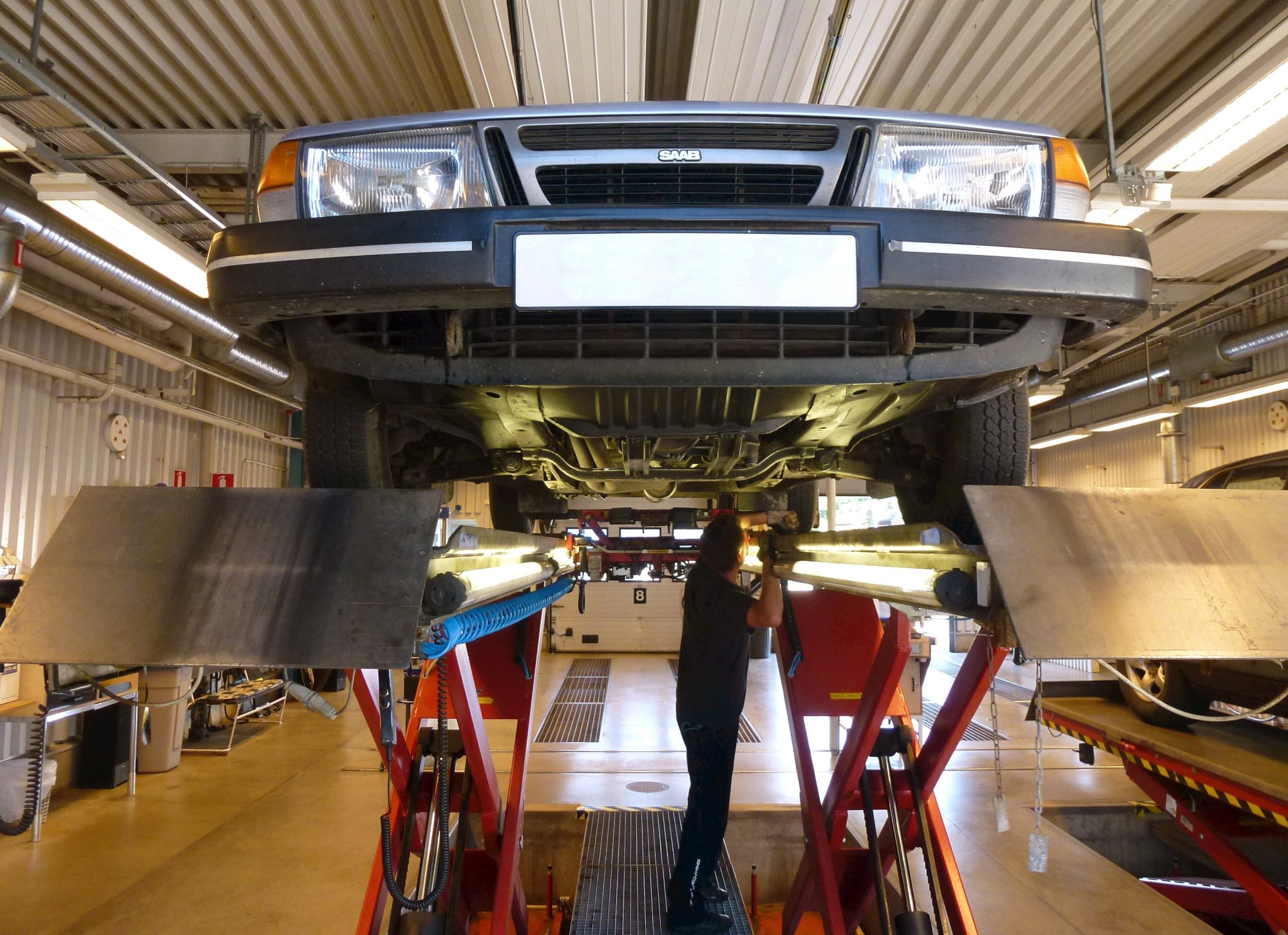
Saab 900
The car the brand is remembered for, and two unrelated vehicles under one name. The Classic 900 to 1993 is Saab's own design with the engine canted backwards and driving through a gearbox in the sump, which is an architecture nothing else in this catalogue shares and which makes gearbox work an engine-out job. The NG900 from 1994 is built on GM's Opel Vectra floorpan and is the direct ancestor of the 9-3. Establishing which one a car is decides everything that follows.

Generations
-
Classic 1978–1993
Saab's own design with the engine canted backwards over a gearbox in the sump — an architecture unlike anything else here, and the reason gearbox work means removing the engine.
- Body styles
- Hatchback · Sedan · Convertible
- Platform
- Saab 900
- Engines
-
- 2.0 — B201 · petrol · 74–87 kW (99–117 hp) · 162–167 Nm (119–123 lb-ft)
- 2.0 turbo — B202 · petrol · 107–129 kW (143–173 hp) · 202–273 Nm (149–201 lb-ft)
- 2.1 — B212 · petrol · 103 kW (138 hp) · 230 Nm (170 lb-ft)
- Transmissions
- 4-speed manual · 5-speed manual · 4-speed automatic · 4/5-speed manual · 3-speed Borg-Warner T-37 automatic
- Drivetrain
- Front-wheel drive
-
NG900 1994–1998
Built on the Opel Vectra floorpan and the direct ancestor of the 9-3 — a conventional transverse layout, sharing nothing structural with the Classic.
- Body styles
- Hatchback · Convertible
- Platform
- GM2900
- Engines
-
- 2.0 — B204 · petrol
- 2.3 — B234 · petrol
- 2.5 V6 — B258I · petrol
- Transmissions
- 4-speed automatic · 5-speed F25 manual · 5-speed Sensonic semi-automatic
- Drivetrain
- Front-wheel drive
Information, not instruction
CarGeek is a reference, not a service manual. Its pages are written from public sources and from what other people have found, never from a manufacturer's own service information, so they can be wrong or incomplete for your particular vehicle. Some of what they describe carries real risk: high voltage, fuel under pressure, stored energy, hot and moving parts.
Have anything you intend to act on checked by a trained person against the manufacturer's own procedure for your vehicle. Nothing here replaces that procedure.
Posted about the Saab 900
Be the first to write this up
Nothing posted about this yet. Whatever you found is worth writing down — even a dead end saves someone the same afternoon.
What makes one worth reading:
- The car — make, model, year and engine. The same fault behaves differently on each.
- What you measured, not only what you replaced.
- What actually fixed it — or that nothing did, which is worth knowing too.
Sign in or create an account to add what you found about Saab 900.