Vehicle
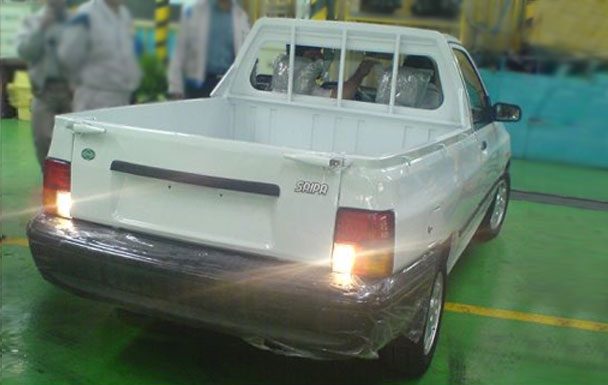
SAIPA 151
The Pride as a pickup, and one of the most numerous working vehicles on Iranian roads — which makes it the reference population for the whole Pride family at commercial mileages rather than domestic ones.
It is mechanically the saloon, with the same 1.3 four-cylinder single-camshaft engine and the same front-wheel-drive layout, so Pride knowledge applies almost entirely. What differs is duty: a load bed changes the rear suspension, the driveline loading and the service interval that actually gets observed, and wear rather than failure is the normal finding on an engine and gearbox designed for a light hatchback and used to carry weight.
It gets its own page rather than being folded into the Pride for the same reason the pickup versions of every other car here do: the vehicle a reader is standing in front of is a pickup, its running population is commercial, and its complaints are not the saloon's. Bi-fuel conversion is very common, and on a converted car a lean or fuel-trim code says nothing about the fuel the engine was not running on.

Generations
-
First generation 2011–present
The Pride with a load bed — the same 1.3 and the same layout, at commercial mileages and commercial duty.
- Body styles
- Pickup
- Platform
- Kia Pride
- Engines
-
- 1.3 SOHC — petrol · 48–52 kW (65–70 hp) · 105–110 Nm (77–81 lb-ft)
- 1.3 bi-fuel — CNG bi-fuel · very widely converted — the gas side must be considered alongside the petrol one. No output is written for the same reason as the Pride saloon's bi-fuel row: car.ir's bi-fuel Pride pages give 105 Nm at 3,000 against 103 at 2,500–2,800 on the petrol trims, which is a higher figure at a higher peak speed and therefore not a gas-mode rating, and khodrobank has no bi-fuel Pride page either — three of its 636 pages are bi-fuel and all three are a Samand or a Peugeot
- Transmissions
- 5-speed manual
- Drivetrain
- Front-wheel drive
Service information
Information, not instruction
CarGeek is a reference, not a service manual. Its pages are written from public sources and from what other people have found, never from a manufacturer's own service information, so they can be wrong or incomplete for your particular vehicle. Some of what they describe carries real risk: high voltage, fuel under pressure, stored energy, hot and moving parts.
Have anything you intend to act on checked by a trained person against the manufacturer's own procedure for your vehicle. Nothing here replaces that procedure.
Posted about the SAIPA 151
Be the first to write this up
Nothing posted about this yet. Whatever you found is worth writing down — even a dead end saves someone the same afternoon.
What makes one worth reading:
- The car — make, model, year and engine. The same fault behaves differently on each.
- What you measured, not only what you replaced.
- What actually fixed it — or that nothing did, which is worth knowing too.
Sign in or create an account to add what you found about SAIPA 151.