Vehículo
SAIPA 151
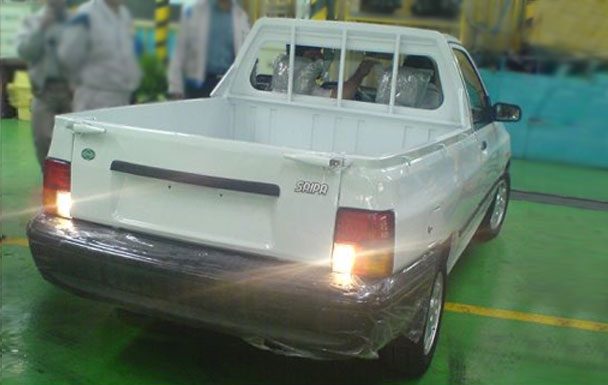
The Pride as a pickup, and one of the most numerous working vehicles on Iranian roads — which makes it the reference population for the whole Pride family at commercial mileages rather than domestic ones.
It is mechanically the saloon, with the same 1.3 four-cylinder single-camshaft engine and the same front-wheel-drive layout, so Pride knowledge applies almost entirely. What differs is duty: a load bed changes the rear suspension, the driveline loading and the service interval that actually gets observed, and wear rather than failure is the normal finding on an engine and gearbox designed for a light hatchback and used to carry weight.
It gets its own page rather than being folded into the Pride for the same reason the pickup versions of every other car here do: the vehicle a reader is standing in front of is a pickup, its running population is commercial, and its complaints are not the saloon's. Bi-fuel conversion is very common, and on a converted car a lean or fuel-trim code says nothing about the fuel the engine was not running on.

Generaciones
-
First generation 2011–present
The Pride with a load bed — the same 1.3 and the same layout, at commercial mileages and commercial duty.
- Tipos de carrocería
- Pickup
- Plataforma
- Kia Pride
- Motores
-
- 1.3 SOHC — petrol · 48–52 kW (65–70 hp) · 105–110 Nm (77–81 lb-ft)
- 1.3 bi-fuel — CNG bi-fuel · very widely converted — the gas side must be considered alongside the petrol one. No output is written for the same reason as the Pride saloon's bi-fuel row: car.ir's bi-fuel Pride pages give 105 Nm at 3,000 against 103 at 2,500–2,800 on the petrol trims, which is a higher figure at a higher peak speed and therefore not a gas-mode rating, and khodrobank has no bi-fuel Pride page either — three of its 636 pages are bi-fuel and all three are a Samand or a Peugeot
- Transmisiones
- 5-speed manual
- Tracción
- Front-wheel drive
Información de servicio
Información, no instrucciones
CarGeek es una obra de referencia, no un manual de taller. Sus páginas se escriben a partir de fuentes públicas y de lo que otras personas han comprobado, nunca a partir de la documentación de servicio del fabricante, de modo que pueden ser incorrectas o incompletas para su vehículo concreto. Parte de lo que describen entraña un riesgo real: alta tensión, combustible a presión, energía acumulada y piezas calientes o en movimiento.
Antes de actuar sobre cualquier indicación, hágala verificar por una persona con formación técnica siguiendo el procedimiento propio del fabricante para su vehículo. Nada de lo que hay aquí sustituye ese procedimiento.
Publicaciones sobre el SAIPA 151
Sé el primero en documentarlo
Todavía no se ha publicado nada sobre esto. Todo lo que haya encontrado vale la pena anotarlo — incluso un callejón sin salida le ahorra a alguien esa misma tarde.
Lo que hace que valga la pena leerlo:
- El coche — marca, modelo, año y motor. La misma avería se comporta distinto en cada uno.
- Lo que mediste, no solo lo que cambiaste.
- Qué lo solucionó de verdad — o que nada lo hizo, que también conviene saber.
Iniciar sesión o crear una cuenta para agregar lo que encontró sobre SAIPA 151.