Vehicle
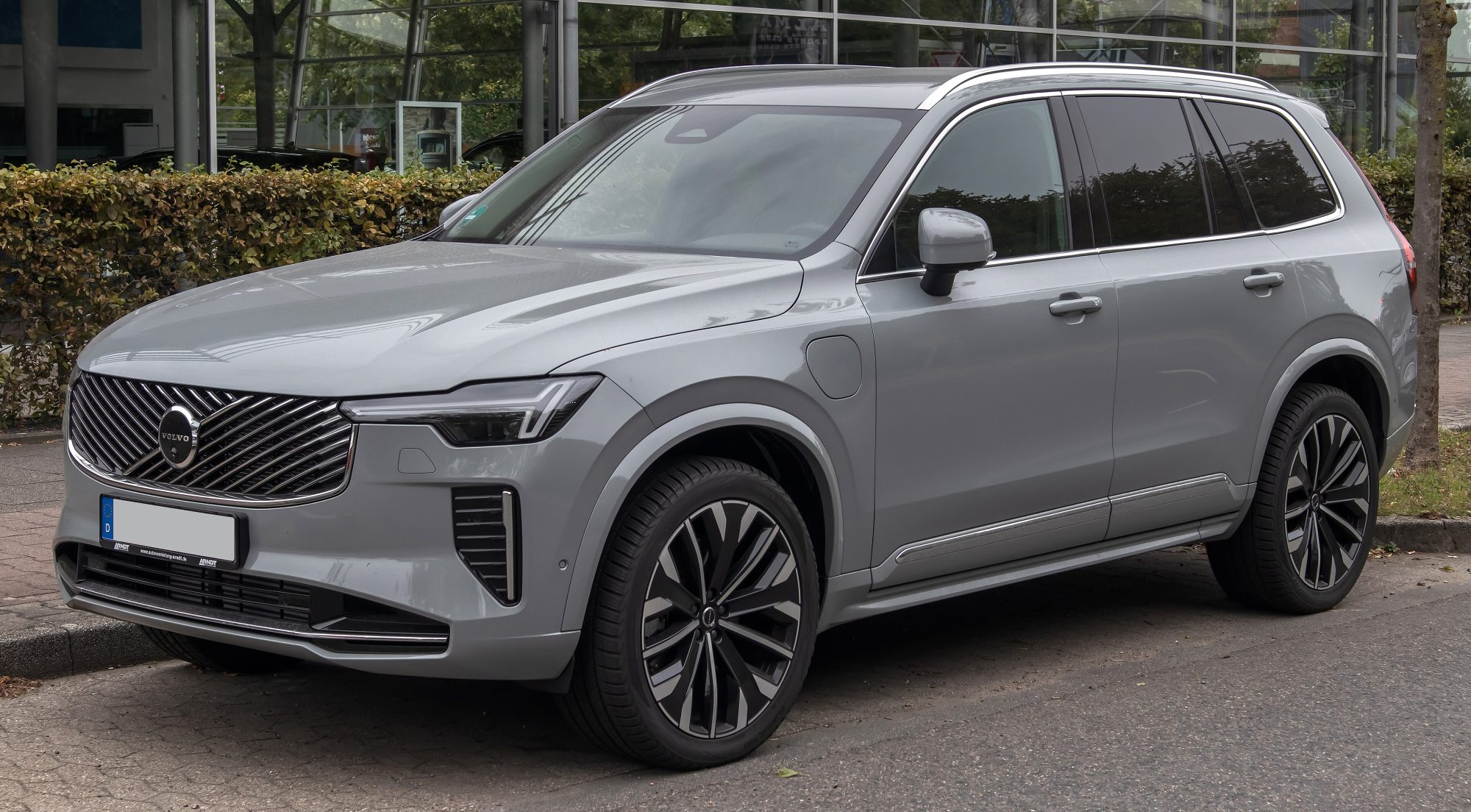
Volvo XC90
The large SUV, and the Volvo where the make's two eras are furthest apart. The first generation is a five- and six-cylinder car of the Ford period; the second runs Volvo's own Drive-E family, in which every engine is a two-litre four-cylinder however much power it makes — turbocharged, supercharged-and-turbocharged, or turbocharged with an electric motor on the rear axle. A T8 badge is a plug-in hybrid, so the hybrid and charging blocks apply in full.
_%E2%80%93_f_03102025.jpg)
Generations
-
P2 2002–2014
Five-cylinder petrols and the D5 diesel; a very long run.
- B4204S / B6304
- B8444S 4.4 L
- SI6 (B6324) 3.2 L
- T5 / T6 / D4 / D5 (badges, not engines)
- Volvo five-cylinder diesel (2.0 and 2.4) 2.4 L
- Volvo five-cylinder petrol (B5254)
- Body styles
- SUV
- Platform
- Volvo P2
- Engines
-
- 2.5T five-cylinder — petrol
- 2.9 T6 straight-six — petrol
- 3.2 straight-six — SI6 · petrol · 179 kW (240 hp) · 320 Nm (236 lb-ft)
- 4.4 V8 — B8444S · petrol · 232 kW (311 hp) · 440 Nm (325 lb-ft) · Yamaha-built
- 2.4 D5 five-cylinder — D5244T4 · diesel · 120–155 kW (161–208 hp) · 400 Nm (295 lb-ft)
- 2.5 turbo five-cylinder — B5254T2 · petrol · 154 kW (207 hp) · 320 Nm (236 lb-ft)
- 2.9 turbo straight-six — B6294T · petrol · 200 kW (268 hp) · 380 Nm (280 lb-ft)
- Transmissions
- 5-speed manual · 5-speed automatic · 6-speed Volvo M66 manual · 4-speed GM 4T65 AWD automatic · 6-speed Aisin TF-80SC automatic
- Drivetrain
- Front-wheel drive · Four-wheel drive
-
SPA 2014–present
Drive-E throughout, including the T8 plug-in hybrid.
- T5 / T6 / D4 / D5 (badges, not engines)
- T8D 1.8 L
- VEA diesel (D4204T) 2.0 L
- VEA petrol (B4204T) 2.0 L
- Body styles
- SUV
- Platform
- SPA
- Engines
-
- T5 2.0 — petrol
- T6 2.0 — petrol · turbocharged and supercharged
- T8 2.0 — plug-in hybrid · electric rear axle with no mechanical link to the front
- D5 2.0 — diesel
- Transmissions
- 8-speed automatic
- Drivetrain
- Four-wheel drive
Information, not instruction
CarGeek is a reference, not a service manual. Its pages are written from public sources and from what other people have found, never from a manufacturer's own service information, so they can be wrong or incomplete for your particular vehicle. Some of what they describe carries real risk: high voltage, fuel under pressure, stored energy, hot and moving parts.
Have anything you intend to act on checked by a trained person against the manufacturer's own procedure for your vehicle. Nothing here replaces that procedure.
Posted about the Volvo XC90
Be the first to write this up
Nothing posted about this yet. Whatever you found is worth writing down — even a dead end saves someone the same afternoon.
What makes one worth reading:
- The car — make, model, year and engine. The same fault behaves differently on each.
- What you measured, not only what you replaced.
- What actually fixed it — or that nothing did, which is worth knowing too.
Sign in or create an account to add what you found about Volvo XC90.