Vehículo
Toyota 4Runner
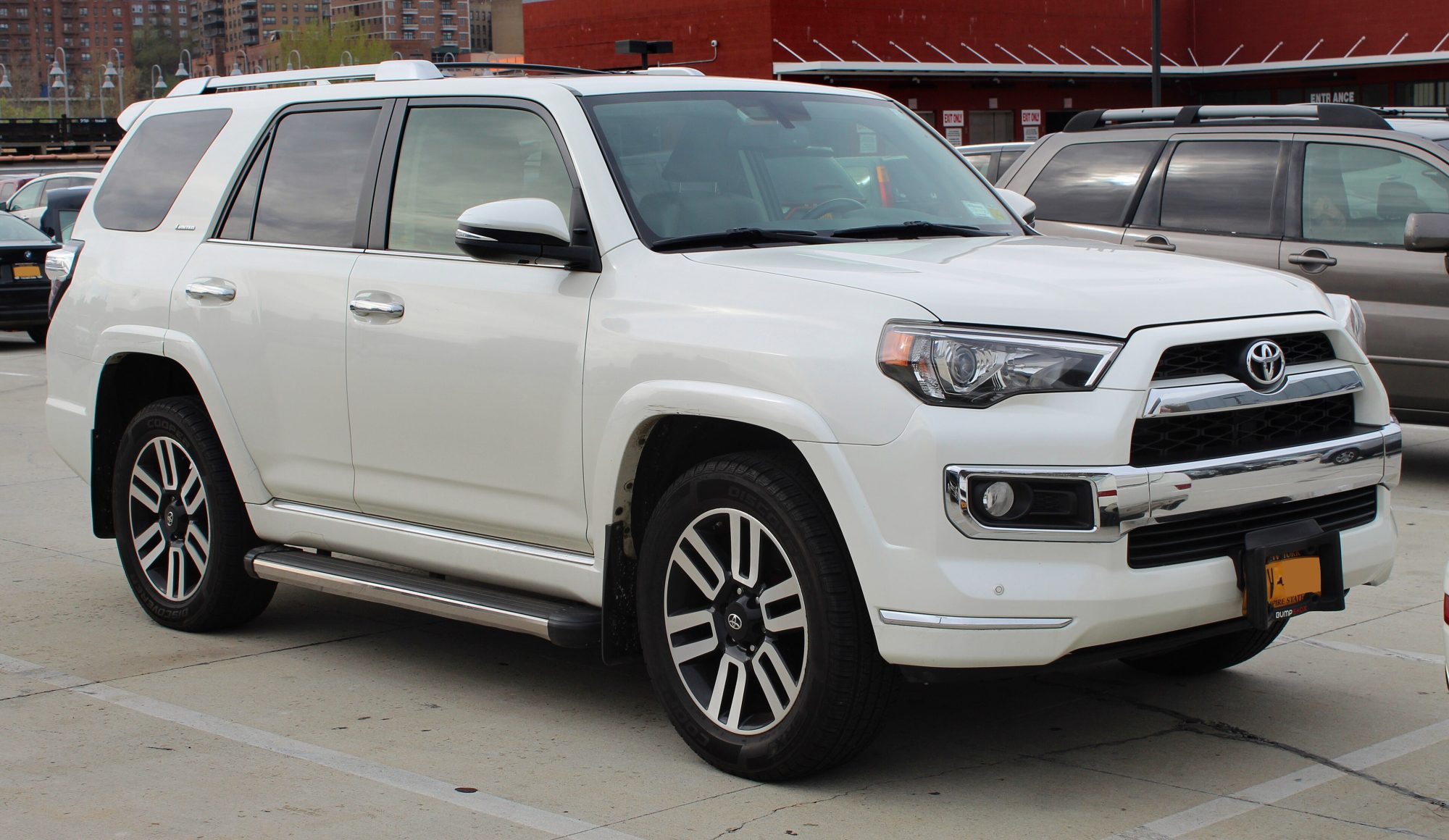
The body-on-frame SUV, sold in Japan as the Hilux Surf — search both names, because the Japanese-market Surf carries a diesel the North American 4Runner never had. The fifth generation ran essentially unchanged from 2009 to 2024 on one engine, which makes it unusually well understood: almost every fault on one has been seen many times. Four-wheel-drive versions split between part-time and full-time systems with a locking centre differential, and which one a car has changes what a driveline code means.
_4.20.19.jpg)
Generaciones
-
First generation (N60) 1984–1989
A short-bed Hilux with the cab rear wall removed and a bolt-on fibreglass top; mechanically it is the pickup. The 2.4 petrol runs either the carburetted 22R or the injected 22R-E, and which one a car has decides every fuel-system diagnosis on it.
- Tipos de carrocería
- SUV
- Plataforma
- Toyota Hilux
- Motores
-
- 2.0 — 3Y-EU · petrol
- 2.2 — 4Y-C · petrol
- 2.4 carburettor — 22R · petrol · 174–190 Nm (128–140 lb-ft)
- 2.4 four-cylinder — 22R-E · petrol · 78–84 kW (105–113 hp) · 185–190 Nm (136–140 lb-ft)
- 2.4 turbo — 22R-TE · petrol · 101 kW (135 hp) · 234 Nm (173 lb-ft)
- 3.0 V6 — 3VZ-E · petrol · 244–245 Nm (180–181 lb-ft) · from 1988
- 2.4 — 2L · diesel · 1984–1989
- 2.4 turbo diesel — 2L-T · diesel · 1985–1989
- Transmisiones
- 5-speed manual · 4-speed automatic
- Tracción
- Rear-wheel drive · Part-time four-wheel drive with low range
-
Second generation (N120/N130) 1989–1995
A full steel body on the Hilux frame rather than a cap on a pickup bed, and the first five-door. The 3VZ-E V6 of these years has a well-known head-gasket history the later 5VZ does not, and the Japanese-market 1KZ diesels were never sold where the North American car went.
- Tipos de carrocería
- SUV
- Plataforma
- Toyota Hilux
- Motores
-
- 2.0 — petrol · YN130G, 1989–1991
- 2.2 — 4Y · petrol
- 2.4 four-cylinder — 22R-E · petrol · 78–84 kW (105–113 hp) · 185–190 Nm (136–140 lb-ft)
- 3.0 V6 — 3VZ-E · petrol · 244–245 Nm (180–181 lb-ft)
- 2.4 turbo diesel — 2L-TE · diesel · 71–72 kW (95–97 hp) · 221–241 Nm (163–178 lb-ft) · LN130G and LN130W
- 2.8 — 3L · diesel · 64–68 kW (86–91 hp) · 188 Nm (139 lb-ft) · LN131V
- 3.0 turbo diesel — 1KZ-T · diesel · 92 kW (123 hp) · 287–296 Nm (212–218 lb-ft) · KZN130; mechanical injection pump
- 3.0 turbo diesel — 1KZ-TE · diesel · 95 kW (127 hp) · 287–289 Nm (212–213 lb-ft) · KZN130; from 1993
- Transmisiones
- 5-speed manual · 4-speed A340H automatic
- Tracción
- Rear-wheel drive · Part-time four-wheel drive with low range
-
Third generation (N180) 1995–2002
An all-new body on an all-new chassis, sharing engines and gearboxes with the Tacoma and its frame with the Land Cruiser Prado. The 5VZ-FE leaves the 3VZ-E head-gasket reputation behind, and in Japan the indirect-injection 1KZ-TE gives way to the common-rail 1KD-FTV in 2000.
- Tipos de carrocería
- SUV
- Plataforma
- Toyota Hilux
- Motores
-
- 2.7 — 3RZ-FE · petrol · 223–240 Nm (164–177 lb-ft) · 4-cylinder; Japan 1995–2002, North America 1996–2000
- 3.4 V6 — 5VZ-FE · petrol · 132–142 kW (177–190 hp) · 294–299 Nm (217–221 lb-ft)
- 3.0 turbo diesel — 1KZ-TE · diesel · 95 kW (127 hp) · 287–289 Nm (212–213 lb-ft) · KZN185; Japan, 1995–2000
- 3.0 turbo — 1KD-FTV · diesel · 100–140 kW (134–188 hp) · 280–420 Nm (207–310 lb-ft) · KDN185; Japan, 2000–2002
- Transmisiones
- 5-speed manual · 4-speed A340F automatic
- Tracción
- Rear-wheel drive · Part-time four-wheel drive with low range
-
Fourth generation 2002–2009
The V8 era, and the generation where the air suspension on higher trims becomes its own fault population.
- Tipos de carrocería
- SUV
- Plataforma
- Toyota N
- Motores
-
- 4.0 V6 — 1GR-FE · petrol · 177–199 kW (237–267 hp) · 361–380 Nm (266–280 lb-ft)
- 4.7 V8 — 2UZ-FE · petrol · 170–212 kW (228–284 hp) · 410–448 Nm (302–330 lb-ft)
- 2.7 — 3RZ-FE · petrol · 223–240 Nm (164–177 lb-ft) · RZN210/215; Japan, 2002–2004
- 2.7 — 2TR-FE · petrol · 241–246 Nm (178–181 lb-ft) · TRN210/215; Japan, 2004–2009
- 3.4 V6 — 5VZ-FE · petrol · 132–142 kW (177–190 hp) · 294–299 Nm (217–221 lb-ft) · VZN210/215; Japan, 2002–2005
- 3.0 turbo — 1KD-FTV · diesel · 100–140 kW (134–188 hp) · 280–420 Nm (207–310 lb-ft) · KDN215; Japan, 2002–2005
- Transmisiones
- 4-speed automatic · 5-speed automatic · 4-speed A3xx automatic · 5-speed A7xx automatic
- Tracción
- Rear-wheel drive · Part-time four-wheel drive with low range
-
Fifth generation 2009–2024
Fifteen years on one engine — the fault population is small and thoroughly documented, which is rare.
- Tipos de carrocería
- SUV
- Plataforma
- Toyota N
- Motores
-
- 4.0 V6 — 1GR-FE · petrol · 177–199 kW (237–267 hp) · 361–380 Nm (266–280 lb-ft)
- 2.7 — 2TR-FE · petrol · 241–246 Nm (178–181 lb-ft) · TRN280; 2009–2010
- Transmisiones
- 5-speed automatic · 4-speed automatic
- Tracción
- Rear-wheel drive · Part-time four-wheel drive with low range
Información de servicio
Información, no instrucciones
CarGeek es una obra de referencia, no un manual de taller. Sus páginas se escriben a partir de fuentes públicas y de lo que otras personas han comprobado, nunca a partir de la documentación de servicio del fabricante, de modo que pueden ser incorrectas o incompletas para su vehículo concreto. Parte de lo que describen entraña un riesgo real: alta tensión, combustible a presión, energía acumulada y piezas calientes o en movimiento.
Antes de actuar sobre cualquier indicación, hágala verificar por una persona con formación técnica siguiendo el procedimiento propio del fabricante para su vehículo. Nada de lo que hay aquí sustituye ese procedimiento.
Publicaciones sobre el Toyota 4Runner
Sé el primero en documentarlo
Todavía no se ha publicado nada sobre esto. Todo lo que haya encontrado vale la pena anotarlo — incluso un callejón sin salida le ahorra a alguien esa misma tarde.
Lo que hace que valga la pena leerlo:
- El coche — marca, modelo, año y motor. La misma avería se comporta distinto en cada uno.
- Lo que mediste, no solo lo que cambiaste.
- Qué lo solucionó de verdad — o que nada lo hizo, que también conviene saber.
Iniciar sesión o crear una cuenta para agregar lo que encontró sobre Toyota 4Runner.