Vehicle
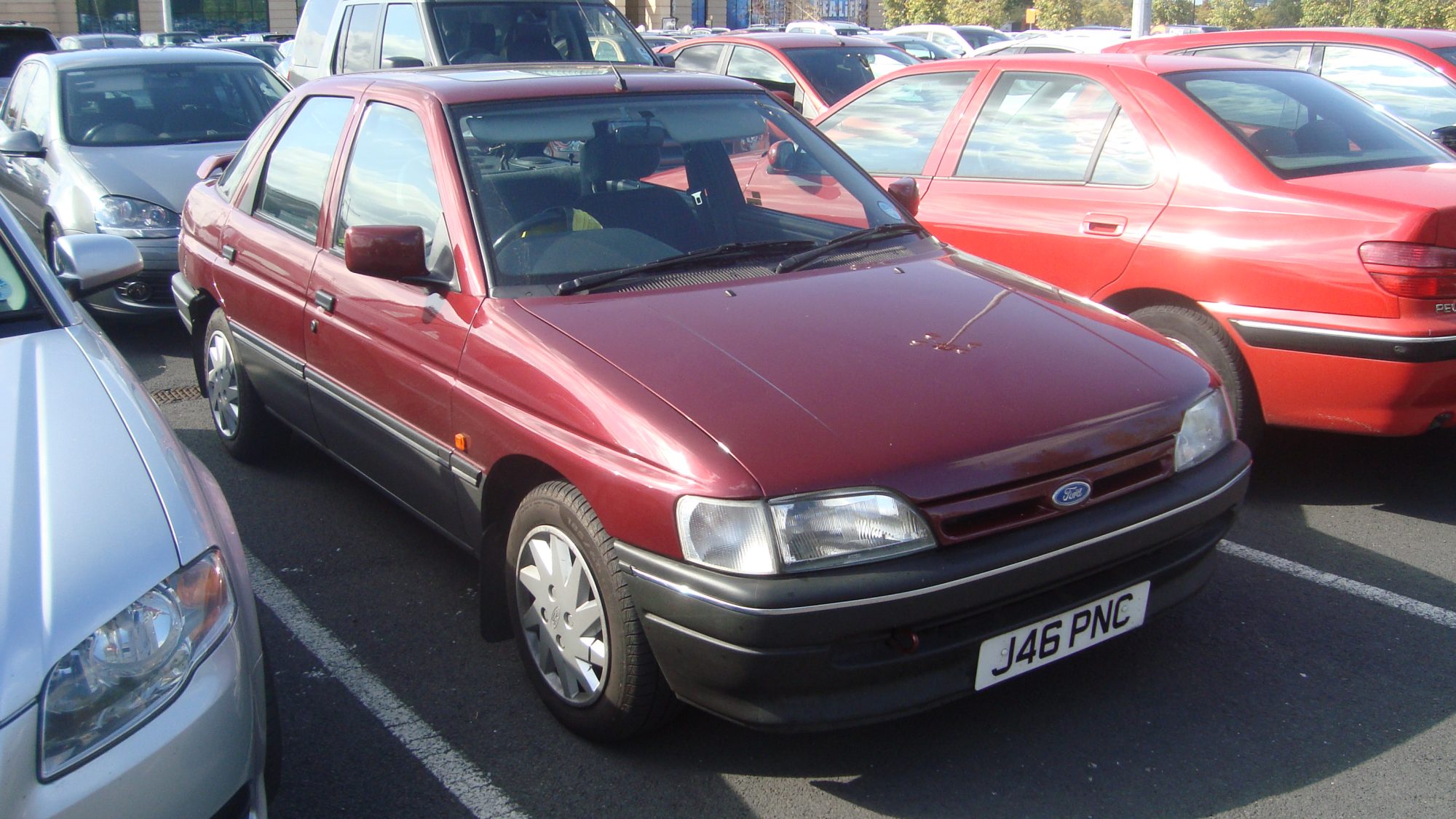
Ford Escort
For two decades this was Ford's volume car in Europe, and a great many are still running with CFI and early EEC-IV engine management — which matters because it sits right at the boundary of what a generic scan tool can reach. The pre-1996 cars are not OBD-II and need Ford's own protocol; the later Zetec and Endura cars are, and read normally. The recurring items are the CVH engine's cam wear and hydraulic tappet noise, corrosion at the earth points behind the battery tray that produces unrelated-looking sensor faults, and on the diesel Enduras a lift pump that fails quietly. The Orion is the saloon version and shares everything.
.jpg)
Generations
-
Third and fourth generation 1980–1990
The CVH era, largely carburetted and pre-OBD — a scan tool has little to read on most of these.
- Body styles
- Hatchback · Estate · Sedan
- Platform
- Ford Escort
- Engines
-
- 1.3 CVH — petrol
- 1.6 CVH — petrol
- 1.8 diesel — diesel
- 1.9 — petrol · 4-cylinder, US market 1985-1990
- 2.0 — diesel · 4-cylinder, US market 1984-1987
- 1.1 — petrol
- 1.6 turbo — petrol
- 1.6 — diesel · 1984–1986
- 1.4 — petrol
- 1.0 — petrol
- 1.8 — AP1800 · petrol
- Transmissions
- 3-speed automatic · 4-speed BC4 manual · 5-speed BC5 manual · 3-speed ATX automatic
- Drivetrain
- Front-wheel drive
-
Fifth generation 1990–1995
CVH and early Zetec engines with pre-OBD-II Ford management — a generic tool will not reach most of it.
- Body styles
- Hatchback · Sedan · Estate · Convertible · Van
- Platform
- Ford Escort
- Engines
-
- 1.3 CVH — petrol
- 1.4 CVH — petrol
- 1.6 Zetec — petrol · 65 kW (87 hp)
- 1.8 Zetec — petrol
- 1.8 Endura-DE — diesel
- Transmissions
- 4-speed automatic · 5-speed Ferguson MT-75 manual
- Drivetrain
- Front-wheel drive · Four-wheel drive
-
Sixth generation 1995–2002
The facelifted car, OBD-II compliant from 1996; earth corrosion behind the battery tray causes sensor faults that look unrelated.
- Body styles
- Hatchback · Sedan · Estate · Van
- Platform
- Ford Escort
- Engines
-
- 1.3 Endura-E — petrol
- 1.6 Zetec-E — petrol
- 1.8 Zetec-E — petrol
- 1.8 Endura-DI — diesel
- 2.0 — petrol · 4-cylinder, US market 1997-2002
- 1.4 — petrol
- Transmissions
- 5-speed manual · 4-speed automatic · 3-speed automatic
- Drivetrain
- Front-wheel drive
Service information
Information, not instruction
CarGeek is a reference, not a service manual. Its pages are written from public sources and from what other people have found, never from a manufacturer's own service information, so they can be wrong or incomplete for your particular vehicle. Some of what they describe carries real risk: high voltage, fuel under pressure, stored energy, hot and moving parts.
Have anything you intend to act on checked by a trained person against the manufacturer's own procedure for your vehicle. Nothing here replaces that procedure.
Posted about the Ford Escort
Be the first to write this up
Nothing posted about this yet. Whatever you found is worth writing down — even a dead end saves someone the same afternoon.
What makes one worth reading:
- The car — make, model, year and engine. The same fault behaves differently on each.
- What you measured, not only what you replaced.
- What actually fixed it — or that nothing did, which is worth knowing too.
Sign in or create an account to add what you found about Ford Escort.