Vehicle
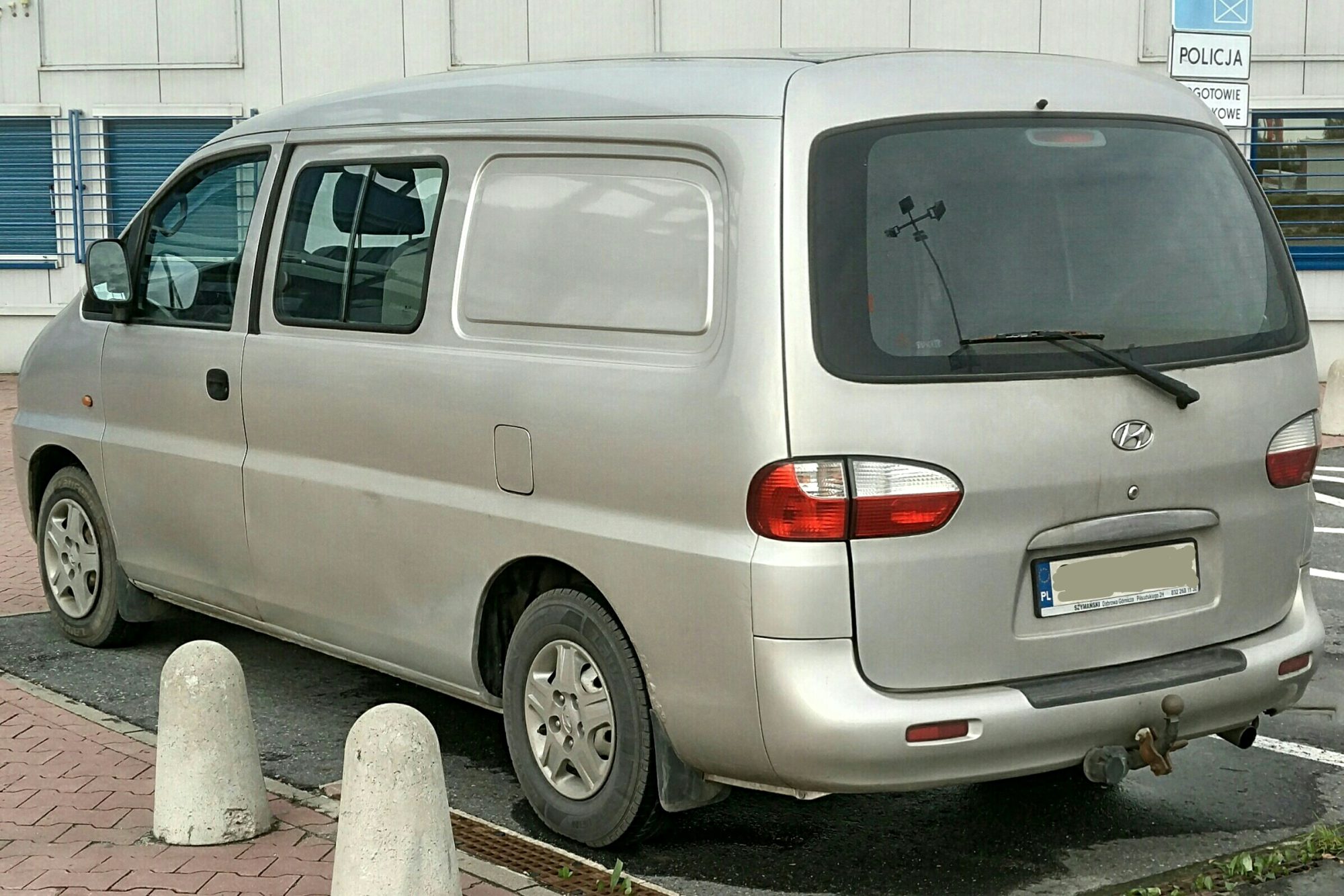
Hyundai H-1
The one-tonne van and minibus, sold as Starex, i800, iLoad and iMax depending on market — all the same vehicle, which is worth knowing because service information is scattered across those names. Nearly all working examples are diesel, and the 2.5 CRDi is the engine to understand: the earlier D4CB with a variable-geometry turbocharger whose vane mechanism sticks with soot and sets underboost or overboost codes long before it makes a noise, and injectors whose copper washers leak combustion gases into the head and produce a rough cold idle. The particulate filter fitted on later markets regenerates poorly on the short urban runs these vans usually do, so a soot-load code is often a duty-cycle problem rather than a component one.
.jpg)
Generations
-
First generation 1997–2007
The original Starex; 2.5 diesel with mechanical and early common-rail injection depending on market.
- Body styles
- Van · Minibus
- Platform
- Hyundai H-1
- Engines
-
- 2.4 petrol — petrol
- 2.5 diesel — D4BH · diesel
- 2.5 CRDi — D4CB · diesel
- 3.0 V6 — petrol
- 2.5 — D4BF · diesel
- 2.6 — D4BB · diesel
- Transmissions
- 5-speed manual · 4-speed automatic · 6-speed manual
- Drivetrain
- Rear-wheel drive · Four-wheel drive
-
Second generation (TQ) 2007–present
The Grand Starex and i800; the D4CB's variable-geometry turbo sticking with soot is the recurring boost fault.
- Body styles
- Van · Minibus
- Platform
- Hyundai TQ
- Engines
-
- 2.4 petrol — petrol · Theta
- 2.5 CRDi — D4CB · diesel · 85–125 kW (114–168 hp)
- 2.2 CRDi — D4HB · diesel
- 2.5 — D4BH · diesel · 85–125 kW (114–168 hp)
- Transmissions
- 5-speed manual · 6-speed manual · 4-speed automatic · 5-speed automatic · 4/5-speed automatic
- Drivetrain
- Rear-wheel drive
Service information
Information, not instruction
CarGeek is a reference, not a service manual. Its pages are written from public sources and from what other people have found, never from a manufacturer's own service information, so they can be wrong or incomplete for your particular vehicle. Some of what they describe carries real risk: high voltage, fuel under pressure, stored energy, hot and moving parts.
Have anything you intend to act on checked by a trained person against the manufacturer's own procedure for your vehicle. Nothing here replaces that procedure.
Posted about the Hyundai H-1
Be the first to write this up
Nothing posted about this yet. Whatever you found is worth writing down — even a dead end saves someone the same afternoon.
What makes one worth reading:
- The car — make, model, year and engine. The same fault behaves differently on each.
- What you measured, not only what you replaced.
- What actually fixed it — or that nothing did, which is worth knowing too.
Sign in or create an account to add what you found about Hyundai H-1.