Vehicle
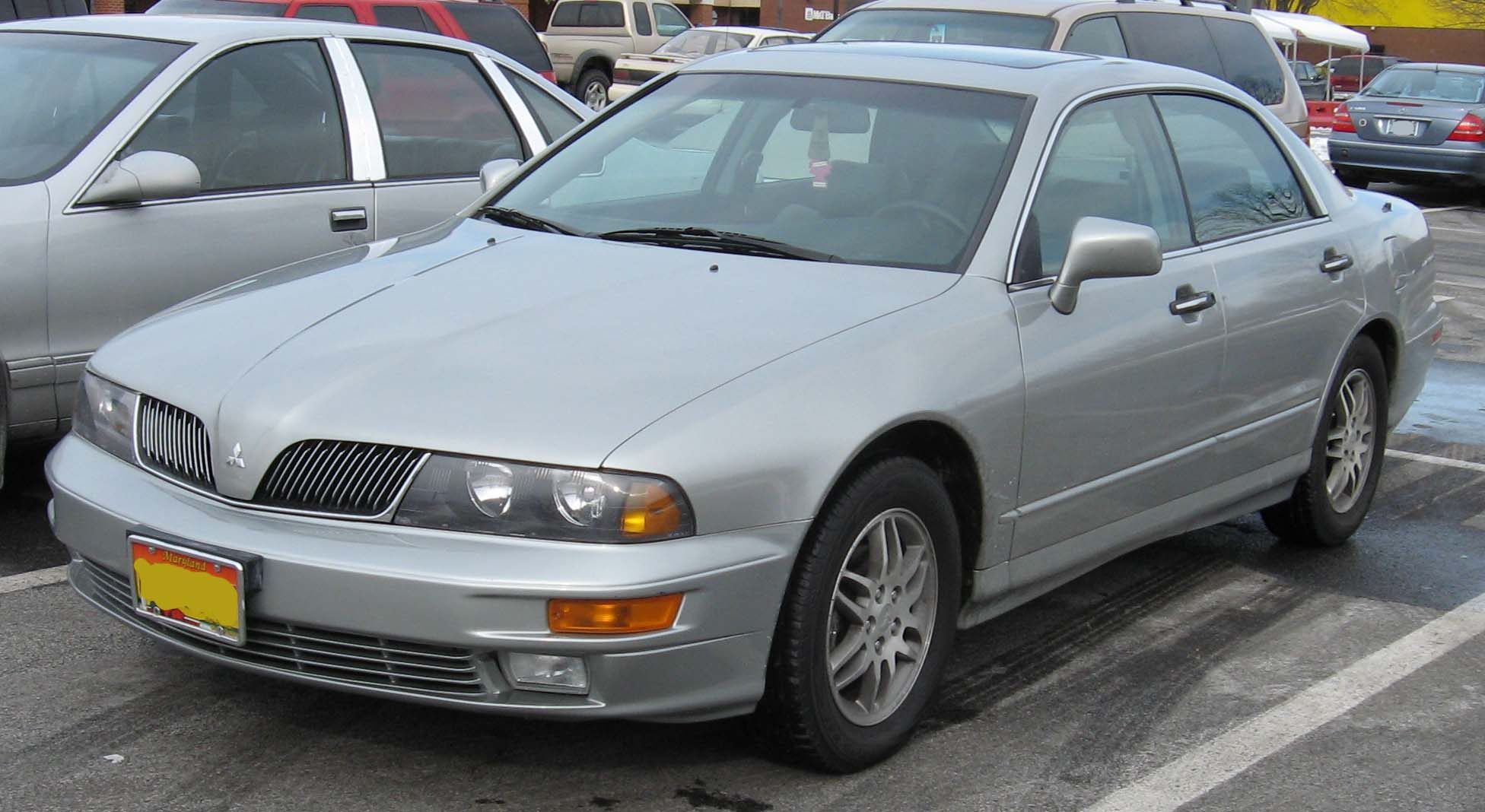
Mitsubishi Diamante
Mitsubishi's full-size front-drive saloon, sold as Sigma in Europe and built from 1997 in Australia on the Magna's body — which is the fact that splits the nameplate in two: an early Diamante is a Japanese-built car and a late one is an Australian Magna with a different nose, and their parts catalogues diverge. Both run the 6G7 V6 family, so the engine documentation is shared with the Pajero, the Galant and the 3000GT. Its four-speed automatic and the front-suspension bushes are the wear items that dominate its service history.

Generations
-
First generation 1990–1996
Japanese-built, and the version with the optional four-wheel steering and electronically controlled suspension.
- Body styles
- Sedan · Estate
- Platform
- Mitsubishi F
- Engines
-
- 3.0 V6 — 6G72 · petrol · 130–151 kW (175–202 hp) · 233–304 Nm (172–224 lb-ft)
- 2.0 V6 — 6A12 · petrol · Japan
- 2.5 V6 — 6G73 · petrol · 221–222 Nm (163–164 lb-ft)
- 2.0 V6 — 6G71 · petrol · 88–92 kW (118–123 hp) · 172 Nm (127 lb-ft) · F11A
- Transmissions
- 4-speed automatic · 5-speed manual · 4-speed INVECS automatic
- Drivetrain
- Front-wheel drive · All-wheel drive
-
Second generation 1995–2005
Built in Adelaide from 1997 on the Magna floorpan. North American cars are all 3.5 V6 automatics.
- Body styles
- Sedan
- Platform
- Mitsubishi Magna
- Engines
-
- 3.0 V6 — 6G72 · petrol · 145 kW (195 hp) · 233–304 Nm (172–224 lb-ft)
- 3.5 V6 — 6G74 · petrol · 153–157 kW (205–210 hp) · 300–333 Nm (221–246 lb-ft)
- 2.5 V6 — 6A13 · petrol
- 2.5 V6 — 6G73 · petrol
- Transmissions
- 4-speed automatic · 5-speed automatic · 4-speed INVECS II automatic · 4-speed Tiptronic automatic · 5-speed Tiptronic automatic · 5-speed manual
- Drivetrain
- Front-wheel drive
Information, not instruction
CarGeek is a reference, not a service manual. Its pages are written from public sources and from what other people have found, never from a manufacturer's own service information, so they can be wrong or incomplete for your particular vehicle. Some of what they describe carries real risk: high voltage, fuel under pressure, stored energy, hot and moving parts.
Have anything you intend to act on checked by a trained person against the manufacturer's own procedure for your vehicle. Nothing here replaces that procedure.
Posted about the Mitsubishi Diamante
Be the first to write this up
Nothing posted about this yet. Whatever you found is worth writing down — even a dead end saves someone the same afternoon.
What makes one worth reading:
- The car — make, model, year and engine. The same fault behaves differently on each.
- What you measured, not only what you replaced.
- What actually fixed it — or that nothing did, which is worth knowing too.
Sign in or create an account to add what you found about Mitsubishi Diamante.