Vehicle
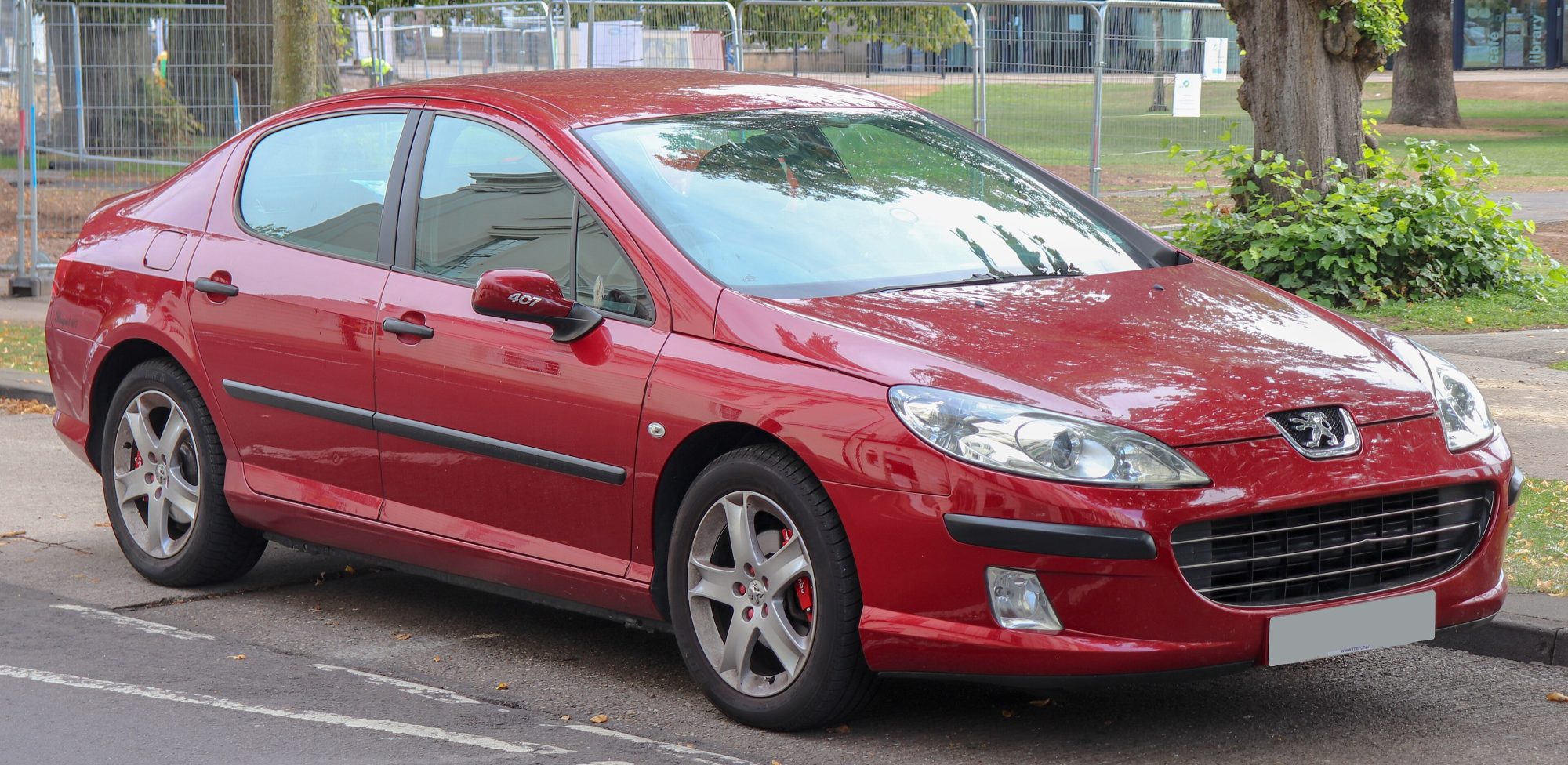
Peugeot 407
The large saloon and estate that replaced the 406, and the model where PSA's 2.0 and 2.2 HDi engines with a particulate filter and its additive system reached volume — which is where most of its diagnosis lives. The additive tank holds a cerium-based fluid dosed into the fuel to lower the filter's regeneration temperature, and when the tank empties or the dosing pump fails the filter stops regenerating properly and the car sets soot-load and additive codes together. Refilling without resetting the counters leaves the fault in place. The 3.0 V6 petrol and the 2.7 HDi V6 are Ford-PSA joint designs. Electrically, the BSI body computer is central and a low battery produces convincing but false faults across several systems.

Generations
-
First generation 2004–2011
The HDi particulate filter with its cerium additive system; an empty additive tank sets soot and dosing codes together.
- Body styles
- Sedan · Estate · Coupé
- Platform
- PSA PF3
- Engines
-
- 1.8 16v — EW7 · petrol · 86–92 kW (115–123 hp)
- 2.0 16v — EW10 · petrol · 99–130 kW (133–174 hp) · 190–200 Nm (140–148 lb-ft)
- 3.0 V6 — ES9 · petrol · 140–155 kW (188–208 hp) · 290 Nm (214 lb-ft)
- 1.6 HDi — DV6 · diesel · 80 kW (107 hp) · 240 Nm (177 lb-ft)
- 2.0 HDi — DW10 · diesel · 66–132 kW (89–177 hp)
- 2.2 HDi — DW12 · diesel · 125 kW (168 hp) · 370 Nm (273 lb-ft)
- 2.7 HDi V6 — DT17 · diesel · 150 kW (201 hp) · 440 Nm (325 lb-ft)
- 2.2 — EW12 · petrol · 116–120 kW (156–161 hp) · 217–220 Nm (160–162 lb-ft)
- 3.0 turbo — DT20 · diesel · 177 kW (237 hp) · 450 Nm (332 lb-ft)
- Transmissions
- 5-speed manual · 6-speed manual · 4-speed ZF 4HP20 automatic · 6-speed Aisin TF80SC automatic
- Drivetrain
- Front-wheel drive
Service information
Information, not instruction
CarGeek is a reference, not a service manual. Its pages are written from public sources and from what other people have found, never from a manufacturer's own service information, so they can be wrong or incomplete for your particular vehicle. Some of what they describe carries real risk: high voltage, fuel under pressure, stored energy, hot and moving parts.
Have anything you intend to act on checked by a trained person against the manufacturer's own procedure for your vehicle. Nothing here replaces that procedure.
Posted about the Peugeot 407
Be the first to write this up
Nothing posted about this yet. Whatever you found is worth writing down — even a dead end saves someone the same afternoon.
What makes one worth reading:
- The car — make, model, year and engine. The same fault behaves differently on each.
- What you measured, not only what you replaced.
- What actually fixed it — or that nothing did, which is worth knowing too.
Sign in or create an account to add what you found about Peugeot 407.