Vehicle
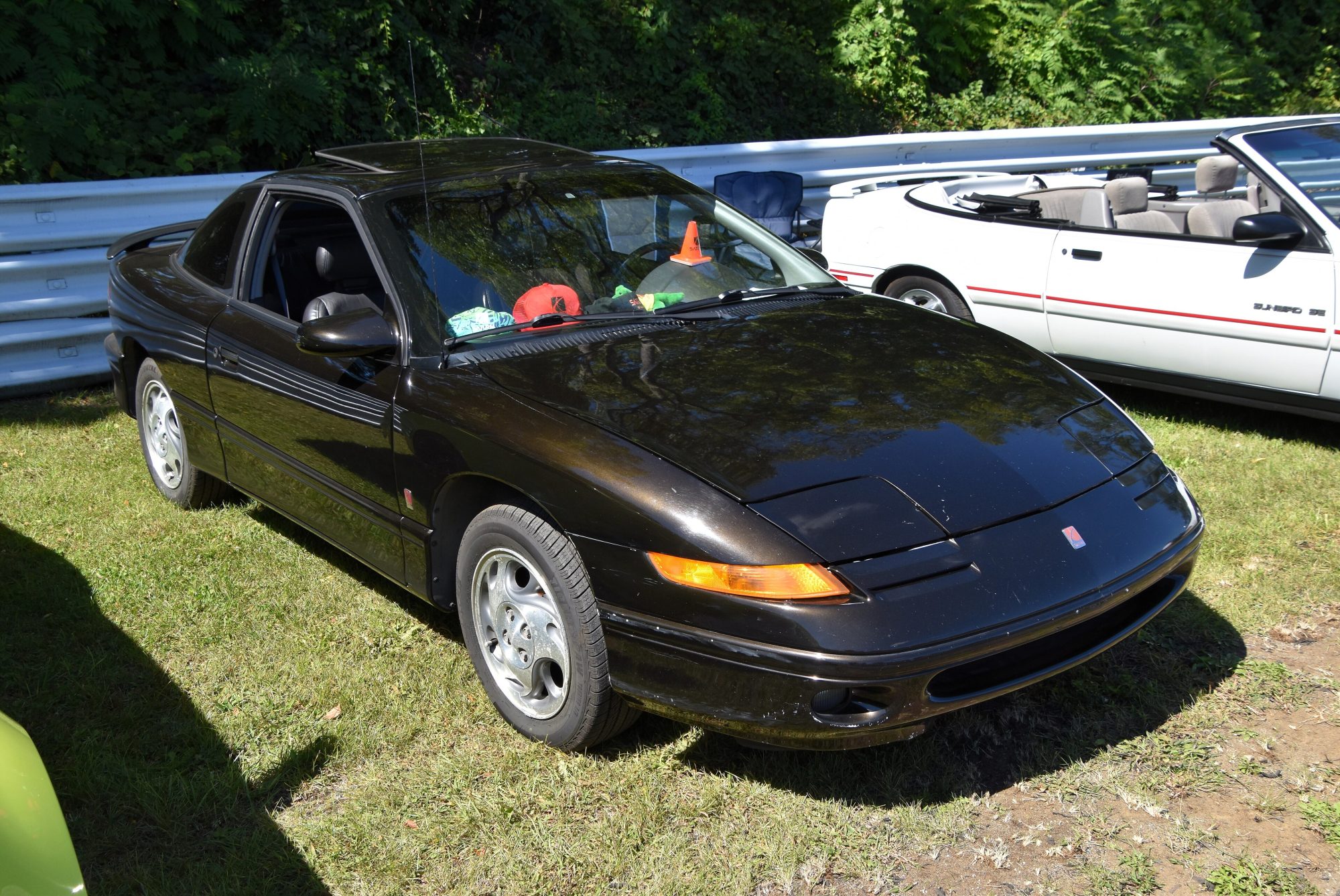
Saturn S-Series
The car the marque was built around, and genuinely unusual: polymer body panels on a steel spaceframe, and an engine family used nowhere else in GM. The 1.9 four comes in single-cam and twin-cam forms, and the fault that defines both is oil consumption from stuck or worn piston rings, heavy enough on high-mileage cars to foul plugs and set misfire and catalyst codes with no mechanical noise at all. Checking consumption before treating the codes is what separates a cheap outcome from a repeated one. The other recurring item is the crankshaft position sensor, whose failure produces an intermittent stall that clears on cooling.
_(54805038724).jpg)
Generations
-
First generation 1991–1995
The original polymer-panelled car; the 1.9 in single-cam and twin-cam form, with ring-related oil consumption already the defining fault.
- Body styles
- Sedan · Coupé · Estate
- Platform
- GM Z-body
- Engines
-
- 1.9 four-cylinder SOHC — LK0 · petrol · 63 kW (84 hp)
- 1.9 four-cylinder DOHC — LL0 · petrol
- Transmissions
- 5-speed MP2/MP3 manual · 4-speed MP6/MP7 automatic
- Drivetrain
- Front-wheel drive
-
Second generation 1996–2002
Rebodied on the same spaceframe and engines, so first-generation information still describes the powertrain completely.
- Body styles
- Sedan · Coupé · Estate
- Platform
- GM Z-body
- Engines
-
- 1.9 four-cylinder SOHC — petrol · LK0
- 1.9 four-cylinder DOHC — LL0 · petrol
- 1.9 — L24 · petrol
- Transmissions
- 4-speed Saturn MP6 automatic · 4-speed Saturn MP7 automatic · 5-speed Saturn MP2 manual · 5-speed Saturn MP3 manual
- Drivetrain
- Front-wheel drive
Information, not instruction
CarGeek is a reference, not a service manual. Its pages are written from public sources and from what other people have found, never from a manufacturer's own service information, so they can be wrong or incomplete for your particular vehicle. Some of what they describe carries real risk: high voltage, fuel under pressure, stored energy, hot and moving parts.
Have anything you intend to act on checked by a trained person against the manufacturer's own procedure for your vehicle. Nothing here replaces that procedure.
Posted about the Saturn S-Series
Be the first to write this up
Nothing posted about this yet. Whatever you found is worth writing down — even a dead end saves someone the same afternoon.
What makes one worth reading:
- The car — make, model, year and engine. The same fault behaves differently on each.
- What you measured, not only what you replaced.
- What actually fixed it — or that nothing did, which is worth knowing too.
Sign in or create an account to add what you found about Saturn S-Series.