Vehicle
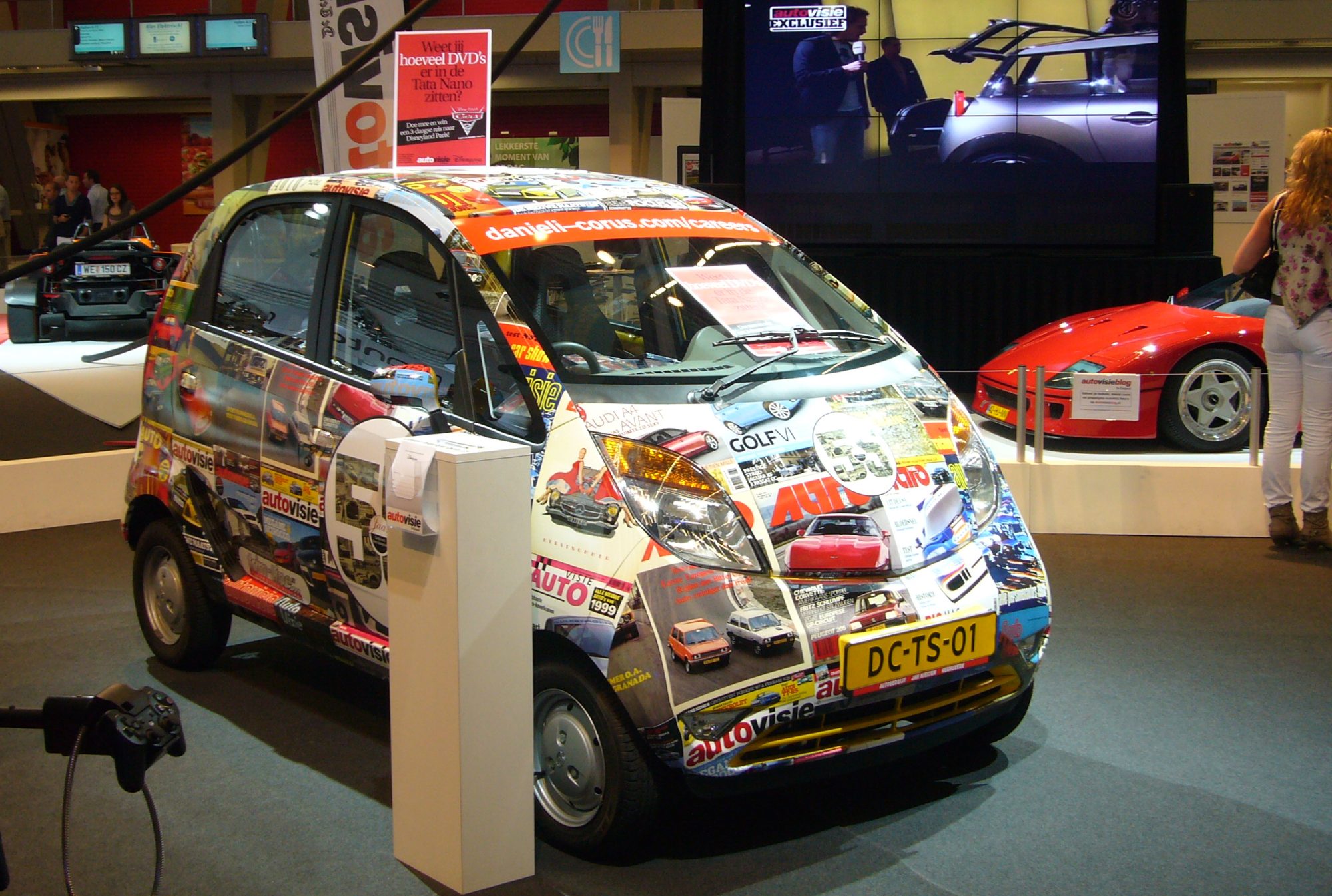
Tata Nano
The car built to a price rather than to a specification, and almost everything unusual about it follows from that. It is rear-engined and rear-wheel drive — the only layout of its kind in this catalogue outside a sports car — with a 624 cc two-cylinder petrol engine sitting under the boot floor, reachable only from inside the car. A technician who approaches it expecting a conventional front-drive hatchback will spend the first half hour looking for the engine.
Two cylinders change the diagnosis, not just the size. A misfire on one cylinder is half the engine, so it presents as a violent shake rather than as a light flutter, and the balancer shaft that makes the layout tolerable is itself a source of noise complaints that are not faults. Fuelling is Bosch multi-point with a single injector, so an injector fault is a whole-engine fault.
A factory bi-fuel CNG version was sold from late 2013, and on those cars the gas side has its own pressure sensing and switching: a fuel-trim or lean code says nothing about the fuel the car was not running on when it set.
Most survivors are cheap, old and lightly maintained, so corroded earths and a tired battery account for a large share of complaints across unrelated modules — the ordinary failure mode of any car at this price after fifteen years.

Generations
-
First generation 2008–2018
Rear-engined and rear-wheel drive with a two-cylinder petrol under the boot floor — a layout nothing else in its class shares.
- Body styles
- Sedan · Hatchback
- Platform
- Tata X3
- Engines
-
- 0.6 — petrol · 28 kW (37 hp) · 51 Nm (38 lb-ft) · two cylinders, single injector — a misfire is half the engine
- 0.6 CNG — CNG bi-fuel · 25 kW (33 hp) · 45 Nm (33 lb-ft) · factory emax bi-fuel from 2013; the gas side has its own pressure sensing
- Transmissions
- 4-speed manual · 5-speed automated manual
- Drivetrain
- Rear-wheel drive
Information, not instruction
CarGeek is a reference, not a service manual. Its pages are written from public sources and from what other people have found, never from a manufacturer's own service information, so they can be wrong or incomplete for your particular vehicle. Some of what they describe carries real risk: high voltage, fuel under pressure, stored energy, hot and moving parts.
Have anything you intend to act on checked by a trained person against the manufacturer's own procedure for your vehicle. Nothing here replaces that procedure.
Posted about the Tata Nano
Be the first to write this up
Nothing posted about this yet. Whatever you found is worth writing down — even a dead end saves someone the same afternoon.
What makes one worth reading:
- The car — make, model, year and engine. The same fault behaves differently on each.
- What you measured, not only what you replaced.
- What actually fixed it — or that nothing did, which is worth knowing too.
Sign in or create an account to add what you found about Tata Nano.