Véhicule
Tata Nano
The car built to a price rather than to a specification, and almost everything unusual about it follows from that. It is rear-engined and rear-wheel drive — the only layout of its kind in this catalogue outside a sports car — with a 624 cc two-cylinder petrol engine sitting under the boot floor, reachable only from inside the car. A technician who approaches it expecting a conventional front-drive hatchback will spend the first half hour looking for the engine.
Two cylinders change the diagnosis, not just the size. A misfire on one cylinder is half the engine, so it presents as a violent shake rather than as a light flutter, and the balancer shaft that makes the layout tolerable is itself a source of noise complaints that are not faults. Fuelling is Bosch multi-point with a single injector, so an injector fault is a whole-engine fault.
A factory bi-fuel CNG version was sold from late 2013, and on those cars the gas side has its own pressure sensing and switching: a fuel-trim or lean code says nothing about the fuel the car was not running on when it set.
Most survivors are cheap, old and lightly maintained, so corroded earths and a tired battery account for a large share of complaints across unrelated modules — the ordinary failure mode of any car at this price after fifteen years.
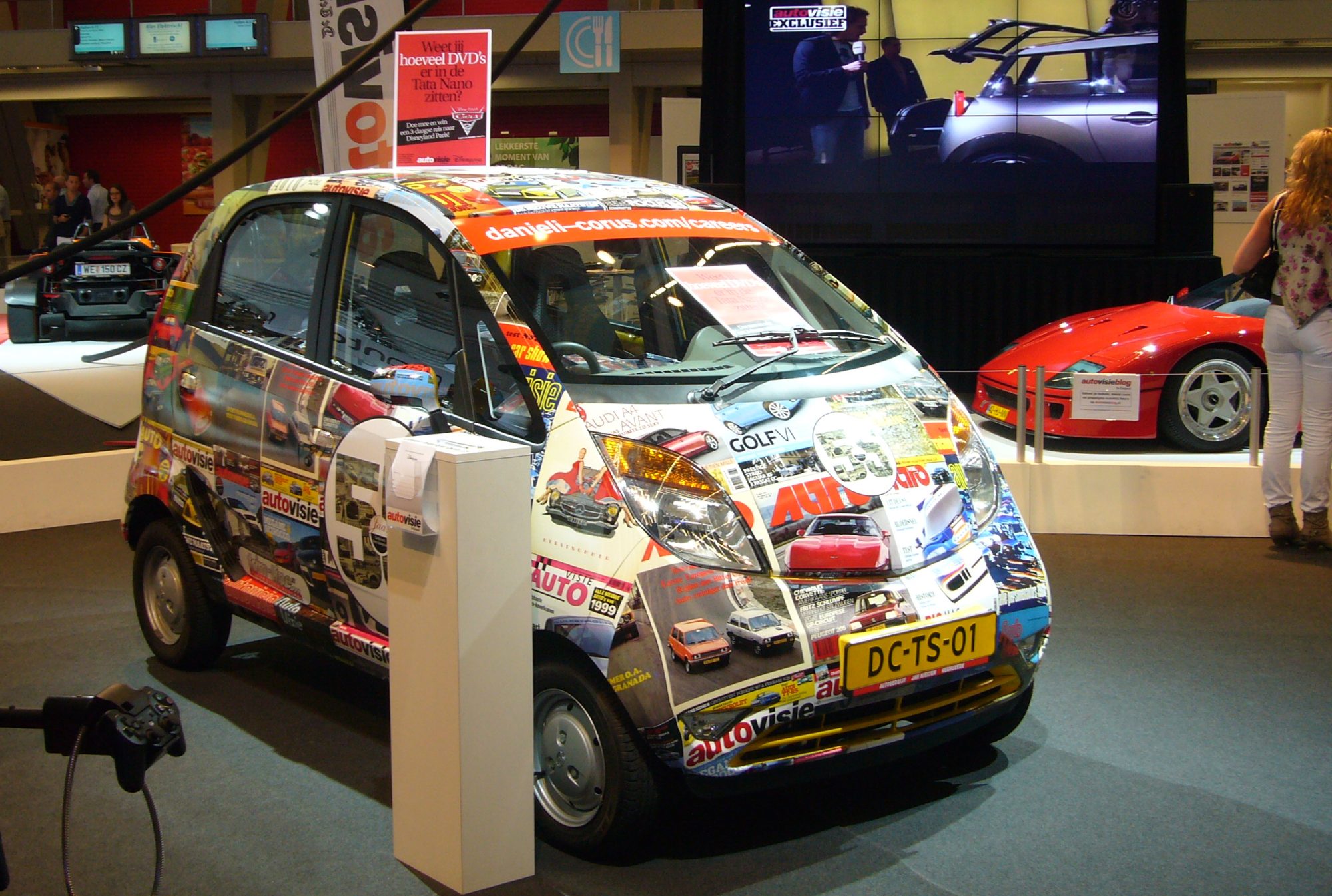

Générations
-
First generation 2008–2018
Rear-engined and rear-wheel drive with a two-cylinder petrol under the boot floor — a layout nothing else in its class shares.
- Types de carrosserie
- Sedan · Hatchback
- Plateforme
- Tata X3
- Moteurs
-
- 0.6 — petrol · 28 kW (37 hp) · 51 Nm (38 lb-ft) · two cylinders, single injector — a misfire is half the engine
- 0.6 CNG — CNG bi-fuel · 25 kW (33 hp) · 45 Nm (33 lb-ft) · factory emax bi-fuel from 2013; the gas side has its own pressure sensing
- Boîtes de vitesses
- 4-speed manual · 5-speed automated manual
- Transmission
- Rear-wheel drive
Des informations, pas des instructions
CarGeek est un ouvrage de référence, pas un manuel d'atelier. Ses pages sont rédigées à partir de sources publiques et de ce que d'autres ont constaté, jamais à partir de la documentation technique du constructeur ; elles peuvent donc être erronées ou incomplètes pour votre véhicule précis. Une partie de ce qu'elles décrivent présente un risque réel : haute tension, carburant sous pression, énergie accumulée, pièces chaudes ou en mouvement.
Avant d'agir sur quoi que ce soit, faites-le vérifier par une personne formée, en suivant la procédure du constructeur pour votre véhicule. Rien ici ne remplace cette procédure.
Publications sur la Tata Nano
Soyez le premier à en faire le compte rendu
Rien n'a encore été publié à ce sujet. Tout ce que vous avez trouvé mérite d'être noté — même une impasse épargne à quelqu'un le même après-midi.
Ce qui rend un compte rendu utile :
- La voiture — marque, modèle, année et moteur. La même panne ne se comporte pas pareil sur chacune.
- Ce que vous avez mesuré, pas seulement ce que vous avez remplacé.
- Ce qui a réellement résolu le problème — ou que rien ne l’a résolu, ce qui est utile aussi.
Se connecter ou créer un compte pour ajouter ce que vous avez trouvé à propos de Tata Nano.