Vehicle
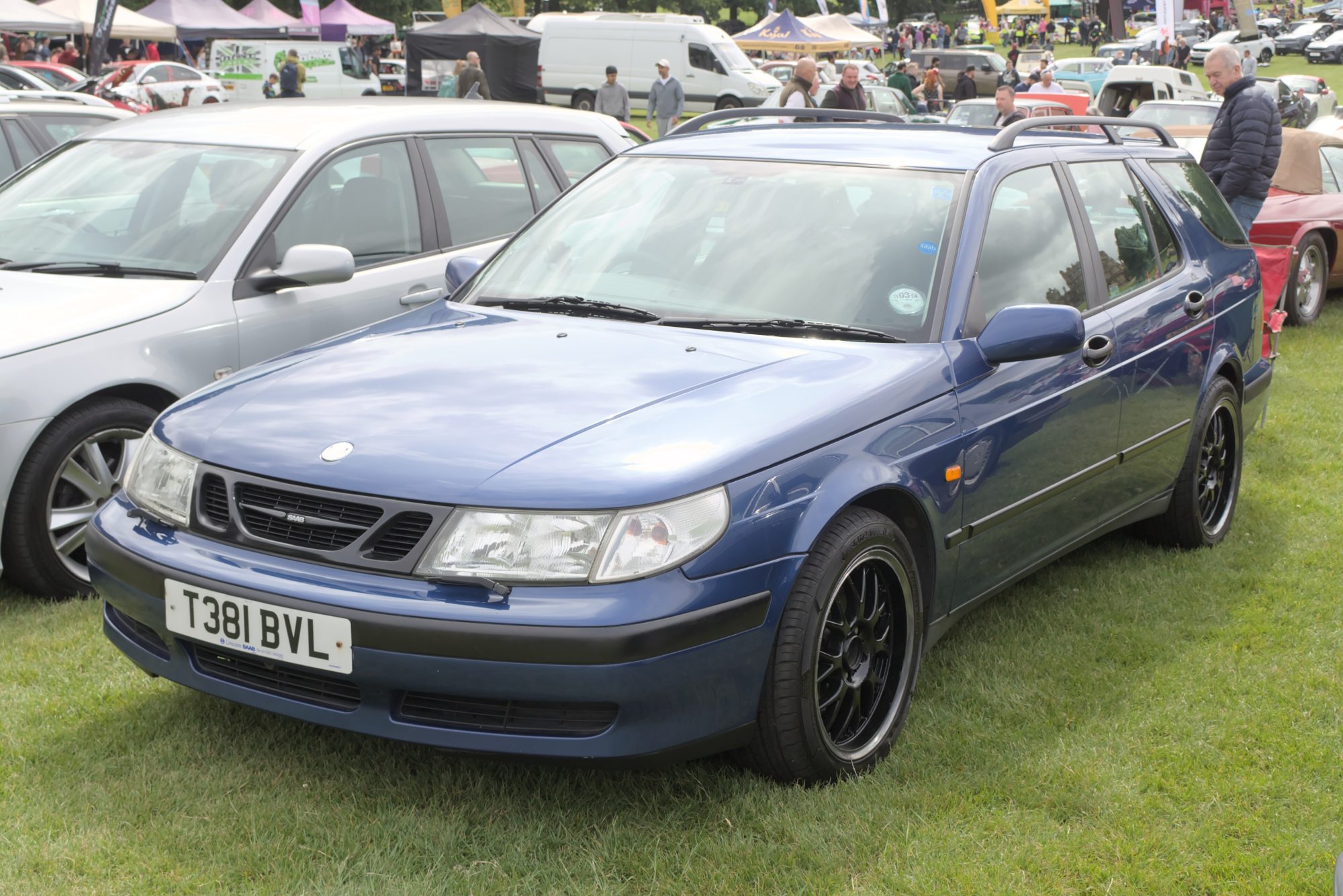
Saab 9-5
The large Saab, and the model where the brand's own engineering survived longest — the first generation ran from 1997 to 2010 on Saab's own platform with the B205 and B235 turbo fours. Its defining fault is oil sludge in the early B205 and B235, caused by a small sump, a hot turbocharger and long service intervals together; an engine that has suffered it will show low oil pressure and bearing noise long before a code names the cause. The 2010 car is a completely different vehicle on GM's Epsilon II — an Insignia underneath — and shares nothing with the one before it.
_-_7_June_2026.jpg)
Generations
-
YS3E 1997–2010
Saab's own platform and its own turbo fours; oil sludge from a small sump and long intervals is the fault that ends these engines.
- Body styles
- Sedan · Estate
- Platform
- GM2900
- Engines
-
- 2.0t — B205 · petrol · 240 Nm (177 lb-ft)
- 2.3T — B235 · petrol · 184 kW (247 hp) · 370 Nm (273 lb-ft) · Aero
- 3.0 turbo V6 — B308E · petrol
- 1.9 TiD — diesel · 110 kW (148 hp) · 320 Nm (236 lb-ft)
- 3.0 V6 TiD — diesel
- 2.2 — D223 · diesel
- Transmissions
- 6-speed manual · 4-speed Aisin 50-42LE automatic · 5-speed Aisin AF33 automatic · 5-speed FM55B03 manual
- Drivetrain
- Front-wheel drive
-
YS3G 2010–2011
An Insignia underneath on GM's Epsilon II, built for barely a year before the company closed — a different car that happens to share a name.
- Body styles
- Sedan · Estate
- Platform
- GM Epsilon II
- Engines
-
- 2.0T — petrol
- 2.8 turbo V6 — A28NER · petrol · 221 kW (296 hp) · 400 Nm (295 lb-ft) · Aero XWD
- 2.0 TiD — diesel · 118–140 kW (158–188 hp)
- 1.6 turbo — Z16LET · petrol · 132 kW (177 hp) · 230 Nm (170 lb-ft)
- 2.0 turbo — A20NHT · petrol
- 2.0 turbo — A20NFT · petrol
- Transmissions
- 6-speed manual · 6-speed Aisin AWTF-80 SC automatic
- Drivetrain
- Front-wheel drive · Four-wheel drive
Information, not instruction
CarGeek is a reference, not a service manual. Its pages are written from public sources and from what other people have found, never from a manufacturer's own service information, so they can be wrong or incomplete for your particular vehicle. Some of what they describe carries real risk: high voltage, fuel under pressure, stored energy, hot and moving parts.
Have anything you intend to act on checked by a trained person against the manufacturer's own procedure for your vehicle. Nothing here replaces that procedure.
Posted about the Saab 9-5
Be the first to write this up
Nothing posted about this yet. Whatever you found is worth writing down — even a dead end saves someone the same afternoon.
What makes one worth reading:
- The car — make, model, year and engine. The same fault behaves differently on each.
- What you measured, not only what you replaced.
- What actually fixed it — or that nothing did, which is worth knowing too.
Sign in or create an account to add what you found about Saab 9-5.