Veículo
Ford Explorer
The three-row SUV that defined the class in America. Later EcoBoost generations bring turbo-era codes to a family truck; the water-pump-behind-the-timing-cover design on some V6es raises the stakes on cooling-system codes.
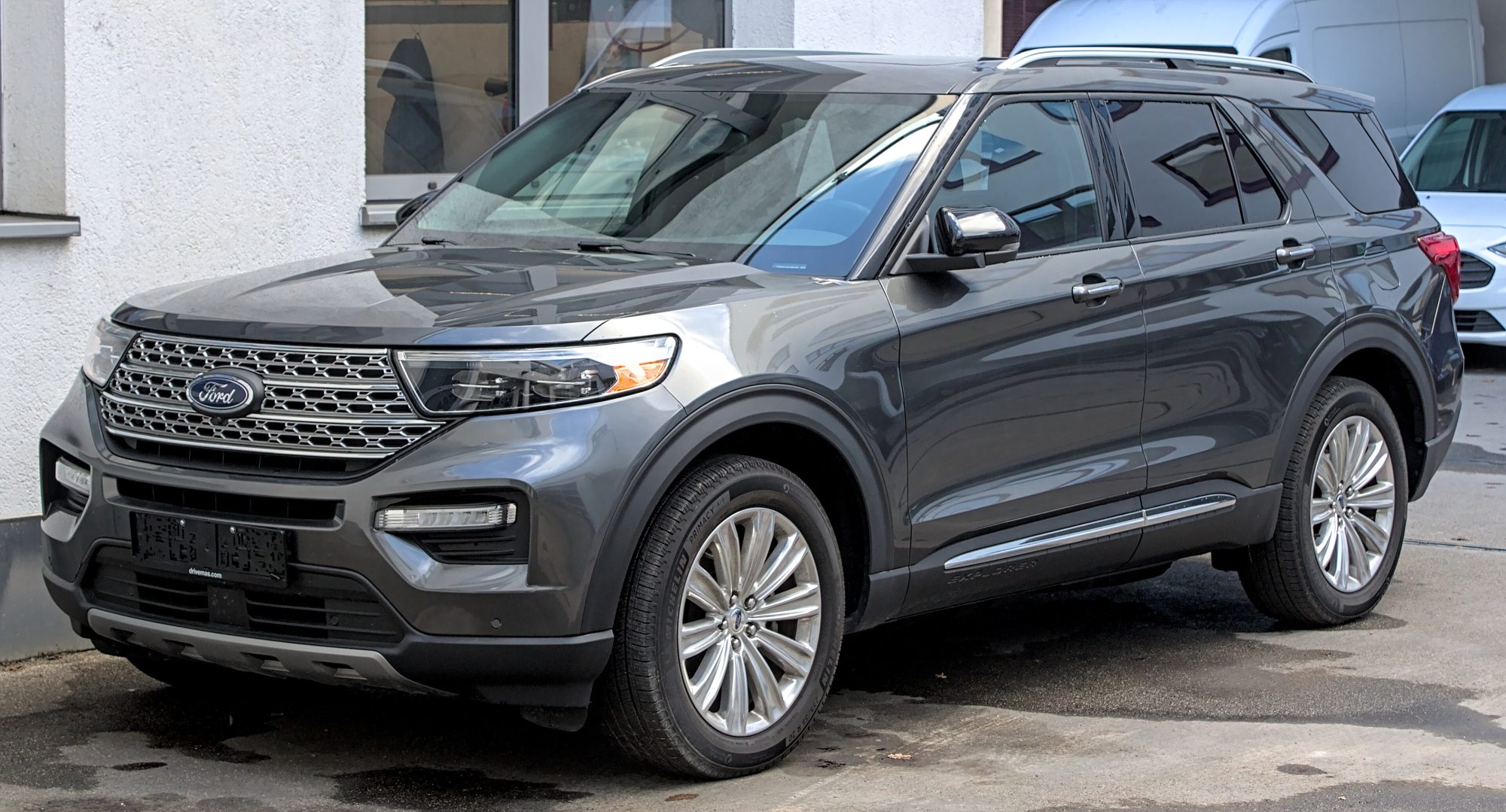
_IMG_6063.jpg)
Gerações
-
First generation 1990–1994
The Bronco II's replacement, on the Ranger's chassis, with one engine and two gearboxes. Three-door and five-door bodies, and the generation whose tyre-pressure and rollover history became a federal investigation.
- Carrocerias
- SUV
- Plataforma
- Ford UN46
- Motores
-
- 4.0 V6 — COLOGNE · petrol · 116–119 kW (155–160 hp) · 298 Nm (220 lb-ft) · Cologne, pushrod
- Câmbios
- 5-speed M5OD-R1 manual · 4-speed A4LD automatic
- Tração
- Rear-wheel drive · Four-wheel drive
-
Second generation 1994–2003
The V8 arrives for 1996 and the overhead-cam 4.0 for 1997, which is the engine whose rear-mounted timing chain guides are the era's expensive failure — the cassettes sit at the back of the block, so reaching them means removing the engine. The five-door ended in 2001 and the three-door Sport ran to 2003.
- 4R70W / AOD-E automático de 4 marchas
- 5R55E / 5R55S automático de 5 marchas
- A4LD / 4R44E / 4R55E automático de 4 marchas
- M5OD / M5OD-R1 manual de 5 marchas
- Carrocerias
- SUV
- Plataforma
- Ford UN105 / UN150
- Motores
-
- 4.0 V6 — COLOGNE · petrol · 119 kW (160 hp) · 298 Nm (220 lb-ft) · Cologne, pushrod, to 2000
- 4.0 V6 SOHC — petrol · 157 kW (210 hp) · 344 Nm (254 lb-ft) · Cologne, from 1997
- 5.0 V8 — WINDSOR · petrol · 157 kW (210 hp) · 380 Nm (280 lb-ft) · Windsor, 1996–2001
- Câmbios
- 5-speed M5OD-R1 manual · 5-speed M5OD-R1HD manual · 4-speed 4R55E automatic · 4-speed 4R70W automatic · 5-speed 5R55E automatic
- Tração
- Rear-wheel drive · Four-wheel drive
-
Third generation 2002–2005
Independent rear suspension for the first time, and the 5.0 Windsor gives way to the 4.6 Modular V8. The overhead-cam 4.0 carries over, and so does its timing chain.
- Carrocerias
- SUV
- Plataforma
- Ford U152
- Motores
-
- 4.0 V6 SOHC — petrol · 157 kW (210 hp) · 344 Nm (254 lb-ft) · Cologne
- 4.6 V8 — TRITON · petrol · 178 kW (239 hp) · 382 Nm (282 lb-ft) · Modular, two valves per cylinder
- Câmbios
- 5-speed M5OD-R4 manual · 5-speed 5R55W automatic · 5-speed 5R55S automatic
- Tração
- Rear-wheel drive · Four-wheel drive · All-wheel drive
-
Fourth generation 2005–2010
Body-on-frame, rear-driven; the last of the traditional layout.
- Carrocerias
- SUV
- Plataforma
- Ford U1
- Motores
-
- 4.0 V6 — COLOGNE · petrol · 157 kW (211 hp)
- 4.6 V8 — TRITON · petrol · 218 kW (292 hp) · 407–427 Nm (300–315 lb-ft)
- Câmbios
- 5-speed 5R55S automatic · 6-speed 6R automatic
- Tração
- Rear-wheel drive · Four-wheel drive
-
Fifth generation 2010–2019
Unibody and front-drive based — no knowledge crosses the change of layout.
- Carrocerias
- SUV
- Plataforma
- Ford D4
- Motores
-
- 2.0 EcoBoost — petrol · 179 kW (240 hp) · 366 Nm (270 lb-ft)
- 2.3 EcoBoost — petrol · 209 kW (280 hp) · 420 Nm (310 lb-ft)
- 3.5 V6 — petrol · 216 kW (290 hp) · 346 Nm (255 lb-ft)
- 3.5 EcoBoost V6 — D35 · petrol · 272 kW (365 hp) · 475 Nm (350 lb-ft) · Sport and Police Interceptor
- 3.7 V6 — petrol · 227 kW (304 hp) · 378 Nm (279 lb-ft)
- Câmbios
- 6-speed automatic · 6-speed 6F SelectShift automatic
- Tração
- Front-wheel drive · Four-wheel drive
-
Sixth generation 2019–present
Back to a rear-drive platform, with a hybrid variant.
- 2.0 EcoBoost 2.0 L
- 2.3 EcoBoost 2.3 L
- 3.5 EcoBoost 3.5 L
- EcoBoost (badge, not an engine)
- Nano (2.7/3.0 EcoBoost V6)
- Carrocerias
- SUV
- Plataforma
- Ford CD6
- Motores
-
- 2.3 EcoBoost — petrol · 224 kW (300 hp) · 420 Nm (310 lb-ft)
- 3.0 EcoBoost V6 — NANO · petrol · 267 kW (358 hp) · ST
- 3.3 V6 hybrid — hybrid · 213 kW (286 hp) · 353 Nm (260 lb-ft)
- Câmbios
- 10-speed automatic
- Tração
- Rear-wheel drive · Four-wheel drive
Dados CAN
Bancos de dados de barramento que cobrem este veículo, espelhados do projeto de código aberto opendbc.
Informações de serviço
Informação, não instrução
O CarGeek é uma referência, não um manual de serviço. Suas páginas são escritas a partir de fontes públicas e do que outras pessoas constataram, nunca a partir da documentação de serviço do fabricante, de modo que podem estar erradas ou incompletas para o seu veículo específico. Parte do que descrevem envolve risco real: alta tensão, combustível sob pressão, energia acumulada e peças quentes ou em movimento.
Antes de agir com base em qualquer orientação, peça a verificação de uma pessoa com formação técnica, seguindo o procedimento do próprio fabricante para o seu veículo. Nada aqui substitui esse procedimento.
Publicações sobre o Ford Explorer
Seja o primeiro a documentar isto
Ainda não há publicações sobre isto. Vale a pena anotar tudo o que você descobriu — até um beco sem saída poupa a mesma tarde de outra pessoa.
O que faz valer a leitura:
- O carro — marca, modelo, ano e motor. A mesma falha se comporta de forma diferente em cada um.
- O que você mediu, não só o que trocou.
- O que realmente resolveu — ou que nada resolveu, o que também vale saber.
Entrar ou criar uma conta para adicionar o que você descobriu sobre Ford Explorer.