Vehicle
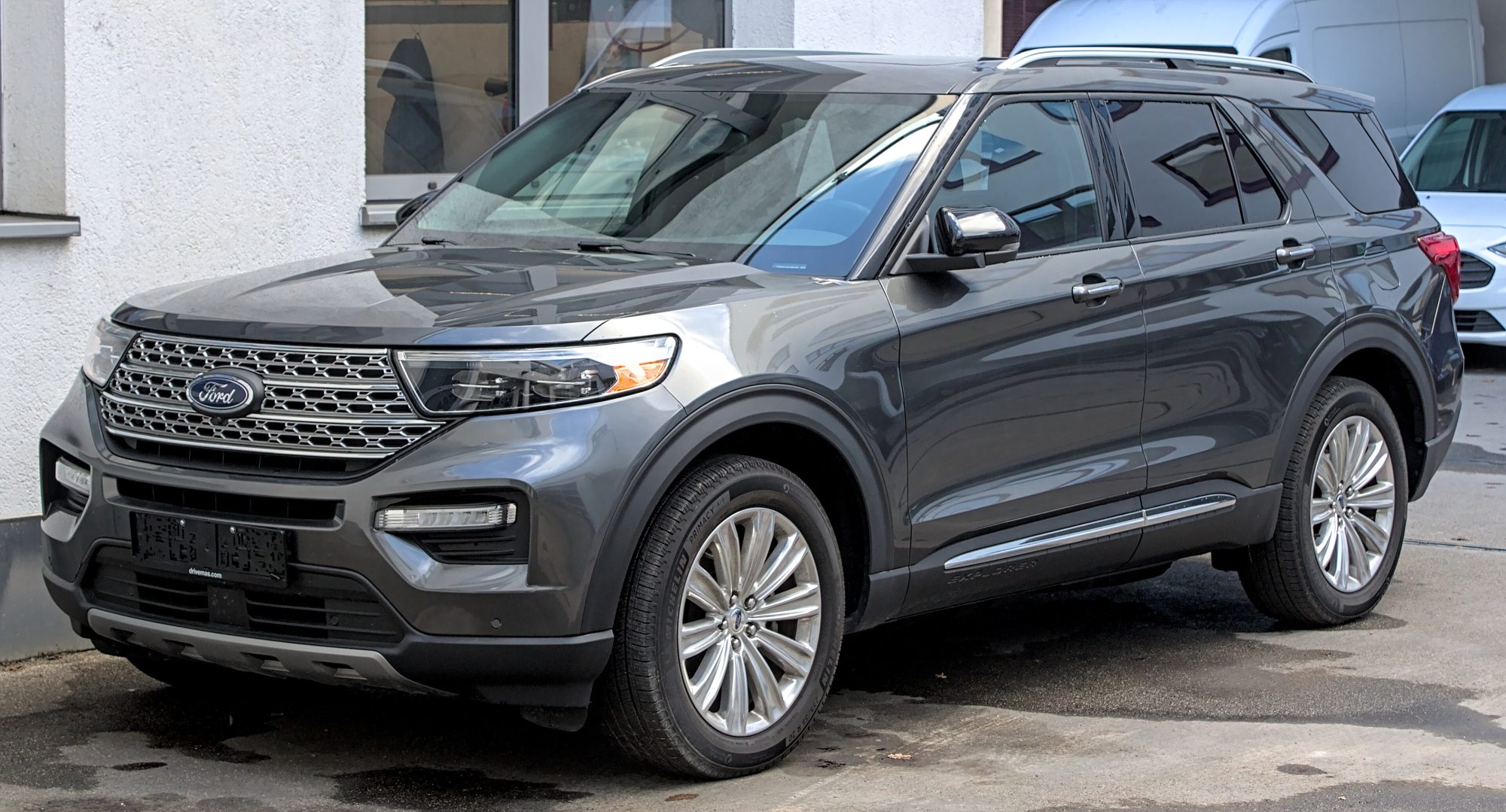
Ford Explorer
The three-row SUV that defined the class in America. Later EcoBoost generations bring turbo-era codes to a family truck; the water-pump-behind-the-timing-cover design on some V6es raises the stakes on cooling-system codes.
_IMG_6063.jpg)
Generations
-
First generation 1990–1994
The Bronco II's replacement, on the Ranger's chassis, with one engine and two gearboxes. Three-door and five-door bodies, and the generation whose tyre-pressure and rollover history became a federal investigation.
- Body styles
- SUV
- Platform
- Ford UN46
- Engines
-
- 4.0 V6 — COLOGNE · petrol · 116–119 kW (155–160 hp) · 298 Nm (220 lb-ft) · Cologne, pushrod
- Transmissions
- 5-speed M5OD-R1 manual · 4-speed A4LD automatic
- Drivetrain
- Rear-wheel drive · Four-wheel drive
-
Second generation 1994–2003
The V8 arrives for 1996 and the overhead-cam 4.0 for 1997, which is the engine whose rear-mounted timing chain guides are the era's expensive failure — the cassettes sit at the back of the block, so reaching them means removing the engine. The five-door ended in 2001 and the three-door Sport ran to 2003.
- 4R70W / AOD-E 4-speed automatic
- 5R55E / 5R55S 5-speed automatic
- A4LD / 4R44E / 4R55E 4-speed automatic
- M5OD / M5OD-R1 5-speed manual
- Body styles
- SUV
- Platform
- Ford UN105 / UN150
- Engines
-
- 4.0 V6 — COLOGNE · petrol · 119 kW (160 hp) · 298 Nm (220 lb-ft) · Cologne, pushrod, to 2000
- 4.0 V6 SOHC — petrol · 157 kW (210 hp) · 344 Nm (254 lb-ft) · Cologne, from 1997
- 5.0 V8 — WINDSOR · petrol · 157 kW (210 hp) · 380 Nm (280 lb-ft) · Windsor, 1996–2001
- Transmissions
- 5-speed M5OD-R1 manual · 5-speed M5OD-R1HD manual · 4-speed 4R55E automatic · 4-speed 4R70W automatic · 5-speed 5R55E automatic
- Drivetrain
- Rear-wheel drive · Four-wheel drive
-
Third generation 2002–2005
Independent rear suspension for the first time, and the 5.0 Windsor gives way to the 4.6 Modular V8. The overhead-cam 4.0 carries over, and so does its timing chain.
- Body styles
- SUV
- Platform
- Ford U152
- Engines
-
- 4.0 V6 SOHC — petrol · 157 kW (210 hp) · 344 Nm (254 lb-ft) · Cologne
- 4.6 V8 — TRITON · petrol · 178 kW (239 hp) · 382 Nm (282 lb-ft) · Modular, two valves per cylinder
- Transmissions
- 5-speed M5OD-R4 manual · 5-speed 5R55W automatic · 5-speed 5R55S automatic
- Drivetrain
- Rear-wheel drive · Four-wheel drive · All-wheel drive
-
Fourth generation 2005–2010
Body-on-frame, rear-driven; the last of the traditional layout.
- Body styles
- SUV
- Platform
- Ford U1
- Engines
-
- 4.0 V6 — COLOGNE · petrol · 157 kW (211 hp)
- 4.6 V8 — TRITON · petrol · 218 kW (292 hp) · 407–427 Nm (300–315 lb-ft)
- Transmissions
- 5-speed 5R55S automatic · 6-speed 6R automatic
- Drivetrain
- Rear-wheel drive · Four-wheel drive
-
Fifth generation 2010–2019
Unibody and front-drive based — no knowledge crosses the change of layout.
- Body styles
- SUV
- Platform
- Ford D4
- Engines
-
- 2.0 EcoBoost — petrol · 179 kW (240 hp) · 366 Nm (270 lb-ft)
- 2.3 EcoBoost — petrol · 209 kW (280 hp) · 420 Nm (310 lb-ft)
- 3.5 V6 — petrol · 216 kW (290 hp) · 346 Nm (255 lb-ft)
- 3.5 EcoBoost V6 — D35 · petrol · 272 kW (365 hp) · 475 Nm (350 lb-ft) · Sport and Police Interceptor
- 3.7 V6 — petrol · 227 kW (304 hp) · 378 Nm (279 lb-ft)
- Transmissions
- 6-speed automatic · 6-speed 6F SelectShift automatic
- Drivetrain
- Front-wheel drive · Four-wheel drive
-
Sixth generation 2019–present
Back to a rear-drive platform, with a hybrid variant.
- 2.0 EcoBoost 2.0 L
- 2.3 EcoBoost 2.3 L
- 3.5 EcoBoost 3.5 L
- EcoBoost (badge, not an engine)
- Nano (2.7/3.0 EcoBoost V6)
- Body styles
- SUV
- Platform
- Ford CD6
- Engines
-
- 2.3 EcoBoost — petrol · 224 kW (300 hp) · 420 Nm (310 lb-ft)
- 3.0 EcoBoost V6 — NANO · petrol · 267 kW (358 hp) · ST
- 3.3 V6 hybrid — hybrid · 213 kW (286 hp) · 353 Nm (260 lb-ft)
- Transmissions
- 10-speed automatic
- Drivetrain
- Rear-wheel drive · Four-wheel drive
CAN data
Bus databases covering this vehicle, mirrored from the open-source opendbc project.
Service information
Information, not instruction
CarGeek is a reference, not a service manual. Its pages are written from public sources and from what other people have found, never from a manufacturer's own service information, so they can be wrong or incomplete for your particular vehicle. Some of what they describe carries real risk: high voltage, fuel under pressure, stored energy, hot and moving parts.
Have anything you intend to act on checked by a trained person against the manufacturer's own procedure for your vehicle. Nothing here replaces that procedure.
Posted about the Ford Explorer
Be the first to write this up
Nothing posted about this yet. Whatever you found is worth writing down — even a dead end saves someone the same afternoon.
What makes one worth reading:
- The car — make, model, year and engine. The same fault behaves differently on each.
- What you measured, not only what you replaced.
- What actually fixed it — or that nothing did, which is worth knowing too.
Sign in or create an account to add what you found about Ford Explorer.