Vehicle
Peugeot 308
The European compact across three generations. Prince petrol engines early (chain and VVT patterns), PureTech three-cylinders later — whose wet timing belt is the age caution the community repeats most.
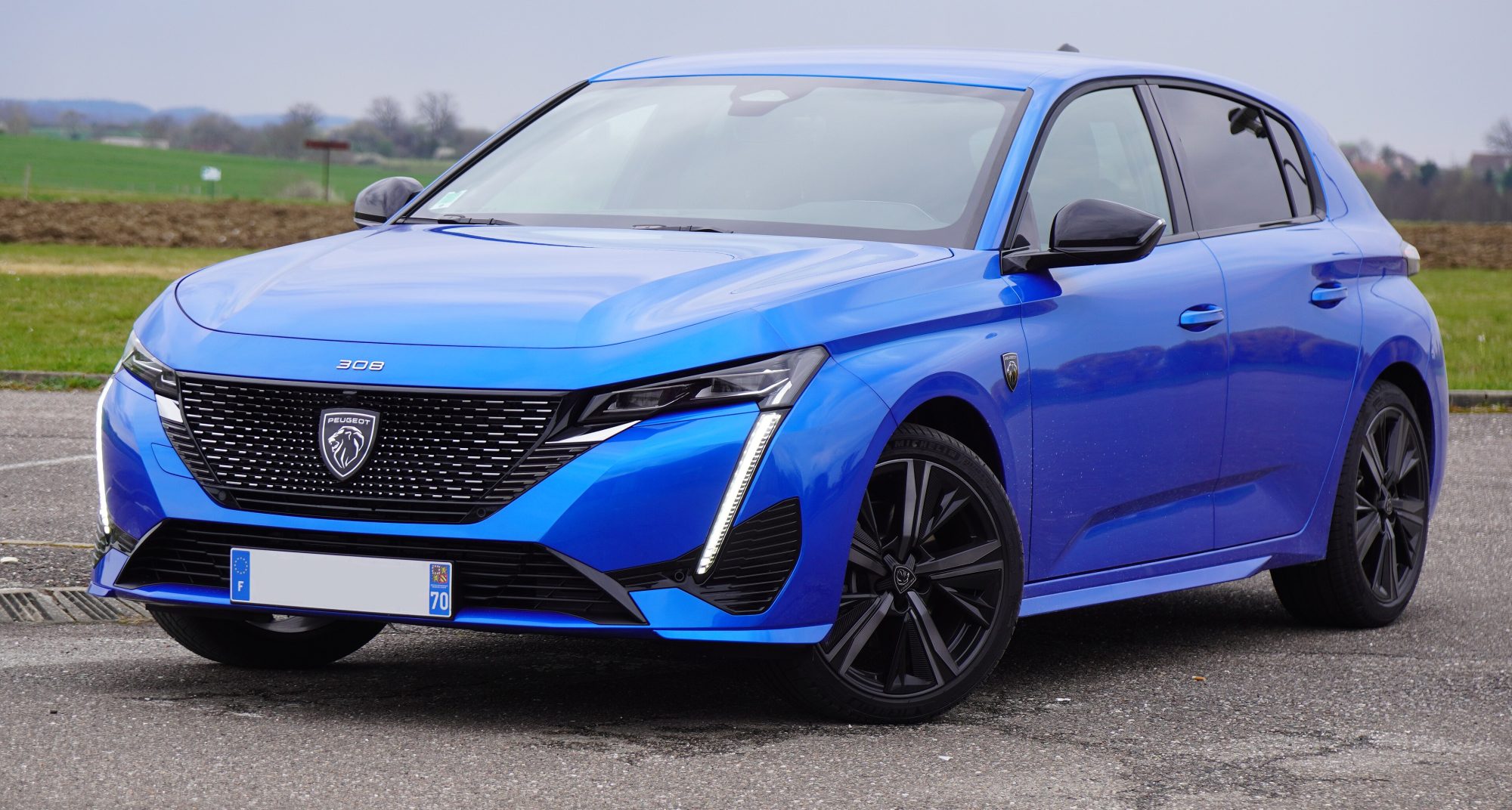
_-_121.jpg)
Generations
-
T7 2007–2013
THP petrol and HDi diesel; the additive-dosed particulate filter is a second system behind every filter code.
- DV6 (1.6 HDi) 1.6 L
- DW10 (2.0 HDi) 2.0 L
- EW
- Prince (EP6 / N13)
- THP (badge, not an engine)
- VTi (badge, not an engine)
- Body styles
- Hatchback · Estate · Coupé cabriolet
- Platform
- PSA PF2
- Engines
-
- 1.4 VTi — EP3 · petrol · 72 kW (97 hp) · 136 Nm (100 lb-ft)
- 1.6 VTi — EP6 · petrol · 88–115 kW (118–154 hp) · 160 Nm (118 lb-ft)
- 1.6 THP GTI — petrol · 275 Nm (203 lb-ft)
- 1.6 HDi — DV6 · diesel · 66–85 kW (89–114 hp) · 215–270 Nm (159–199 lb-ft)
- 2.0 HDi — DW10B · diesel · 100–120 kW (134–161 hp) · 320–340 Nm (236–251 lb-ft)
- Transmissions
- 5-speed manual · 6-speed manual · 5/6-speed manual · 4-speed ZF 4HP automatic · 6-speed Aisin AWTF-80 SC automatic · 6-speed Auto6R
- Drivetrain
- Front-wheel drive
-
T9 2013–2021
EMP2 platform; PureTech petrol arrives, with its timing belt running in oil.
- BlueHDi (badge, not an engine)
- DV5 (1.5 BlueHDi) 1.5 L
- DV6 (1.6 HDi) 1.6 L
- DW10 (2.0 HDi) 2.0 L
- EB (PureTech, 1.0–2.0) 1.2 L
- Prince (EP6 / N13)
- THP (badge, not an engine)
- Body styles
- Hatchback · Estate
- Platform
- EMP2
- Engines
-
- 1.2 PureTech — EB2F · petrol · 81–96 kW (109–129 hp) · 205–230 Nm (151–170 lb-ft) · wet timing belt — a service-history question before a fault
- 1.6 THP — petrol · 88–200 kW (118–268 hp) · 200–340 Nm (148–251 lb-ft)
- 1.5 BlueHDi — DV5 · diesel · 75–96 kW (101–129 hp) · 250–300 Nm (184–221 lb-ft)
- 2.0 BlueHDi — DW10 · diesel · 110–133 kW (148–178 hp) · 370–400 Nm (273–295 lb-ft)
- 1.2 turbo — EB2DTS · petrol · 81–96 kW (109–129 hp) · 205–230 Nm (151–170 lb-ft)
- 1.6 turbo — EP6DT · petrol · 88–200 kW (118–268 hp) · 200–340 Nm (148–251 lb-ft)
- 1.6 — DV6 · diesel · 73–88 kW (98–118 hp) · 230–300 Nm (170–221 lb-ft)
- Transmissions
- 5-speed manual · 6-speed manual · 6-speed automatic · 8-speed automatic · 5/6-speed manual · 6-speed EAT6 Aisin AWTF-80 SC
- Drivetrain
- Front-wheel drive
-
P5 2021–present
Plug-in hybrid variants, and a fully electric version late in the run.
- BlueHDi (badge, not an engine)
- DV5 (1.5 BlueHDi) 1.5 L
- EB (PureTech, 1.0–2.0) 1.2 L
- Prince (EP6 / N13)
- Body styles
- Hatchback · Estate
- Platform
- PSA EMP2
- Engines
-
- 1.2 PureTech — petrol · 81–96 kW (109–129 hp) · 205–230 Nm (151–170 lb-ft)
- 1.6 PureTech PHEV — EP6FDT · plug-in hybrid
- 1.5 BlueHDi — DV5 · diesel · 75–96 kW (101–129 hp) · 300 Nm (221 lb-ft)
- 54 kWh electric — electric · e-308
- 1.2 turbo — EB · petrol · 81–96 kW (109–129 hp) · 205–230 Nm (151–170 lb-ft)
- Transmissions
- 6-speed manual · Single-speed reduction · 8-speed EAT8 Aisin automatic
- Drivetrain
- Front-wheel drive
Service information
Information, not instruction
CarGeek is a reference, not a service manual. Its pages are written from public sources and from what other people have found, never from a manufacturer's own service information, so they can be wrong or incomplete for your particular vehicle. Some of what they describe carries real risk: high voltage, fuel under pressure, stored energy, hot and moving parts.
Have anything you intend to act on checked by a trained person against the manufacturer's own procedure for your vehicle. Nothing here replaces that procedure.
Posted about the Peugeot 308
Be the first to write this up
Nothing posted about this yet. Whatever you found is worth writing down — even a dead end saves someone the same afternoon.
What makes one worth reading:
- The car — make, model, year and engine. The same fault behaves differently on each.
- What you measured, not only what you replaced.
- What actually fixed it — or that nothing did, which is worth knowing too.
Sign in or create an account to add what you found about Peugeot 308.