Vehicle
Ford Taurus
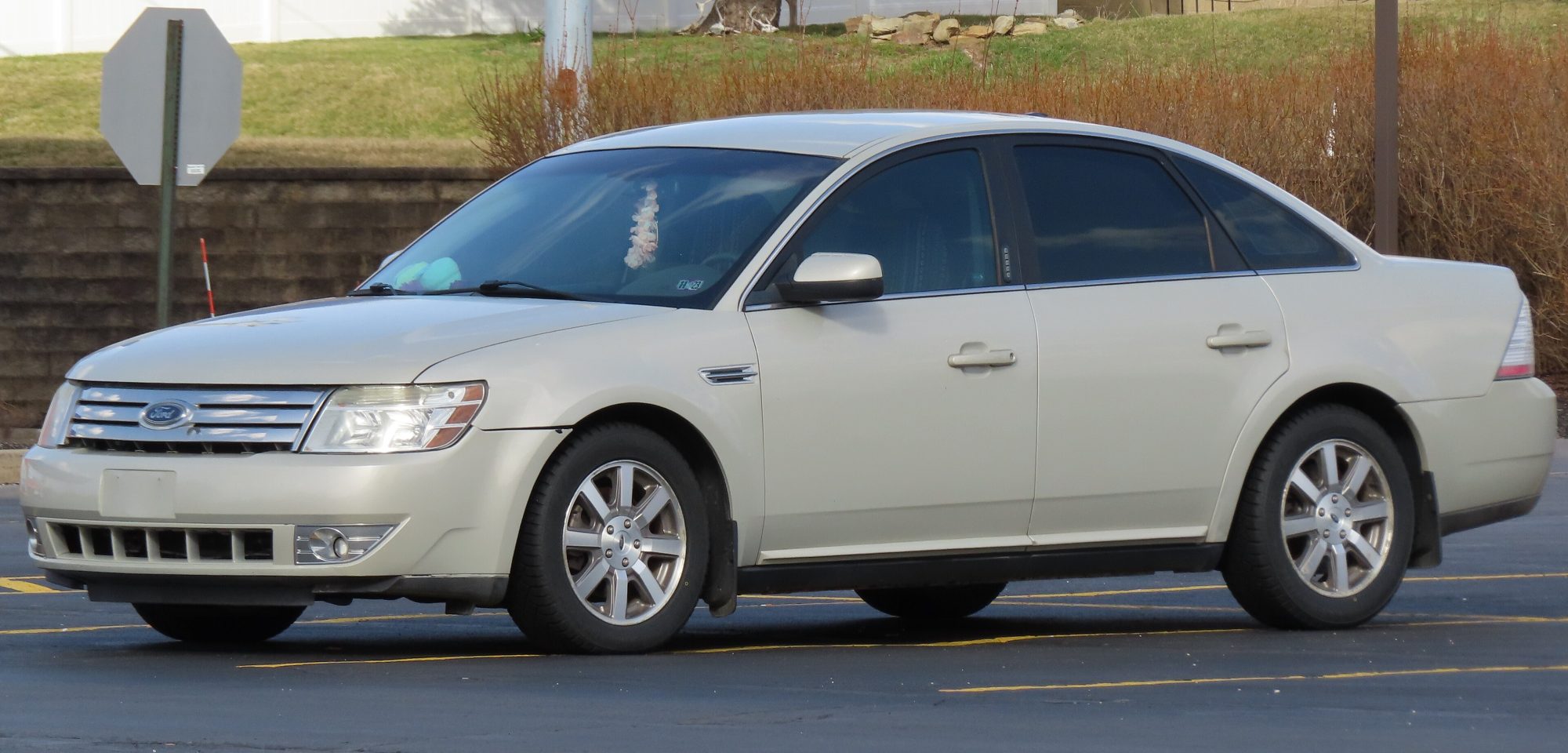
A nameplate that covers two unrelated cars. The Vulcan 3.0 V6 era to 2007 is a simple transverse front-drive saloon whose recurring faults are ordinary — intake gaskets, the AX4N transaxle, and a cooling fan controller that fails and produces overheating with no coolant loss. The 2008-on car is the renamed Five Hundred on Volvo-derived D3 architecture, with the 3.5 Duratec and, on the SHO, the 3.5 EcoBoost, and its faults belong to that family instead: on the EcoBoost, condensation in the intercooler causing misfires under sustained boost, and on all of them a CVT or six-speed depending on year. Establishing which car you have decides which half of the information applies.

Generations
-
First and second generation 1986–1995
The Vulcan 3.0 and the Yamaha-built SHO V6 — two engines with nothing in common beyond the body they sit in.
- Body styles
- Sedan · Estate
- Platform
- Ford DN5
- Engines
-
- 2.5 four-cylinder — petrol
- 3.0 V6 — VULCAN · petrol · Vulcan
- 3.8 V6 — ESSEX · petrol · 104 kW (139 hp) · Essex
- 3.0 V6 SHO — petrol · Yamaha-built
- 3.2 — petrol · 6-cylinder, US market 1993-1995
- Transmissions
- 5-speed manual · 3-speed automatic · 3-speed ATX automatic · 4-speed AXOD automatic · 4-speed AXOD-E automatic · 5-speed MTX manual
- Drivetrain
- Front-wheel drive
-
Third and fourth generation 1996–2007
Transverse front-drive with the Vulcan 3.0 V6; intake gaskets, the AX4N transaxle and fan-controller failure are the recurring items.
- Body styles
- Sedan · Estate
- Platform
- Ford DN101
- Engines
-
- 3.0 V6 — VULCAN · petrol · Vulcan
- 3.0 V6 Duratec — petrol · 24-valve
- 3.5 V6 — petrol
- 3.4 V8 — petrol · 175 kW (235 hp)
- Transmissions
- 4-speed AX4N automatic · 4-speed AX4S automatic
- Drivetrain
- Front-wheel drive
-
Fifth and sixth generation (D3) 2008–2019
The renamed Five Hundred on Volvo-derived architecture; the SHO's 3.5 EcoBoost misfires from intercooler condensation under sustained boost.
- Body styles
- Sedan
- Platform
- Ford D3
- Engines
-
- 3.5 V6 Duratec — petrol · 215 kW (288 hp)
- 3.5 V6 EcoBoost — petrol · SHO
- 2.0 EcoBoost — petrol · 179 kW (240 hp) · 366 Nm (270 lb-ft)
- 3.7 V6 — petrol · 227 kW (304 hp) · 378 Nm (279 lb-ft)
- Transmissions
- CVT · 6F35 6-speed automatic · 6F50 6-speed automatic
- Drivetrain
- Front-wheel drive · Four-wheel drive
Service information
Information, not instruction
CarGeek is a reference, not a service manual. Its pages are written from public sources and from what other people have found, never from a manufacturer's own service information, so they can be wrong or incomplete for your particular vehicle. Some of what they describe carries real risk: high voltage, fuel under pressure, stored energy, hot and moving parts.
Have anything you intend to act on checked by a trained person against the manufacturer's own procedure for your vehicle. Nothing here replaces that procedure.
Posted about the Ford Taurus
Be the first to write this up
Nothing posted about this yet. Whatever you found is worth writing down — even a dead end saves someone the same afternoon.
What makes one worth reading:
- The car — make, model, year and engine. The same fault behaves differently on each.
- What you measured, not only what you replaced.
- What actually fixed it — or that nothing did, which is worth knowing too.
Sign in or create an account to add what you found about Ford Taurus.