Fahrzeug
Ford Taurus
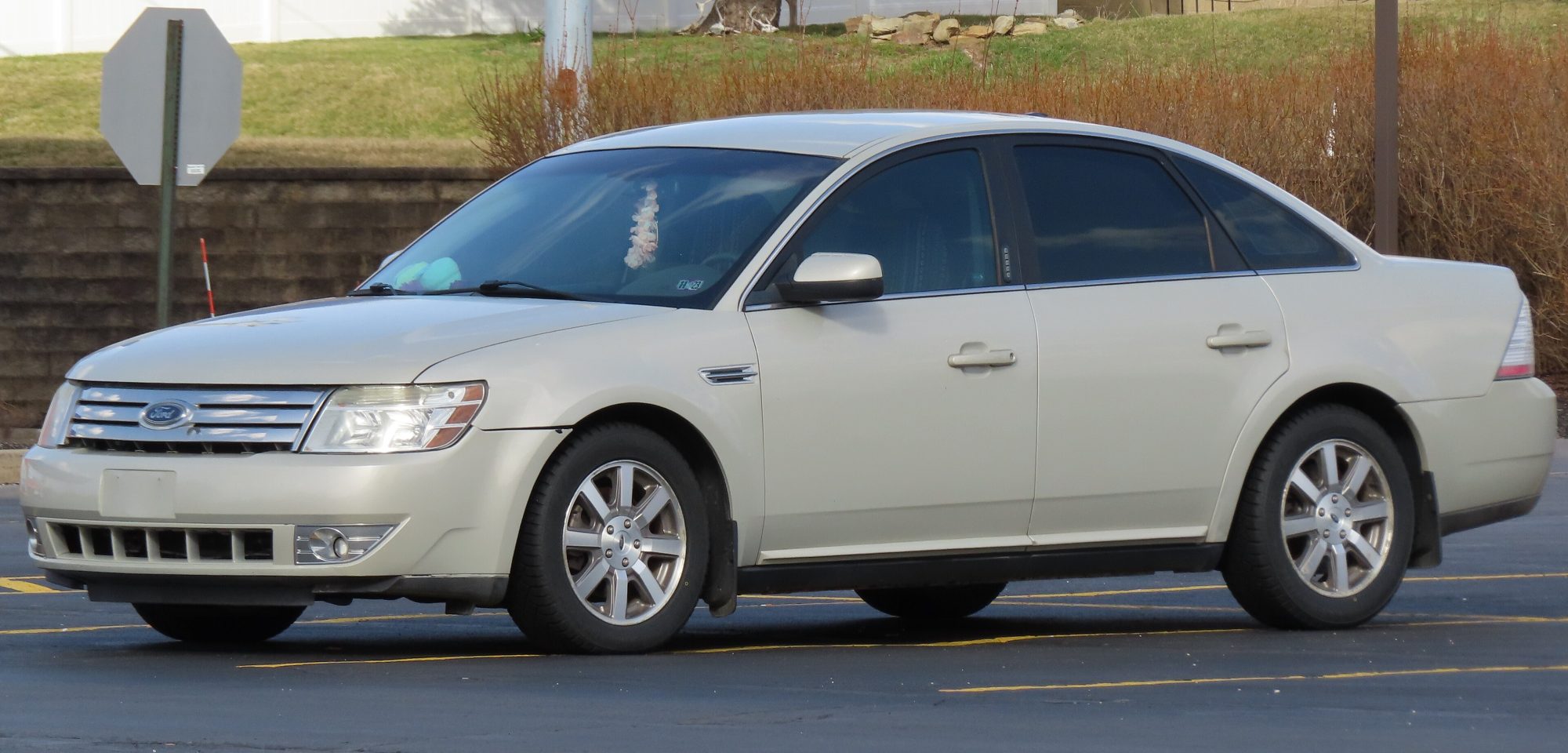
A nameplate that covers two unrelated cars. The Vulcan 3.0 V6 era to 2007 is a simple transverse front-drive saloon whose recurring faults are ordinary — intake gaskets, the AX4N transaxle, and a cooling fan controller that fails and produces overheating with no coolant loss. The 2008-on car is the renamed Five Hundred on Volvo-derived D3 architecture, with the 3.5 Duratec and, on the SHO, the 3.5 EcoBoost, and its faults belong to that family instead: on the EcoBoost, condensation in the intercooler causing misfires under sustained boost, and on all of them a CVT or six-speed depending on year. Establishing which car you have decides which half of the information applies.

Generationen
-
First and second generation 1986–1995
The Vulcan 3.0 and the Yamaha-built SHO V6 — two engines with nothing in common beyond the body they sit in.
- Karosserieformen
- Sedan · Estate
- Plattform
- Ford DN5
- Motoren
-
- 2.5 four-cylinder — petrol
- 3.0 V6 — VULCAN · petrol · Vulcan
- 3.8 V6 — ESSEX · petrol · 104 kW (139 hp) · Essex
- 3.0 V6 SHO — petrol · Yamaha-built
- 3.2 — petrol · 6-cylinder, US market 1993-1995
- Getriebe
- 5-speed manual · 3-speed automatic · 3-speed ATX automatic · 4-speed AXOD automatic · 4-speed AXOD-E automatic · 5-speed MTX manual
- Antrieb
- Front-wheel drive
-
Third and fourth generation 1996–2007
Transverse front-drive with the Vulcan 3.0 V6; intake gaskets, the AX4N transaxle and fan-controller failure are the recurring items.
- Karosserieformen
- Sedan · Estate
- Plattform
- Ford DN101
- Motoren
-
- 3.0 V6 — VULCAN · petrol · Vulcan
- 3.0 V6 Duratec — petrol · 24-valve
- 3.5 V6 — petrol
- 3.4 V8 — petrol · 175 kW (235 hp)
- Getriebe
- 4-speed AX4N automatic · 4-speed AX4S automatic
- Antrieb
- Front-wheel drive
-
Fifth and sixth generation (D3) 2008–2019
The renamed Five Hundred on Volvo-derived architecture; the SHO's 3.5 EcoBoost misfires from intercooler condensation under sustained boost.
- Karosserieformen
- Sedan
- Plattform
- Ford D3
- Motoren
-
- 3.5 V6 Duratec — petrol · 215 kW (288 hp)
- 3.5 V6 EcoBoost — petrol · SHO
- 2.0 EcoBoost — petrol · 179 kW (240 hp) · 366 Nm (270 lb-ft)
- 3.7 V6 — petrol · 227 kW (304 hp) · 378 Nm (279 lb-ft)
- Getriebe
- CVT · 6F35 6-speed automatic · 6F50 6-speed automatic
- Antrieb
- Front-wheel drive · Four-wheel drive
Serviceinformationen
Information, keine Handlungsanweisung
CarGeek ist ein Nachschlagewerk, kein Werkstatthandbuch. Die Seiten entstehen aus öffentlichen Quellen und aus dem, was andere festgestellt haben, nie aus den Serviceunterlagen des Herstellers; für Ihr konkretes Fahrzeug können sie daher falsch oder unvollständig sein. Ein Teil des Beschriebenen birgt echte Gefahren: Hochspannung, Kraftstoff unter Druck, gespeicherte Energie sowie heiße oder bewegte Teile.
Lassen Sie alles, wonach Sie handeln wollen, von einer fachlich geschulten Person anhand der herstellereigenen Vorgehensweise für Ihr Fahrzeug prüfen. Nichts hiervon ersetzt diese Vorgehensweise.
Beiträge zum Ford Taurus
Schreiben Sie den ersten Erfahrungsbericht dazu
Dazu wurde noch nichts veröffentlicht. Was immer Sie gefunden haben, ist es wert, aufgeschrieben zu werden — selbst eine Sackgasse erspart jemandem denselben Nachmittag.
Was einen Bericht lesenswert macht:
- Das Fahrzeug — Marke, Modell, Baujahr und Motor. Derselbe Fehler verhält sich auf jedem anders.
- Was Sie gemessen haben, nicht nur, was Sie getauscht haben.
- Was es tatsächlich behoben hat — oder dass nichts es behoben hat, was ebenso nützlich ist.
Anmelden oder ein Konto anlegen und eintragen, was Sie gefunden haben — zu Ford Taurus.