Vehicle
Ford Transit
Europe's default van, now global. Commercial duty cycles compress a decade of wear into a few years, so emissions-system and injector codes arrive early and often.
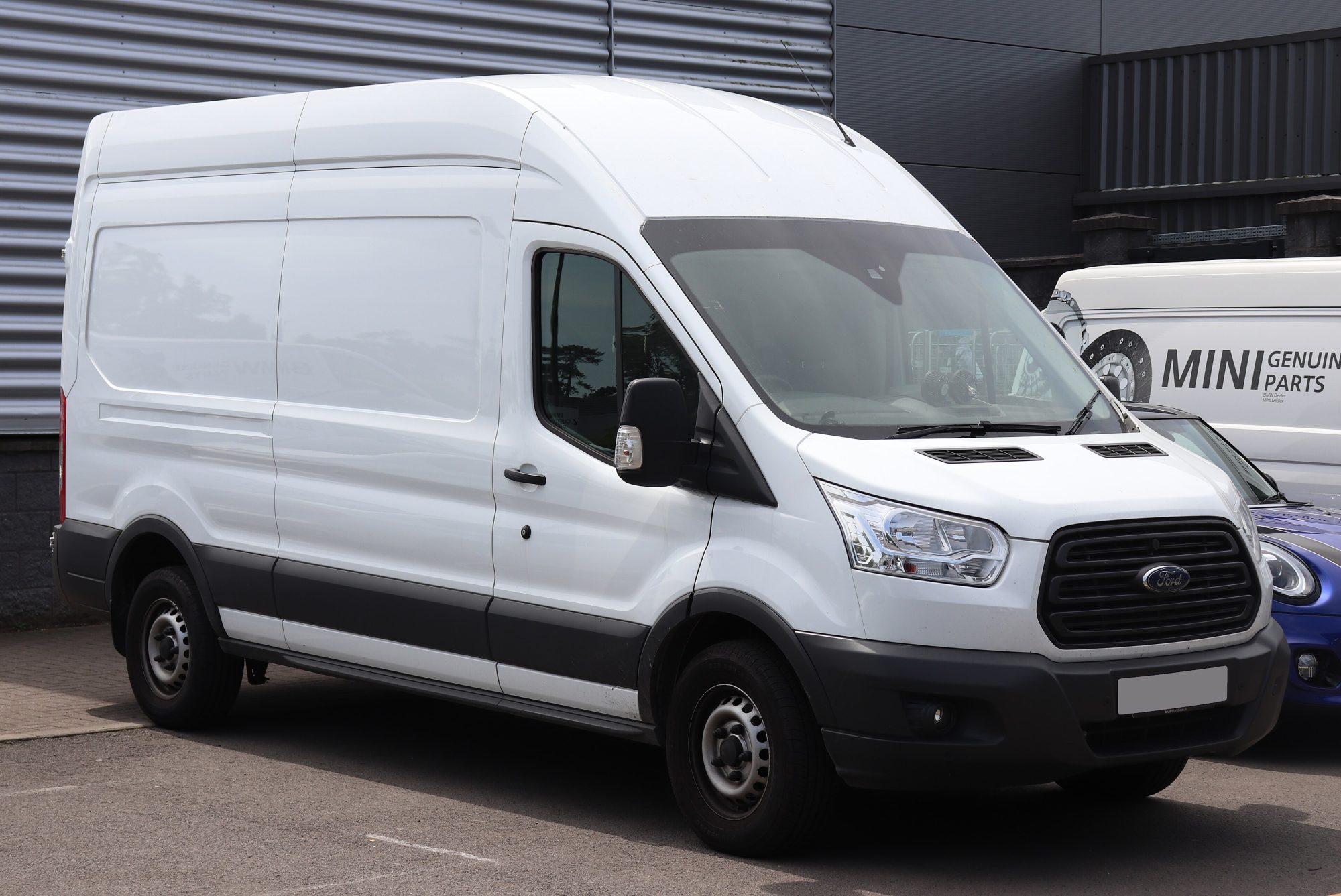

Generations
-
Mk7 2006–2014
Front- and rear-drive versions of one van — establish which before a driveline diagnosis.
- Duratec (badge, not an engine)
- Duratorq TDCi 2.0 (Duratorq and EcoBlue, 1.5–3.2) 2.0 L
- TDCi (badge, not an engine)
- Body styles
- Van · Chassis cab · Minibus
- Platform
- Ford V347
- Engines
-
- 2.2 TDCi — diesel · 63–114 kW (84–153 hp)
- 2.4 TDCi — diesel · 74–103 kW (99–138 hp)
- 3.2 TDCi five-cylinder — diesel · 147 kW (197 hp)
- 2.3 Duratec — petrol · 107 kW (143 hp)
- 2.0 — petrol
- Transmissions
- 6-speed manual · 5-speed Ford MT75 manual
- Drivetrain
- Front-wheel drive · Rear-wheel drive · Four-wheel drive
-
V363 2013–present
EcoBlue diesels; conversions are common, so a parasitic drain belongs in the added wiring first.
- 3.5 EcoBoost 3.5 L
- Duratorq TDCi 2.0 (Duratorq and EcoBlue, 1.5–3.2) 2.0 L
- TDCi (badge, not an engine)
- Body styles
- Van · Chassis cab · Minibus
- Engines
-
- 2.0 EcoBlue — diesel · 77–136 kW (103–182 hp)
- 2.2 TDCi — diesel · 74–114 kW (99–153 hp)
- 2.4 — diesel · Europe only
- 3.2 five-cylinder — diesel · 138 kW (185 hp) · All markets except for South America
- 2.0 — mild hybrid
- 2.3 — petrol · Europe only
- 3.5 V6 — petrol · North America only
- 3.7 V6 — petrol · 205 kW (275 hp) · 353 Nm (260 lb-ft) · North America only
- 2.0 turbo — mild hybrid
- 3.5 turbo V6 — petrol
- Transmissions
- 6-speed 6R80 automatic · 6-speed Getrag MT82-D4 manual · 5-speed manual · 10-speed 10R80 automatic
- Drivetrain
- Front-wheel drive · Rear-wheel drive · Four-wheel drive
Service information
Information, not instruction
CarGeek is a reference, not a service manual. Its pages are written from public sources and from what other people have found, never from a manufacturer's own service information, so they can be wrong or incomplete for your particular vehicle. Some of what they describe carries real risk: high voltage, fuel under pressure, stored energy, hot and moving parts.
Have anything you intend to act on checked by a trained person against the manufacturer's own procedure for your vehicle. Nothing here replaces that procedure.
Posted about the Ford Transit
Be the first to write this up
Nothing posted about this yet. Whatever you found is worth writing down — even a dead end saves someone the same afternoon.
What makes one worth reading:
- The car — make, model, year and engine. The same fault behaves differently on each.
- What you measured, not only what you replaced.
- What actually fixed it — or that nothing did, which is worth knowing too.
Sign in or create an account to add what you found about Ford Transit.